
Savings Accounts: Security vs. Growth - Understanding the Trade-offs

Sometimes, you need to sacrifice growth for financial security.
There's a reason you need to be careful about keeping too much money in a savings account. Over time, the value of your money could erode if you keep it tucked away in savings. That's because savings accounts don't tend to pay very generous amounts of interest.
In fact, even high-yield savings accounts today are paying roughly 0.60% to 0.70% interest. That's hardly a lot considering that if you were to invest your money instead, you might generate returns that are 10 times that high -- and those returns would still be a bit below the stock market's average.
But while it's clear a savings account won't make you rich, it's important to keep one open -- and well-funded -- at all times. Here's why.
You need cash on hand for emergencies
You never know when life might throw a curveball your way. You might think your job is secure only to get laid off when your company opts to downsize. Or, you might get sick or hurt and end up with thousands of dollars in medical bills.
Without money in an emergency fund, you might struggle financially during a scenario like that and suffer a host of unwanted consequences. But if you have cash reserves to tap, you'll have a much easier time getting through a financial crisis.
In fact, as a general rule, it's a good idea to sock away enough money in savings to cover at least three months of essential bills. For better protection, you'll want to aim for six months' worth.
Now you may be thinking, "Can't I just invest my money in a brokerage account and tap it when a need for cash arises?" And the answer is, you could, but that may not be a route you want to take.
You can't discount the possibility of needing money in a pinch at the precise moment your investment portfolio loses value. In that case, raiding your brokerage account would mean locking in guaranteed losses (whereas often, if you leave your portfolio alone during a market downturn, it will recover in time and you won't lose a cent).
On the other hand, with a savings account, you never have to worry about losing out on principal. If you put $10,000 in the bank, your balance will be worth $10,000 (more, if interest has accrued), no matter the timing of when you need to take a withdrawal.
Protect yourself
It's a good idea to invest money beyond what you need to keep on hand for emergencies. But make sure to keep a modest amount of cash in a savings account at all times. Doing so could help you ride out a storm the next time life throws you an unwanted financial surprise.
Now this isn't to say you have to settle for any old savings account rate. Rather, do your research.
If you're not thrilled with what your bank pays in interest, see if there's a better rate out there (if you bank at a brick-and-mortar institution, you may find that moving to an online bank will give you access to a higher interest rate). But no matter what, don't leave yourself without savings -- frustrating as it may be to see what minimal interest you're earning on your cash.
-

Margin Accounts for Short Selling: A Comprehensive Guide
A margin account is created by a broker for a customer—essentially lending the customer cash to buy securities. Typically, the broker will set up limits and restrictions as to how much the customer
-
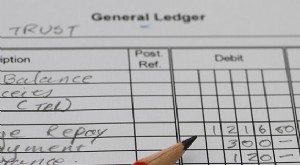
Understanding the General Ledger: Definition & Importance for Businesses
If individual assets and accounts are trees, the general ledger is the forest. It’s a finance team’s master document that shows all of the business’ transactions—accounts payab
banking
- High-Yield Savings Accounts: Why They're Still Worth It (Even with Lower Rates)
- Savings Account Requirements: What You Need to Open One
- Why You Need a Separate Bank Account After Turning 18
- Optimizing Your Savings Account: Avoiding Overfunding & Maximizing Returns
- Savings Account vs. High-Balance Checking: What's Best for You?
- Beyond the Bank: Smart Alternatives to Traditional Savings Accounts
- Joint Bank Account: Benefits, Risks & How to Decide
- High-Yield Savings Accounts: Earn More Interest on Your Money
- Why a Business Bank Account is Essential for Success
-
 Online Purchases with Savings Accounts: What You Need to Know
Can You Buy Things Online with a Savings Account? You can make online purchases from your savings account but on most kinds of savings accounts you cannot make purchases as easily as you can ...
-
 Retirement & Savings Goals at 40: What You Should Have
By 40, you should have an emergency fund and a good amount of retirement savings stowed away. (iStock) By the time you hit age 40, you should have a decent amount of cash saved up — both for em...