
Dealing with Tax Debt: Options When You Can't Pay
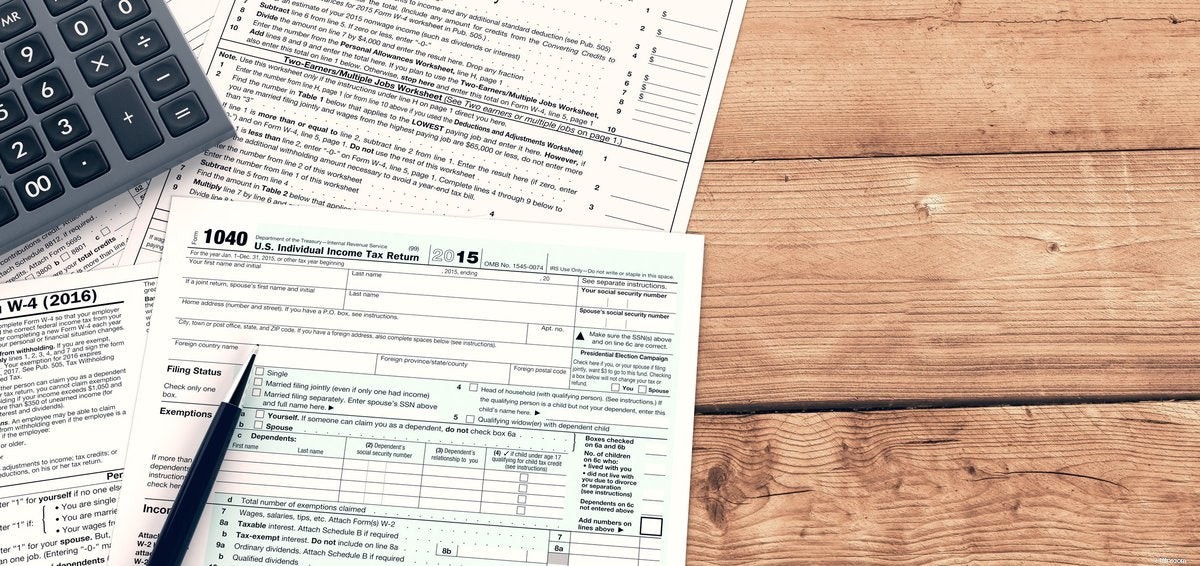
Most tax filers get a refund each year. But what happens when you not only owe the IRS money, but don't have an easy means of paying that debt?Image source: Getty Images.
Each year, the majority of people who file a tax return end up getting money back from the IRS. But what happens if the opposite happens, and you wind up owing money on your taxes? It can be a big disappointment -- and a big source of stress, especially if you don't have the money in savings to cover that debt.
If you're starting at a hefty IRS bill, your first inclination might be to empty out your emergency fund or charge that expense on a credit card and pay it off over time. But before you go either route, know that there might be a better way to deal with a tax bill you can't immediately cover.
Paying your tax bill over time
If you're facing an IRS bill you can't pay immediately, here's some good news: The agency will generally work with you so that you're able to pay that debt over time. All you need to do is apply for an installment agreement by the time your tax bill is due (for the current year, that deadline is April 15, 2019). Then, you'll simply tell the IRS how much you can afford to pay each month, and if that amount is reasonable, you'll be approved. If you select too low an amount, the IRS will assign a minimum payment to you, kind of like how you're given a minimum payment on each credit card statement.
Now it's in your best interest to pay off your tax debt as quickly as possible to avoid racking up interest and penalties. But if you sign up for an installment plan, you'll avoid a scenario where the IRS comes after you for the money you owe.
Why choose an installment plan over depleting an emergency fund?
The purpose of an emergency fund is to provide you with cash to cover unplanned bills, and your tax bill might very well fall into that category. But while it's okay to withdraw some of your emergency fund to cover your taxes, you shouldn't deplete your savings in their entirety. The reason? If you encounter a follow-up emergency that forces you to whip out a credit card and subsequently carry a balance, you'll pay more interest on that unpaid sum than what the IRS will charge you on overdue taxes.
Furthermore, the IRS won't charge you any money for setting up an installment plan provided you can pay your tax bill in 120 days or less. During that time, you have the option to cut back on expenses, work a side job, or come up with other creative ways to scrounge up cash and knock out that debt quickly, thereby minimizing the extent to which you accrue interest on that total.
Don't charge your tax bill on a credit card
If you don't have emergency savings, you may be inclined to charge your unpaid taxes on your credit card and pay off that sum over time. This way, you won't have the IRS breathing down your neck.
But again, the IRS is actually quite reasonable when it comes to letting you pay off your tax bill, and it charges less interest than what most credit cards do. The only exception might be if you manage to qualify for a card with a 0% introductory APR. In that case, if you put your tax bill on your credit card but pay it off quickly, you might avoid racking up interest on that sum altogether.
That said, if you pay your tax debt with a credit card, you'll automatically be charged a processing fee for that service (whereas that fee won't apply if you pay that bill from a bank account), so that's something to consider even with the 0% interest option.
Planning ahead for next year
Owing money on your taxes isn't the end of the world, especially since it actually means that you got an advance on some cash. At the same time, it pays to set some funds aside during the year so that if you do end up owing the IRS again, you're not scrambling to cover that bill.
Ready to file your taxes? Check out The Ascent's H&R Block review.
-

Personal Loans for Taxes: Pros, Cons & Alternatives
Many or all of the products here are from our partners that pay us a commission. It’s how we make money. But our editorial integrity ensures our experts’ opi
-
Tax Refund: Invest or Pay Down Debt? Expert Advice
Your tax refund could be just the thing to boost your savings or reduce your debt. The
banking
- Consequences of Unpaid Bills: What to Expect & How to Manage
- Navigating Private Student Loan Repayment Challenges: Your Options
- Late Tax Filing Consequences: What Happens If You Miss the Deadline?
- Navigating Personal Loan Payments: A Step-by-Step Guide When Facing Difficulty
- Tax Relief Options: What to Do If You Can't Pay Your Taxes
- Managing Unaffordable Debt Payments: A Comprehensive Guide
- Navigating Financial Difficulty: A Step-by-Step Guide to Managing Overdue Bills
- Pension Income and Taxes: What You Need to Know
- Dealing with Unpaid Income Taxes: A 3-Step Guide to IRS Resolution
-
 Tax Withholding Calculator: Ensure Accurate Deductions
div.cust...
-
 Navigating Financial Difficulties: A 6-Step Plan When You Can't Pay Bills
If you are dealing with the reality of an ‘I can’t pay my bills’ situation, then your financial stress may be through the roof. And that is completely understandable!...