
Secure & Convenient Travel Money Management: Expert Strategies
There are more ways to pay for things today than in the pre-internet past. But when it comes to traveling with money the same concerns apply: Safety, convenience, and fees.
It’s hard to address all three with one payment method. A debit card is convenient, but dangerous if it ends up in the wrong hands. Credit cards protect your bank account, but if you don’t use the right ones you’ll pay too much in fees. Changing cash into foreign currencies can also be expensive. As for travelers checks, does anyone under the age of 30 even know what they are?
In this article we’ll compare paper and plastic payment options and show you how to travel with money. The smartest approach is a combination of payment methods.
Credit and debit cards
A credit card may be the best way to travel with money, provided you have the right one. For one thing, using a credit card instead of a debit card protects your bank balance from theft. And there are some things you can only pay for with a credit card, such as a rental car.
The best credit cards for international travel also offer additional travel-related benefits such as travel insurance, rewards points, no foreign currency transaction fees, and more. Using a travel rewards credit card can also help you earn free flights, hotel rooms, and other travel necessities.
Call your bank before using your credit or debit card abroad so you know what fees you’ll be charged for foreign transactions and ATM usage.
Money Under 30’s favorite travel credit cards
Citi Premier® Card
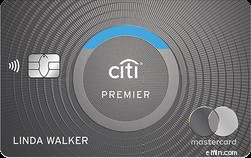
In A Nutshell
The Citi Premier® Card kicks off with a limited-time 80,000 bonus ThankYou® Point intro offer after spending $4,000 in the first three months of account opening. The everyday rewards program offers 3 points per dollar spent in a variety of categories and has no foreign transaction fees.
Read review Apply Now On the Citi Secure WebsiteIn A Nutshell
The Citi Premier® Card kicks off with a limited-time 80,000 bonus ThankYou® Point intro offer after spending $4,000 in the first three months of account opening. The everyday rewards program offers 3 points per dollar spent in a variety of categories and has no foreign transaction fees.
Read review Credit Score Requirements: Credit Score requirements are based on Money Under 30’s own research of approval rates; meeting the minimum score will give you the best chance to be approved for the credit card of your choice. If you don’t know your credit score, use our free credit score estimator tool to get a better idea of which cards you’ll qualify for. *Money Under 30 uses a FICO 8 score, which is one of many different types of credit scores. *A creditor may use a different score when deciding whether to approve you for credit. ? Poor 500-599 Fair 600-699 Good 700-749 Excellent 750-850What We Like:
-
Limited Time Offer: Earn 80,000 bonus ThankYou® Points after you spend $4,000 in purchases within the first 3 months of account opening. These points are redeemable for $800 in gift cards at thankyou.com
-
Three points per dollar spent at Gas Stations, Supermarkets, Restaurants, Hotels and on Air Travel
-
No foreign transaction fees
- For a limited time, earn 80,000 bonus ThankYou® Points after you spend $4,000 in purchases within the first 3 months of account opening
- Earn 3 Points per $1 spent at Restaurants and Supermarkets
- Earn 3 Points per $1 spent at Gas Stations, Air Travel and Hotels
- Earn 1 Point per $1 spent on all other purchases
- Annual Hotel Savings Benefit
- 80,000 Points are redeemable for $800 in gift cards when redeemed at thankyou.com
- No expiration and no limit to the amount of points you can earn with this card
- No Foreign Transaction Fees on purchases
Apply Now >>
The Citi Premier® Card comes with plenty of benefits for frequent travelers. These include no foreign transaction fees, plenty of rewards earning potential, and a $100 annual hotel savings benefit after you spend at least $500 on a hotel stay. Cardholders earn rewards on purchases, with 3x points per dollar spent on air travel, hotels, gas stations, restaurants, and supermarkets, and 1x points on everything else.
The Citi Premier® Card also comes with an attractive welcome offer for new cardholders. Borrowers can earn an impressive 80,000 bonus points when they spend $4,000 in the first three months (equal to $800 in gift cards when redeemed at thankyou.com). Flexible redemption options are available, making this versatile travel credit card a great pick for any wallet.
Learn more: See card details/apply.
Chase Sapphire Preferred® Card
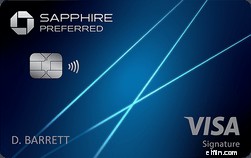
In A Nutshell
The Chase Sapphire Preferred® Card sets the standard for travel rewards by offering an excellent 5x points on travel purchases through Chase Ultimate Rewards®, 3x points on dining and 2x points on all other travel purchases. And points are worth 25% more when you redeem travel through Chase Ultimate Rewards® – That means the killer 60,000 point sign-up bonus is worth $750 towards travel.
Read review Apply Now On the Secure WebsiteIn A Nutshell
The Chase Sapphire Preferred® Card sets the standard for travel rewards by offering an excellent 5x points on travel purchases through Chase Ultimate Rewards®, 3x points on dining and 2x points on all other travel purchases. And points are worth 25% more when you redeem travel through Chase Ultimate Rewards® – That means the killer 60,000 point sign-up bonus is worth $750 towards travel.
Read review Credit Score Requirements: Credit Score requirements are based on Money Under 30’s own research of approval rates; meeting the minimum score will give you the best chance to be approved for the credit card of your choice. If you don’t know your credit score, use our free credit score estimator tool to get a better idea of which cards you’ll qualify for. *Money Under 30 uses a FICO 8 score, which is one of many different types of credit scores. *A creditor may use a different score when deciding whether to approve you for credit. ?- Excellent
What We Like:
-
A monster of an up-front bonus; 60,000 bonus points after spending $4,000 in the first three months.
-
5X points on travel purchased through Chase Ultimate Rewards®, 3X points on dining, 2X points on all other travel purchases, plus more.
-
Points are worth 25% more when you redeem travel through Chase Ultimate Rewards®
- Earn 60,000 bonus points after you spend $4,000 on purchases in the first 3 months from account opening. That's $750 when you redeem through Chase Ultimate Rewards®.
- Enjoy benefits such as a $50 annual Ultimate Rewards Hotel Credit, 5x on travel purchased through Chase Ultimate Rewards®, 3x on dining and 2x on all other travel purchases, plus more.
- Get 25% more value when you redeem for airfare, hotels, car rentals and cruises through Chase Ultimate Rewards®. For example, 60,000 points are worth $750 toward travel.
- With Pay Yourself Back℠, your points are worth 25% more during the current offer when you redeem them for statement credits against existing purchases in select, rotating categories
- Count on Trip Cancellation/Interruption Insurance, Auto Rental Collision Damage Waiver, Lost Luggage Insurance and more.
- Get complimentary access to DashPass which unlocks $0 delivery fees and lower service fees for a minimum of one year when you activate by December 31, 2024.
Apply Now >>
When you use the Chase Sapphire Preferred® Card, you’ll have $750 in points (when redeemed for travel through Chase Ultimate Rewards®) to book with right off the bat (it’s Chase’s welcome bonus to you after you spend $4,000 on the card in the first three months).
And the way to really maximize these points is to redeem them through Chase’s homegrown redemption program known as Chase Ultimate Rewards®. Using this program, the 60,000 points that would usually earn you $600 is upgraded to $750 when you redeem through Chase Ultimate Rewards®. So you are actually getting more money for your points by using them this way.
Learn more: See card details/apply or read our complete Chase Sapphire Preferred® Card review.
Cash
To pay with cash while you’re abroad, you’ll need to exchange American dollars for the local currency. There are many ways to do this, including online, but if you don’t prepare in advance you’re likely to end up overpaying.
Avoid currency exchange kiosks at the airport and in popular tourist areas. And pay attention to the exchange margin, which is the difference between the rate at which a bank or currency exchange buys currency and the rate at which they sell it. That lets you know how much profit the business makes on each transaction, on top of any additional service fees.
Of course, you can also withdraw cash in a foreign currency from the ATM. Check with your bank about foreign transaction or currency exchange fees. Most banks also charge you for using an outside ATM, and the ATM itself will probably have a fee. So the cost of getting cash can be high. Withdraw in larger sums to minimize transaction fees.
Cash is easy to obtain and use, but there’s always a risk of loss or theft. I knew a woman who was pickpocketed on the Prague subway right after she’d withdrawn a lot of cash from an ATM.
Thieves can be very subtle, especially in crowded areas, and you may have no idea what happened until the next time you look for your wallet.
When you travel with a lot of cash, you need a safety system, whether that’s buying a special pouch or “money belt” to store your cash in, leaving most of it in a safe in your hotel room, or splitting it up between traveling companions.
Cash’s biggest benefit, besides the fact that you can pay for just about everything with it, is its budgetary advantage.
It’s easy to lose track of your spending on a credit or debit card, particularly when the math of currency exchange is involved, but there’s never any mystery about how much cash you’ve used and how much you have left. That makes it easier to create a discretionary spending budget in advance and stick to it.
Travelers checks
Like cash, travelers checks can help you budget spending money. Unlike cash, you can’t use them to pay for everything. If your travelers checks are lost or stolen, you can replace them.
I know some of you are scratching your heads and thinking “a travelers what?”
Travelers checks were popular in the pre-internet, pre-debit card stone age. Before it was easy to withdraw cash from any ATM anywhere, travelers checks allowed people to travel with cash-like funds plus the protection of a credit card.
These payment relics are still around today, although they aren’t as widely available or accepted by as many stores. Chances are you’ll have to “cash” your travelers checks at a bank or currency exchange kiosk before you can use them.
So why not just withdraw cash with your debit card, bypassing the hassle and extra fees of obtaining travelers checks?
In case you find yourself in a place where ATMs are few and far between, or frequently out of order. In such a scenario, carrying a small amount of travelers checks in low denominations gives you access to local currency without the theft risk of hauling around a pile of bills. You can cash them in as you need to.
Cashing travelers checks at a bank also gives you a better exchange rate than using them to pay for things. Travelers checks are also be available in foreign currencies like the Euro.
How to get travelers checks
American Express is the only company that still issues paper checks. Other brands have switched to prepaid “travel cards,” which we’ll talk about more below.
To obtain American Express travelers checks, visit their website to search for an authorized vendor (banks make up the majority of them) near your zip code. If you’re an Amex cardholder, you won’t have to pay commission fees.
How to use them
The first thing you need to do is sign in the upper lefthand corner so that no one else can use your checks. Two-signature checks are also available for people traveling together. Record the serial numbers and keep this list separate from your checks, as you’ll need it to replace any that get lost or stolen.
Most places that accept American Express will take your travelers checks as payment. If not, you’ll have to cash them in at a bank or currency exchange store.
There are usually fees associated both with obtaining travelers checks and using them, so we recommend only keeping a few on hand as a backup payment method.
Prepaid travel debit cards
These are the modern replacement for travelers checks, though they often come with more fees than their paper ancestors. Prepaid cards also give you the convenience of paying with plastic without the risk of exposing your bank account to theft. You can reload the balance from the company’s website or over the phone.
The major prepaid travel debit card brands are:
- Visa TravelMoney
- Mastercard Prepaid Travel Card
- American Express Serve
- Travelex Multi-currency Cash Passport
Our advice is to use these cards as you would actual travelers checks—as a back-up only. The associated fees mean prepaid debit cards aren’t the cheapest way to spend your money abroad.
Summary
It’s best to take a multi-pronged approach when you travel with money. Take a few travelers checks or a prepaid travel card as a backup. Use your debit card to withdraw cash from ATMs and a credit card to pay for expenses at restaurants and other merchants. Create a plan and a budget before your trip to ease some of the stress of traveling.
What’s your preferred payment method while traveling? Let us know in the comments.
Read more:
- How To Exchange Foreign Currency: The 3 Simple Rules
- Traveling Abroad? The Best Credit Cards for International Travel—And Some To Leave At Home
-

Navigating Finances with a High Spender: 10 Practical Savings Strategies
Financial management can be intimidating and strenuous. Now, just imagine trying to do this with someone else. But, it’s a reality for couples who are balancing each other’s wants and needs, as well a
-
Secure Your Vacation: 5 Essential Money-Saving Travel Tips
How many days until vacation? We know you’re eagerly counting down the days. When you work hard throughout the year, you deserve some fun, relaxation, and adventure. But even on your dream vacation, i
banking
- Million Dollar Investment Strategies: Secure Your Financial Future
- Top Investment Options: Strategies for Short, Mid & Long Term Goals
- Credit Card Rewards: Avoiding Costly Mistakes & Maximizing Value
- Unlock Financial Success: How Meditation Boosts Your Wealth
- Generate Passive Income: Strategies for Mailbox Money
- Wealth-Building Habits: 6 Key Differences of Top Savers
- Maximize Your Savings: How to Find the Highest Money Market Rates
- Affordable Domestic Travel: 5 Ways to Save Money on Your Trip
- Top Travel Rewards Credit Cards with No Annual Fee
-
Essential Budget Categories: A Comprehensive Guide for Financial Freedom
This article may contain links from our partners. Please read how we make money for more info.If you’ve been around here for a while, you’ll know that we love a budget. Budgets help you to...
-
Travel Insurance: Is It Worth It? | Protect Your Vacation Investment
You’re busy researching your next big vacation. As you look at all your options, you notice suggestions to buy travel insurance on most trip summary pages. When you consider what youre going to...