
Bitcoin Block Rewards: How Miners Earn New Bitcoins
What Is a Block Reward?
Bitcoin block rewards are new bitcoins awarded to cryptocurrency miners for being the first to solve a complex math problem and creating a new block of verified bitcoin transactions. The miners use networks of computers to do this, and every time a new block is created it is verified by all the other competing miners. Then a new math problem is introduced and the miners start over.
Key Takeaways
- A block reward refers to the number of bitcoins you get if you successfully mine a block of the currency.
- The amount of the reward halves after the creation of every 210,000 blocks, or roughly every four years.
- The amount is expected to hit zero around 2140.
Understanding Block Rewards
The block reward provides an incentive for bitcoin miners to process transactions made with the cryptocurrency. Creating an immutable record of these transactions is vital for bitcoin to work as intended. The blockchain is like a decentralized bank ledger—one that can't be altered after being created. The miners are needed to verify the transactions and keep this ledger up to date. Block rewards, and to a lesser extent, transaction fees, are their payment for doing so.
Bitcoin was designed so that new bitcoins are created at a consistent pace. So the difficulty of the math problem is adjusted every two weeks to ensure a steady output of new bitcoins—roughly one block of transactions every 10 minutes.
Bitcoin's Block Rewards Vs. Ethereum's
Ethereum, bitcoin's main competitor as a cryptocurrency, also relies on block rewards to provide incentives to miners. With Ethereum, the reward is a digital token called "ether," which is rewarded each time a miner succeeds in providing the mathematical proof of a new block. As with bitcoin, miners are also awarded a transaction fee, known as a "gas" fee.
Unlike with bitcoin, there is no limit on the number of Ethereum ether tokens that can be created, and they are created at a much faster pace—in seconds, versus about 10 minutes. So the total number of blocks in the Ethereum chain is larger than in the bitcoin chain.
The Future of Bitcoin Block Rewards
To limit inflation, bitcoin creator Satoshi Nakamoto designed bitcoin to ultimately have only 21 million bitcoins. This is why the size of bitcoin block rewards is halved after the creation of every 210,000 blocks, which takes around four years. At bitcoin's inception in 2009, each block reward was worth 50 BTC. In May 2020, the block reward was halved a third time to 6.25 BTC. And as of May 2021, there were already 18.7 million bitcoins in existence, or nearly 90% of the total planned supply.
Ultimately, the block reward is scheduled to reach zero around May 2140, but mining will likely no longer be profitable long before that date is reached. As of April 2039, about 99.6% of bitcoins will already have been issued, and the block reward will be just 0.19531250 bitcoin. Along the way, transaction fees are expected to become the primary incentive for bitcoin miners.
Investing in Bitcoin and other Initial Coin Offerings (“ICOs”) is highly risky and speculative, and this article is not a recommendation by Investopedia or the writer to invest in Bitcoin or other ICOs. Since each individual's situation is unique, a qualified professional should always be consulted before making any financial decisions. Investopedia makes no representations or warranties as to the accuracy or timeliness of the information contained herein.
-
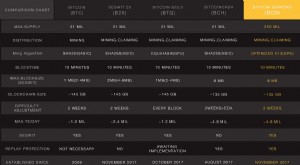
Bitcoin Diamond (BTM) Explained: Fork, Risks & What You Need to Know
Everything You Need to Know About Bitcoin Diamond Bitcoin did another hard fork, the coin created this time is Bitcoin Diamond. The fork occurred at block height 495866. [1][2] NOTE: Some people
-

Bitcoin Gold (BTG): Should You Hold or Claim Your Coins?
Why You Should Consider Not Selling Your Bitcoin Gold; But Should Be Careful Retrieving It If you held Bitcoin during the Bitcoin Gold fork, you now have equal parts Bitcoin Gold. Although you ca
Bitcoin
- Bitcoin Halving 2024: Reward Cut in Half & What It Means
- Bitcoin Halving: What to Expect & Its Impact on the Market
- Bitcoin's Viability: Analyzing Network Activity & Future Prospects
- Bitcoin Segwit2x Fork: What Happened on November 17th?
- Bitcoin Price History & Value: A Comprehensive Overview
- Bitcoin vs. Bitcoin Cash: A Comprehensive Comparison
- Genesis Block: Understanding the First Block in Cryptocurrency
- Understanding Bitcoin Blocks: The Foundation of Blockchain
- Bitcoin Mining Explained: A Comprehensive Guide for 2024
-
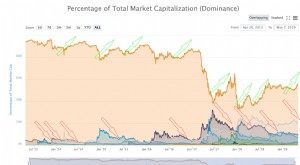 Bitcoin Dominance Explained: Understanding BTC Market Share & Trends
How to Understand Bitcoin Dominance: How it Works and Why it is Important Bitcoin Dominance is a measure of how much of the total market cap of crypto is comprised of Bitcoin. It can help you und...
-
Bitcoin Halving: Understanding the Mechanics & Impact
What is Halvening in Bitcoin and Other Cryptos In Bitcoin, halving is when block rewards for mining are cut in half. Halving happens at regular intervals based on the Bitcoin protocol. Many other...