
15 Alternative Investments: Diversify Your Portfolio Beyond Stocks
The stock market is the first thing many people think of when they hear the word "investments." But it's not the only option to grow your wealth.
A wide range of investments can help diversify your portfolio and prepare you to meet your long-term goals.
From looking at REITs to peer-to-peer lending to commodities and even cryptocurrencies, here are 15 investments that could help add diversification and risk protection to your investment portfolio.
Real estate investment trusts (REIT)
Eric Hood/Adobe

If you want to invest in real estate but don't have the cash to buy an income-producing property or don't have the time and resources to research the best real estate markets and assets, then you can invest in a REIT.
Typically, these companies buy large-scale income-producing properties and distribute that income to the owners who have invested in the REIT.
Gold, silver, and commodities
vladk213/Adobe

Some commodities, like gold and silver, are purported to be inflation-proof investments. Silver, in particular, may do well when the industry is booming since it's used in manufacturing.
While gold and silver are physical assets, they're often volatile, so a portfolio shouldn't weigh too heavily in their favor.
Municipal bonds
Vitalii Vodolazskyi/Adobe
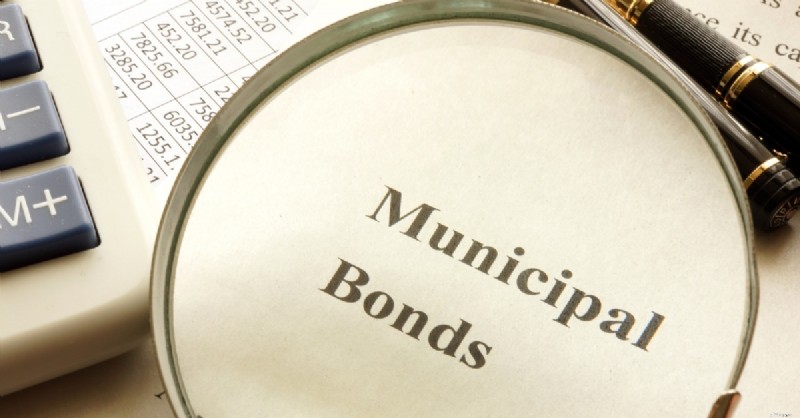
The government needs money to fund community projects, and that allows you to invest, typically with a guarantee against default.
These investments are called municipal bonds and pay for schools, highways, and other projects.
While they have low interest rates, some municipal bonds are exempt from state and local taxes in addition to federal taxes.
Vacation rentals
pikselstock/Adobe

You can invest in both your enjoyment and your portfolio by buying a vacation rental property.
While it's not a liquid asset, a vacation home could appreciate over time, and you can make rental income off the property when you're not using it.
Depending on the property, this could help generate income or at least help cover the costs.
Certificates of deposit (CD)
JonoErasmus/Adobe

Investing in a CD typically offers a higher interest rate than a savings account, yet you don't have the risk of the stock market.
When you put money into a CD, it's a bank account with a guaranteed interest rate, so you know you'll get your money out with interest.
The catch is that the interest rate is only accrued over a set amount of time, which means if you withdraw your money early, you could face penalties.
Savings bonds
Grady R/peopleimages.com/Adobe

Similar to CDs, Series EE savings bonds pay a fixed interest rate over a set amount of time. They are purchased through the federal government and are guaranteed by the federal government.
You could also look into Series I bonds, which have a combined fixed interest rate and variable rate based on inflation. These bonds can be held for up to 30 years and are best for long-term investors.
Money market funds
Matthew Cerff/peopleimages.com/Adobe

If you want a more liquid option than CDs or bonds, money market funds are a good alternative.
While they consist of short-term CDs and short-term bonds, you can withdraw your money at any time without a penalty.
Think of it like a savings account with a higher interest rate. If you're interested in investing in a money market fund, you'll most likely need to go through a brokerage.
Annuities
Studio Romantic/Adobe

Think of investing in an annuity, like setting up a pension for yourself. You agree to pay money upfront into an annuity.
Then, in the future, you receive regular payments, sometimes over a decided-upon period, other times for the rest of your life.
Sometimes, these payments are fixed, though they can also be variable or indexed.
Crowdfunding
Vergani Fotografia/Adobe

Even if you're not a budding venture capitalist, you can still invest in startups by participating in equity crowdfunding campaigns via platforms like GoFundMe, Kickstarter, and Patreon.
Through these platforms, startups will look to receive small sums from many people who will receive a small share of equity in the company. If you do your research, you might hit a home run.
Peer-to-peer lending
peopleimages.com/Adobe

Through services like Prosper and Lending Club, you can invest a small amount in loans to other people, known as peer-to-peer lending services.
You can contribute small amounts, such as $25, and your return will be repaid with interest.
These are riskier propositions since the borrower could default, but if you invest a small amount across many loans, then you may still see a positive return, even if some default.
Ownership in a franchise
BullRun/Adobe

If you have significant capital and time until you need to access your cash, you can buy a franchise, whether that's a fast-food restaurant, hotel, or even a salon.
You'll buy the ability to run a business under an already successful name, though you will probably have to take an active role in running the business.
The biggest returns tend to come when you open more than one location.
Art and antiquities
Iryna/Adobe

Even if you aren't a fine art collector, you can invest in art through companies like Masterworks, which offer fractional shares in pieces of high-value fine art.
Art is often seen as inflation-proof, since collecting art isn't necessarily directly tied to stock market performance.
However, it's important to remember that art is not a liquid asset, and you'll have to find the right seller when you're ready to cash in.
Cryptocurrency
SAK GFX/Adobe

Are you up for a roller coaster? Cryptocurrencies are prone to dramatic price swings, but some investors continue to invest in Bitcoin and other cryptocurrency options.
This digital currency is not for those who would prefer to keep their portfolio more low risk.
Private equity and venture capital
David/Adobe

If you have a high-risk tolerance, you might explore investing in non-publicly traded companies.
But it also takes patience — you won't see your money again until the private equity fund sells the company again or decides to go public with an IPO, and it's a boom or bust scenario.
A whopping 80% of the returns come from just 20% of the deals.
NFTs
gesrey/Adobe

NFTs boomed in 2021, and while they may not dominate headlines anymore, that doesn't mean they're over.
For perspective, the volume of NFT investments was in the billions of dollars, and now it's in the millions. However, a niche group is still interested in buying the digital artwork that dominates the market. It may be a risky investment as the future is uncertain.
Bottom line
Donson/peopleimages.com/Adobe

While the stock market has historically provided strong returns for investors, it's not the only option. Alternative investment strategies with varying degrees of risk can also pay off.
In some cases, you may be willing to gamble with high-risk investments like cryptocurrencies. Others may be looking to get into investments that typically have a high barrier to entry like real estate.
And some investors may want potentially less risky options like CDs or annuities to boost their bank accounts. The decision comes down to what level of risk you're willing to assume and your goals.
We can help boost your earning potential even further!
Loading...
Confirming Subscription
Loading...
Thanks for Becoming an EXTRA Ultimate Subscriber!
Check your texts
Reminder: Check your inbox as well to confirm your EXTRA email subscription.
-

Understanding Student Loan Interest Rates in 2022: A Comprehensive Guide
Student loans are a reality for many college students in the United States. While taking out student loans may be imperative to pursuing higher education, they can also be confusing and leave you st
-

Elon Musk's Crypto Portfolio: Bitcoin & Tesla's Future
Many or all of the products here are from our partners that pay us a commission. It’s how we make money. But our editorial integrity ensures our experts’ opi
Blockchain
- Hyperledger Iroha: A Flexible Blockchain Platform for Enterprise Solutions
- Ethereum: A Comprehensive Overview of the Blockchain Platform
- Best Cryptocurrencies to Buy During Bitcoin's Bull Run
- OneCoin Scam: Lessons Learned from the Largest Cryptocurrency Fraud
- TikTok NFTs: Own Iconic Moments from Top Creators
- RookieXBT: From $35K to $1.6M in 9 Months - A Crypto Trading Success Story
- Top 5 Cryptocurrencies for College Students: Smart Investments for the Future
- Best Cryptocurrency Credit Cards: Earn Rewards & Spend Crypto
- Daily Cryptocurrency Prices: Top 10 on August 19, 2021 - Analytics Insight
-
 Cryptocurrency for Business: A Comprehensive Guide for Entrepreneurs
The year 2009 is when Bitcoin was created by an unknown fellow going by Satoshi Nakamoto. Though it wasn’t paid much attention for several years, this digital currency would come to be known the wor...
-
 Tax Savings for Freelancers in India: 7 Proven Strategies
A freelancer earning ₹24 lakh gross can legally pay zero income tax this year. Most Indian freelancers earning the same amount will pay ₹2–4 lakh. The gap isnt luck. Its knowledge.Indias tax code has ...