
Secure Storage Solutions: Safety Deposit Boxes & Fireproof Safes
You’ve all seen the movie – the hero walks into a bank and requests to access a safety deposit box. The bankers hand him a box and close the door. The camera zooms in on the lid as he slowly lifts it and reveals thousands of dollars in various currencies, multiple passports, and a loaded gun.
Hollywood is a lot of fun, but it doesn’t work like that in real life. Many banks prohibit the storage of weapons or explosives in a safety deposit box, and it’s not a good idea to keep your passport there. Oh, and most banks issue safety deposit boxes that require two keys – one set kept by the bank and the other which is issued to the safety deposit box holder; both are required to open the box. But Hollywood has one thing right – safety deposit boxes are a great place to store valuable property.
How to Store Your Valuables
Most people have some valuable possessions or information they want to safeguard. It could be their personal or financial documents, last will and testament, jewelry, or other valuable belongings. Each of these items should be protected in a different manner – you shouldn’t store all of them in a safe deposit box, and you shouldn’t store all of them at home.
The type of valuables you are safeguarding will determine how it should be stored. You may have antiques or collectibles you wish to display. A locked display case will probably be a good option for that. If you have guns, potentially dangerous valuables, or belongings you don’t wish to display, then consider a gun safe or another safe that is too large and heavy to carry out the door (small fireproof lockboxes are easily carried and can be more easily broken into than some of the better-rated home safes).
Tip: Make sure you have your valuable items documented for insurance reasons. Perform a home inventory to document your valuables and make sure you have enough homeowner’s insurance.
What to Put in a Safety Deposit Box
A safety deposit box serves several functions – namely keeping your important documents or other items in a secure, off-site location. In many cases, a safety deposit is probably safer than a lock box in your home – it is more difficult to break into and limits access. But that limited access can also be a problem if you need quick access to certain documents or other valuables.
For that reason, you don’t want to keep documents or other valuables you may need at a moment’s notice, including your passport, original copies of your will, estate plans, power of attorney, burial preference, medical documents, living will, and similar items. In the event of your death it may take a court order to unseal your safety deposit box, causing a delay in settling your estate. You should leave copies of your will with your estate executor and your attorney.
Personal items to keep in a safety deposit box:
- Birth, Marriage, and Death certificates
- separation/divorce papers
- Military records such as the original copy of a DD Form 214.
- Copy of will, estate plan, burial preference, and/or power of attorney
- Copy of life insurance
- Copies of legal documents / business documents
- Copy of passport
- Copy of college degree
- Copy of professional license
- Copy of Social Security Card
- Copy of health records (immunizations, surgeries, hospitalizations, etc.)
Property and investments:
- Original stock certificates
- U.S. savings bonds, other bonds and Treasury securities
- Contracts
- Deeds, titles, title insurance for home, automobiles, and other property
- Home inventory (can be photos, DVD, VHS, etc.)
- Copy of homeowner’s insurance
- Copy of receipts for home improvements
- Coins, jewelry, etc.
Note: A safety deposit box is often safe from prying eyes and thieves, but is not airtight or watertight. It is recommended to keep all items in a Ziploc bag or other waterproof container to protect them from moisture, flooding, sprinkler systems, etc.
How to Choose and Purchase a Fireproof Safe or Lockbox
A fireproof safe is a great place to keep important documents, photos, and computer backups of sensitive information. There are many factors to consider such as the level of protection offered, what you will be storing, cost, etc. The most important thing to consider is the items you will be storing. How large are the items that require safeguarding? Will you be storing anything with special preservation needs (antiques, collectibles, firearms, jewelry, archival quality documents, memorabilia, etc.).
Choosing a fireproof safe.
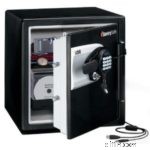 Evaluate needs. Consider space requirements, value and type of items to be stored, amount of necessary security, etc.
- Evaluate fire ratings. Common classifications include UL 72, UL 125, and UL 350. The UL (Underwriter’s Laboratories) numbers represent the allowed internal temperature when exposed to fire – usually tested by exposure to fire for one hour at 1700 degrees. Data storage safes. Most photos, CD’s, flash drives, and other electronic media suffer damage at temperatures of 140F or higher, so go with a rating of UL125 or lower if you are storing electronic data. Document storage safes. A safe with a rating or UL 350 is good for most documents.
- Look for a GSA approved safe (Government Service Administration). GSA approved safes are often similar to those used by the government for the storage of classified information. If it’s good enough for top secret information, it’s good enough for your financial records and other important valuables.
- Evaluate burglary classification. TL-15 and TL-30 are common classifications, with the TL-30 offering more protection.
- Compare prices. On the low end, you can purchase a fireproof safe for close to $100 (prices vary). On the high end, you can go into the thousands, depending on size and features. Make sure you find a safe that meets or exceeds UL testing standards.
Choosing a fireproof lockbox.
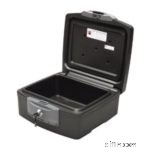 Evaluate needs. Most fireproof lockboxes are smaller than safes and are designed for documents and other small items.
- Fire protection. Again, check the ratings as listed above. Many, but not all, fireproof lock boxes are rated for electronic data.
- Burglary protection. Most lock boxes are not as secure as a safe – you can even order replacement keys for some models. The value here is in the fire protection, not protection from thieves.
- Prices. Prices range from $25 and up.
Consider signing up for a home security service
The above items are important for safeguarding your valuables, but another item to consider is a home security service to monitor your home for break-ins or other emergencies. A home security service may alert authorities to emergencies with enough time to prevent catastrophic loss of valuables or catch any thieves who are breaking into your home.
Using a monitored home security service can help you protect your home and valuables from burglars, fires, and other events.

-

Dog Liability Insurance: Protect Yourself From Costly Claims
Whether you own a passive Bassett Hound or a high strung Terrier, all dog owners should consider purchasing dog liability insurance. The average dog attack claim can typically hit the $100,000 m
-
Protect Yourself: 5 Ways to Identify and Avoid Cryptocurrency Scams
Here are the five ways you can spot, avoid and protect yourself from cryptocurrency scamsThe cryptocurrencies craze is increasing rapidly in the country. As crypto-assets continue to gain the attentio
budget
- Safe Deposit Boxes: Risks and Alternatives to Consider
- Storing Cash in a Safety Deposit Box: Legality & Considerations
- Safe Deposit Boxes: A Comprehensive Guide to Opening and Using One
- Safe Deposit Box Essentials: What to Store & What to Leave at Home
- Financial Preparedness: Planning for Job Loss & Economic Uncertainty
- Certificate of Deposit (CD): Pros & Cons - A Comprehensive Guide
- Bitcoin Wallets: Secure Storage & Buying Options - A Comprehensive Guide
- Safety Deposit Boxes: Protecting Your Valuables - A Comprehensive Guide
- Certificate of Deposit (CD): A Comprehensive Guide
-
 IKEA's Innovative Strategy: Reshaping the Future of Retail in Vienna
Image Credit: IKEA IKEA has a well-deserved reputation for affordable, attractive, and accessible furniture and home goods. Even if you don't have a physical store nearby, you might have a fo...
-
Secure Your Future: Understanding and Maximizing Your Pension
Whatever your age, you need to think and plan for your retirement and pension. Most full time and many part time employees in the United States are covered by some form of pension. This is becau...