
Christmas Light Energy Savings: Reduce Your Holiday Energy Bill
Several year ago I was leaving for work in the morning and noticed I had left my Christmas lights on all night. It was still dark out when I left for work, so there was no missing the lights. I stopped my car and turned off the lights right away. We only had a medium size tree wrapped in lights, so I don’t think it used enough energy to make a noticeable difference in our utility bill.
But one thing I did notice was that several other houses on our block still had their lights on. When I thought about it, I realized those same lights were on every morning for the previous weeks. Almost every house had a larger light display than we did. So I am sure they had a noticeable change in their electric bill the following month!
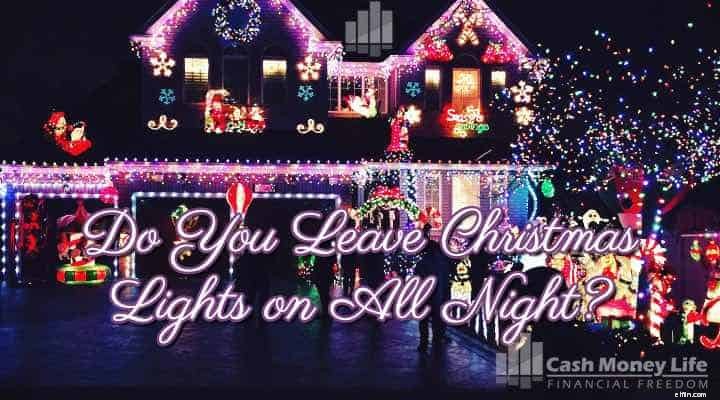
That got me thinking… Why do people leave the lights on throughout the night? It doesn’t make sense to me to leave them on after a certain point because almost everyone is asleep and there will not be anyone around to enjoy them. I think leaving the lights on all night needlessly uses a large amount of electricity and costs people a lot of money. I don’t think the electric companies mind, but is it the responsible thing to do?
I have since placed our lights on an automated timer to prevent this mistake from happening again. But I still see dozens of homes in our neighborhood that are lit up throughout the night. I’m sure it costs them quite a bit of money. They can save quite a bit by using an outdoor outlet timer with photocell light sensor. They only cost a few dollars and will automatically turn your lights on and off (more about this later in this article).
How You Can Save Money on Your Christmas Light Display
We have since moved to a new home, and we now have a (slightly) larger Christmas light display. It’s not huge, but it works for our yard. We have also made several changes to make our display more energy efficient. In fact, we don’t experience a noticeable change in our electric bill during the Christmas season, even with our indoor and outdoor Christmas light displays.
Use Energy Efficient LED Lights
Perhaps the biggest way to save money is by using more energy efficient lighting. LED lights use a fraction of the energy used by incandescent lights, and in general, they have a longer lifespan. You may pay a little more for them up front, but the longer lifespan and reduced energy requirements mean they will generally pay for themselves within a year or two. LED lights also produce less heat, which is better when they are used indoors.
Another benefit of using LED lighting is the ability to daisy chain more strings of lights together, since they generally draw less power than traditional incandescent lights. Be sure to check the manufacturer’s recommendations to determine how many strings you can place on each outlet and in each chain. We don’t have many lights in our display, so we can do our entire display from one outlet.
We use only LED lights in our Christmas light displays, including our outdoor display, our pre-lit Christmas tree, and other seasonal lighting. We have also swapped out many of our interior lights with LEDs, though we still have some CFL lights, which are still more efficient than the incandescent lights. You should save quite a bit of money each year by switching to more energy efficient lighting.
Use Automatic Timers for Your Lights
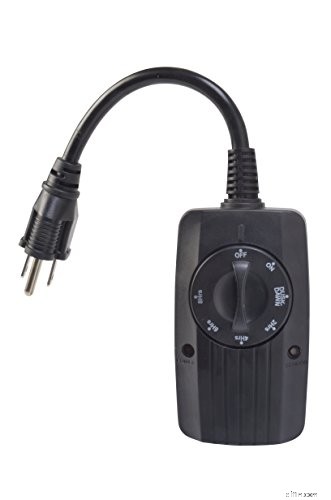
The next big change we made was installing an outdoor outlet with a built-in photo sensor and timer on our outdoor electric outlets. This turns on our Christmas lights on at dusk, then turn them off after 6 hours. This is nice because we never have to worry about remembering when to turn our lights on or off. The timer can be set for 4, 6, 8, or 12 hours, or you can set the sensor to automatically turn the lights on at dusk, and off at dawn. We opted to set the timer for 6 hours, which is usually a little after we go to bed. It gets dark around 4:30 in December where we live, so that keeps the lights on until around 10:30pm. There is very little street traffic in our neighborhood at that time, so that’s a great time to turn off the lights.
 The convenience and cost savings of this device far outweighs the cost, which was very reasonable, at less than $10. I bought ours as part of a package, with outdoor extension cords and other seasonal items. You can often find these on clearance after the holidays, but I would just opt to buy one now, so you can enjoy the convenience and energy savings throughout the season. Here is a comparable item at Amazon: Outdoor Outlet Timer with Photocell Light Sensor, Weatherproof.
Outdoor Outlet Timer with Photocell Light Sensor
Price:
Automatically turn holiday lights on and off. Adjust the outlet timer to your preferences (dusk-dawn, 2, 4, 6 or 8 hours).
 Full Disclosure: We earn a commission if you click this link and make a purchase, at no additional cost to you.
Note: Be sure to buy extension cords and outlets designed for outdoor use, as using one designed for indoor use may cause serious problems if it gets wet!
What About Interior Lighting Displays?
The easiest way to control exterior Christmas light displays is with the photosensitive automatic timers mentioned above. But these aren’t a great solution for indoors, since they turn on when the sun goes down.
That said, it’s a good idea to turn off your lights when no one is there to enjoy them. We leave our lights off during the day, and turn them on when everyone comes home from work or school. Then we simply turn our interior lights off before going to bed.
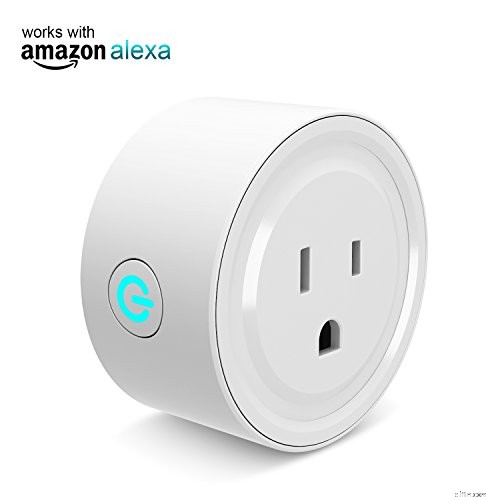
But if you want to get fancy, you can use an automatic timer for your interior displays. They are slightly more expensive that the exterior timers, but still very affordable. If you really want to get fancy, you can get a smart outlet that you can control with your smartphone and a wi-fi setup. Many of them can even be controlled with Amazon Alexa, Google Home, your smartphone, or a wi-fi setup. They can be purchased for less than $20. This is an affordable way to save money, and also turn lights on and off if you are away from home.
Smart Plug Outlet Works with Wi-Fi, Amazon Alexa, Google Home, Smartphone
Price:
Control your outlet with Amazon Alex, Google Home, IFFT, and your smartphone.
 Full Disclosure: We earn a commission if you click this link and make a purchase, at no additional cost to you.
Buy Your Christmas Lights & Supplies at the End of the Season
You can usually save a lot of money if you buy your lights closer to Christmas, or after the holiday. The only downside is trying to time everything, as the best deals are usually limited to product on hand. There can be slim pickings if you wait too long in the season. So buy when you find the right product at a price you can live with – otherwise you might just miss out!
Where to find the best deals on Christmas lights: Unfortunately, I don’t have a great recommendation, since this varies from year to year (I would check places like Ebates, Slick Deals, and similar websites for deal information). You should check the big box stores like Home Depot, Lowe’s, Wal-Mart, Target, Meijer, Menard’s, and similar locations. But you can also find them in unlikely places, such as grocery stores, department stores, etc.
Do you leave your Christmas lights on at night? If so, why?

-

Top 3 Private Student Loan Lenders for Lower Interest Rates
div.cust
-

5 Smart Ways Your Smartphone Can Save You Money
Cell phones have earned a reputation as enablers of mindless, wallet-draining spending. In addition to racking up expensive overage fees and international charges, popular apps offering f
budget
- Hope & Savings: How Optimism Can Boost Your Finances
- Financial Planning for Your 30s: Smart Savings Strategies
- Smart Money Saving Strategies for Your 20s
- Maximize Savings: A Comprehensive Guide to Using Coupons
- Community College: A Smart Path to Affordable Higher Education
- Cost Per Wear: Maximize Your Wardrobe Value & Save Money
- How Much to Provide for Your Child's Guardian in a Will: A Practical Guide
- Save for a Car: Strategies for Paying Cash & Avoiding Debt
- 10 Money-Saving Gadgets to Boost Your Budget
-
 Protect Your Retirement: Understanding the 26(f) Program
On April 10, 2017, the Department of Labor will introduce a controversial measure that could incite a retirement blackout and cause you to miss out on $68,870 a year or more. And one of the only way...
-
 Financial Strategies for Your 40s: Secure Your Future
By the time you turn 40, the pace of your life is a lot different from what it was when you were fresh out of college or still figuring things out in your 30s.Your biggest concerns probably revolve a...