
Adulting 101: A Practical Guide for New Graduates
Being a young adult in 2016 is no picnic. You (mostly) don’t know what you want to do, your love life’s a slow-motion disaster film, and your parents keep asking when you’re going to settle down/get married/go to med school.
Oh, and you’ve got crazy student loan debt, wages have been stagnant for decades, housing prices are through the roof, and climate change just killed a bunch of reindeer in Siberia.
It’s enough to make you feel like this:
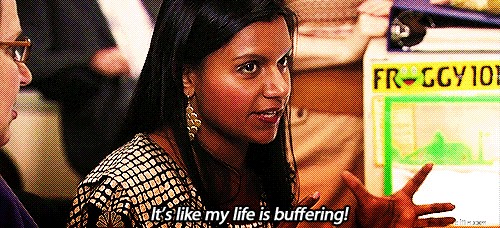
It doesn’t have to be this hard. While we can’t tell you how to figure out what you want to do with your life, or get you to stop drunk-texting your ex, or bring those poor reindeer back to life, we can help you get your finances in order.
Here’s how to be an adult—on paper, at least.
1. Pay yourself first

It’s a personal finance cliche, but it’s still the first step on the road to financial stability. Saving money often feels like deprivation—you can’t buy stuff you want. But if you change your mindset, and see saving as an investment in (pretty near) future you’s health and happiness, it makes it a lot easier.
How to pay yourself first? Here are a few ideas:
Do (at least) the bare minimum when it comes to retirement savings
Ideally, you’d be putting away a significant amount of money toward your golden years, but we know you’ve got bills: Those fat monthly payments to Sallie Mae, as well as rent, food, and the (more than) occasional night out.
But one of the few advantages (financially speaking) of being young is that you’ve got decades until you’re going to need your retirement money. Thus, every dollar you put away now will be worth more at retirement than dollars you put down in 10 or 20 years, when you’ll be a little farther along the slow crawl to the grave—and thus more flush.
Why? Compound interest. With time, your money earns interest, and then that interest earns interest, and then the interest on your interest earns more….you see where this going. Time is on your side on this one.
So what’s the bare minimum?
If your employer offers a match, contribute as much as you need to get the maximum match. For most of you, this will be 6%, with an additional 3% coming from your employer. Free money!

And with that, you’ll be close to halfway to the 20% savings rate that most financial advisors (and Money Under 30) recommend.
If you start right out of school, it might even be enough for you to have a year’s salary saved up in your 401(k) by age 30.
And because that 6% comes out pre-tax, you won’t feel as much of a pinch in your (slightly) reduced paycheck.
If you employer doesn’t offer a match?
Then you should open up a Roth IRA and aim to max out your yearly contribution. Since you’re young, and probably not making a ton yet, you’ll be paying less in taxes than you will later on. Contributions to a Roth IRA are done with post-tax money; withdrawals you take in retirement are tax-free.
Regardless, you’ll want to put your money in low-cost index funds, as fees can really eat up your returns.
Set up an emergency fund

According to a recent study by the Federal Reserve, almost half of all Americans wouldn’t be able to cover an unexpected $400 expense. $400!
To compare, the average visit to the emergency room costs $1,233.
An emergency fund is important for a lot of reasons:
- Stuff happens, and often it’s expensive.
- If you’ve got a nice cushion of cash socked away for the unexpected, then you’ll be less likely to raid your 401(K) or IRA in the event of an emergency or unexpected job loss, which means those investments can keep appreciating tax- and penalty-free.
- Psychologically, you’ll be less stressed because you know that you can handle anything—whether a new set of tires or your pet’s expensive dental work—without going into debt.
You might not have a ton of cash to put aside right now. Even setting aside small amounts can help, and small amounts eventually add up to big(ish) money.
An app like Digit, which analyzes your spending and takes out small amounts when it thinks you won’t notice, is a great way to start, especially if you take a hands-off approach to your finances. Digit takes advantage of your lack of attention, and uses it to help you save.
If you’re the more conscious type, then consider setting up a high-yield savings account. By putting your money in a separate account, you set up a nice little psychological barrier between you and it, meaning you’ll be less likely to spend your emergency fund on impulse buys. And the interest your money earns will help offset inflation.
Want to set it and forget it? Use our free tool to automate your finances.
Build a bank account buffer™

If the idea of savings several thousand dollars seems far off, aim for the bank account buffer™ first. It’s like a mini-emergency fund you keep in your checking account.
Think of it as a cushion of cash you keep in your checking account, and that you never spend. No fun, right?
It’s not much fun, but it can keep you from having to worry about whether the landlord will deposit your rent check before you get your next employer-sponsored infusion of cash. It also protects you from overdraft fees, which means being broke won’t make you even more broke.
It can be $500, $1,000, or equal to the amount of one paycheck. You don’t want your bank account buffer™ to be too much (unless you’re using a high-yield checking account), because you’ll be missing out on the (admittedly pretty minimal) interest that money would be earning in a high-yield savings account.
2. Get accustomed to living within your means

Money Under 30 founder David Weliver got into $80,000 in debt before he was even 25. How did he do it? The way we all do: Spending more than he earned.
When you’re young and making real money for the first time, it can be hard to tell yourself no. But indulging every whim now means it’ll be even harder to reduce your spending later on. It’s best to start developing good habits now, so you won’t have to dig yourself out of a hole in the future.
Track your spending
I know, I know. I can already hear the resistance. Tracking what you spend is no fun (or at least it’s no fun unless you’re a little bit compulsive), but it’s also pretty much the only way to get a handle on your finances. If you don’t know where your money goes, how can you hope to know where you can—or should—cut back?
If you don’t want to do the most tried-and-true method, Ye Olde Spreadsheet, then perhaps let an app do it for you: It won’t be as helpful at encouraging fiscal discipline, but it will help you get an overall sense of where your money’s going.
Wait three days before making a big purchase

Telling yourself “no” all the time gets old. Eventually, you’ll break down and start saying “yes” to everything.
Instead, tell yourself “Not now.” By offering your acquisitive impulses delay rather than denial, you’ll dull the edges of their disappointment. They can have what they want—they just have to wait.
You’ll usually find that, at the end of three days, the desire itself has dissipated.
In its place? Relief you didn’t buy that kinda ugly sweater, or the gadget you’d get bored with in two days.
Don’t budget—instead, figure out your discretionary income

Budgets work great for some people—but not for most of us. Why assign an arbitrary limit to what you spend on groceries? What if you need toothpaste but you’ve already maxed your “toiletries” budget? Would being good with money dictate having rancid breath until next month?
Instead of putting limits on unpredictable categories, figure out what you have left over to spend after you’ve paid all your bills (rent, utilities, insurance, debt payments) and put some money into savings—AKA your “nut,” (which I think we’ll all agree is an unfortunate term).
Then, spend what’s leftover on whatever you want. You’ll still have to make choices (often difficult ones) but you won’t be constantly bumping up against arbitrary limits.
3. Plan for the future (and the unexpected)
Start building credit
Building good credit takes years—seven of them, in fact. Even if you don’t plan on buying a house any time soon, it’s good to start thinking about your credit score. A high score will get you the lowest rates available, and may save you thousands of dollars over the life of a loan.
There are a few ways you can build credit for the first time:
- Get a secured credit card.
- Become an authorized user on someone else’s card (like a parent).
- Take out a credit builder loan from Upstart.
Maybe you’re spooked by credit cards—a lot of people who came of age around the financial crisis are. But credit cards offer benefits that debit cards don’t—namely, credit card companies report your payments to the credit bureaus, and help you build credit.
If you’re worried about overspending, then a secured card—or even a charge card, which must be paid off in full every month—might be the best for you.
The most important thing, whatever you choose: Pay your bill every month. On-time payments are the most important element of building good credit. Missing a payment—by even a day!—could set you back years.
Check your credit report at least once a year
Once you’ve established a credit score, then you should keep an eye on it.
It’s not unheard of for errors—showing missed payments on accounts you’ve always paid religiously, or an outstanding debt you never took out—to show up on your credit report, and those errors can hurt you. Credit reports are often used by landlords and even employers as a means of vetting potential tenants and employees. You don’t want the pristine credit you worked so hard for marred by a computer glitch.
Many banks, including Capital One and American Express, offer credit monitoring as a perk of being a cardmember. Credit Karma and Credit Sesame both offer access to one credit report a month, as well as monthly updates to your credit scores.
Learn more about how credit scores are calculated, and use our credit score estimator to get a sense of what yours might be.
Get renters insurance
You may not own a house yet, but I imagine you already have plenty of stuff, and some of it is pretty expensive. Got a nice bike? A laptop? A flat-screen TV? Would it be easy for you replace them if they got lost, stolen, or damaged?
If not (and even if so), you should get renters insurance. Renters insurance is like homeowners insurance….but for renters. It protects your stuff in the event of theft, damage, or loss, and it protects you from liability if, say, you accidentally burn down your apartment building, or leave the shower running and cause serious water damage. (Fun fact: Your landlord will not just pay for that.)
Renters insurance tends to be pretty cheap, especially if you combine it with your auto insurance.
A friend of mine recently lost most of her belongings in a house fire, and her renters insurance made it possible for her to recover. That kind of peace of mind is definitely worth $10 a month.
For more info on the right policy for you, check out Money Under 30 partner Policygenius.
4. Set some money goals
Tracking your spending and telling yourself “not now” will feel somewhat pointless once you’ve got six months of living expenses in your emergency fund and you’re hitting your targets for retirement savings.
That’s when it’s time to start setting savings goals. It could be for a down payment on your dream house, a trip to Europe, or a brand new car. It can be saving up money to go to grad school, or to pay for your wedding. It can be all of those!
Capital One 360 has a great feature (unique among high-yield savings accounts) where it allows you to divide your money up into (up to 25) separate accounts. That makes it easy to prioritize different goals, and to see the progress you’re making on each individual one.
Goals are a great way to motivate yourself to save more, and to keep up the momentum you’ve built up while saving for your emergency fund. And, even better, it means you get to save toward fun stuff.
5. Be patient
In your twenties, it can feel like so many of your goals are out of reach. If you’re not making a ton of money, then saving a ton of money is going to take a while.
Don’t beat yourself up about it. Those small contributions will start adding up to something substantial soon enough, and you should be proud of yourself for making smart choices that will serve you well later in life.
Summary
If you’re just out of college, you’re probably overwhelmed by both new freedoms and new responsibilities. Jobs, money, taxes—it can all be too much. But if you start with the basics, you’ll find yourself well ahead of the curve by the time you hit the big 3-0.
Read more:
- The $1 Million 401(k): Investing Strategy For 20- And 30-Somethings
- How To Save Your First $500
-
Buy Stocks Online: A Beginner's Step-by-Step Guide
It’s never been easier to buy stock. If you have a little bit of money and a brokerage account, you can buy a piece of a publicly traded company. A stock is an ownership share in a business,
-

Smart Investing for Beginners: 5 Ways to Build Wealth with Little Money
Investing isn’t just for stock market pros — it’s an all-encompassing term for how to be smart about money.The truth is: you don’t need an influx of cash to start building
debt
- Financial Planning for Your 30s: Smart Savings Strategies
- Smart Money Saving Strategies for Your 20s
- Real Stories: How Mint Users Achieve Their Financial Goals
- Reframe Your Finances: Understanding and Rewriting Your Money Story
- Debt Consolidation Loans: A Comprehensive Step-by-Step Guide
- Secure Your Future: Top 5 Safe Investment Strategies
- Protect Your Credit: A Comprehensive Guide to Freezing Your Credit Report
- Investing in Gold: A Comprehensive Guide for Beginners
- Create a Budget: A Step-by-Step Guide to Financial Control
-
Rebuilding Your Emergency Fund: A Guide for Financial Security
It is trying times for millions of Americans trudging through one crisis after another in 2020. The impact has been staggering, and for many, their savings haven’t escaped unscathed.ȁ...
-
 Financial Strategies for Your 40s: Secure Your Future
By the time you turn 40, the pace of your life is a lot different from what it was when you were fresh out of college or still figuring things out in your 30s.Your biggest concerns probably revolve a...