
Millennial Personal Finance: Key Statistics & Trends (2024)

Are you doing really well, or really badly with your finances when compared to the average American?
You shouldn’t compare in a way that will make you feel bad about your finances, but it’s helpful to see how you are doing compared to others.
There are lots of statistics out there about the various aspects of finances, so you’ll find something in there to fit your current life circumstances.
So, how do you size up against the average American? There are some personal finance statistics that 2020 has shown us, and we will look at poor spending habits statistics.
Let’s take a look:
American Financial Literacy Statistics
Financial literacy is so important for every American to have, but it’s not something that we all feel that we possess.
Financial literacy is where you have a basic understanding of how money works, and we will also look at some financial planning statistics.
In 2018 there was an NFCC Financial Literacy Survey. The survey found that:
- 55% of Americans ranked their financial knowledge as an A or B (meaning that 45% ranked themselves lower than this)
- 1 in 4 Americans say that they do not pay their bills on time
Budgeting and Spending Statistics
It’s also interesting to look at the budgeting statistics and spending that other Americans are doing.
There are certain things that we all need to spend our money on, but then there are a lot of other things that we spend on too. Are we spending on the things that we should be?
Americans That Actually Follow A Formal Budget
A formal budget doesn’t mean a strict budget, but just managing your money in general. It’s useful to find a budget template or budget planner to help you with this.
A study by Gallup found that only ⅓ of Americans follow a budget each month.
An interesting fact that they found was that people are more likely to have a budget if they earn over $75,000.
Holiday Budgeting vs. Spending
It’s always interesting to look at what other people are spending over the holidays, as this can be a time when we try to spend a lot to keep up with others.
The amount that we spend varies from person to person:
The average amount they’ll spend? A whopping $1,048 on holiday decorations, food, gifts, and shipping costs. Here’s a breakdown of where that money will go (from the National Retail Federation:
- $659 for gifts for family, friends, and coworkers
- $227 on food and decorations
- $162 on other non-gift purchases
There are lots of Americans that go into debt for the holidays, where it was reported that the average debt for Christmas was $1,230 (in a study done by MagnifyMoney).
It’s time to think, are the holidays really worth going into debt for? We also wonder what is the percentage of debt-free households.
Paycheck to Paycheck Statistics
Living paycheck to paycheck is where you are relying on your next paycheck to be able to pay for your life and bills.
The worrying thing about doing this is that if you lost your job, you wouldn’t have any money for your bills. This is less than ideal!
Unfortunately, it looks as though half of Americans are living paycheck to paycheck, as discovered by a report in 2017 by MarketWatch.
It doesn’t mean that this is because of not earning enough money, however, as the report found that only 20% of these earned less than $40,000 per year.
Total American Debt

You may be wondering how many Americans are in debt, as it seems like there is a concern about financial literacy in general in the country.
Percentage of Americans In Debt
Unfortunately, there are a lot of Americans in debt, and a variety of different types of debt as well. So many will be wondering what it is like to be debt-free.
An article that was published in 2017 reported that the US has 157 million Americans with credit card debt and 44 million with student loan debt.
The total credit card debt in the country stands at a huge $1,023,000,000,000, according to the Federal Reserve.
With all of the numbers in mind, it works out to be approximately 62.4% of Americans with credit card debt, and 17.5% of Americans with student loans.
Statistics On Defaults, Delinquencies, and More
Another downside to debt is when you are unable to make the payments.
There are reports which suggest that the amount of defaults has been going up.
For student loan debt, 4.5% have defaulted on at least one of their student loans (from a report on CNBC in 2016).
The American Bankers Association has said that there has been an increase in delinquency rates for both credit cards and auto loans.
The delinquency rate for credit cards has increased by 2.74% and on auto loans, it has increased by 0.87%.
Average American Debts (Types and Proportions)
There are different types of debt that Americans have, and a lot of people have a combination of a few of them.
Let’s take a look at the different kinds of debt that the average American has:
Credit Card Debt
A survey in 2018 by Nerdwallet found that the average American household has $135,065 of debt.
They found that the average credit card debt in a household stands at $6,741.
Student Loan Debt
Student loan debt is, on average, the second largest household debt after mortgage debt.
The Federal Reserve Report on Economic Well-Being in 2017 found that the average student loan debt was $32,741 with the median debt being $17,000.
Mortgage Debt
According to a report by Nerdwallet in 2018, the average mortgage debt per household is $185,591.
An article on The Motley Fool found that FHA loans for first-time homebuyers are an average of $190,000.
Here is a great article on the costs of selling a house.
Auto Loan Debt
Another statistic from a Nerdwallet report is that in 2017 the average auto loan in America was $29,058.
Average American Credit Scores
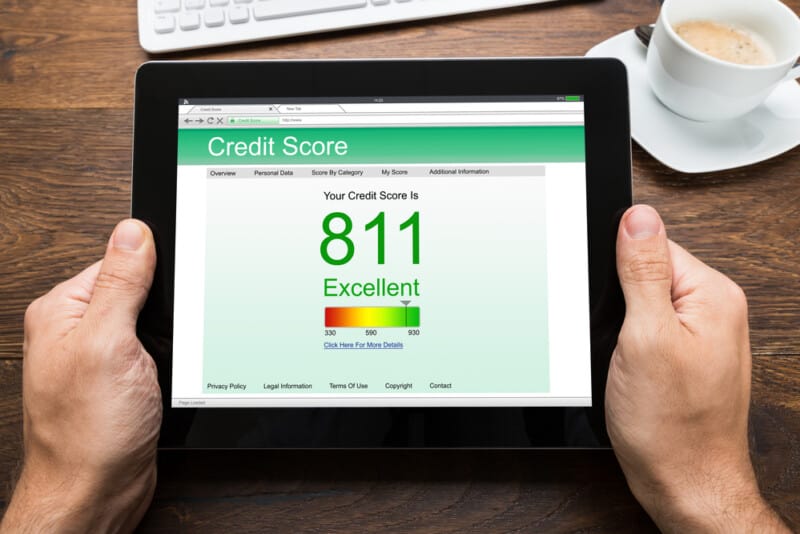
A credit score is what lenders look at when they are deciding whether or not they want to lend money to you.
The average American has a FICO score of 700, although credit scores do tend to improve by age.
Savings and Retirement Statistics
When it comes to personal finance statistics, a really important area that we tend to focus on is savings and retirement funds.
These are very important, as we don’t want it to come to a time when we don’t have enough money to live.
Saving Statistics
According to Marketwatch, 44% of Americans don’t have enough money to cover a $400 emergency. This is important as it means that they may have to rely on debt for something like this.
In 2017, the Federal Reserve said that the average savings rate per person is 5.6%.
Retirement Statistics
Your retirement savings may not be where they want to be, but that doesn’t mean that you can’t change things.
Unfortunately, there are a lot of Americans who don’t have a lot of money saved for retirement – 13.7% have $0 saved, and 28.6% have less than $10,000 (report from GoBankingRates).
Employment & Side Hustle (Secondary Income Stream) Statistics
Following on from retirement savings statistics, would it then surprise you that there is a large percentage of Americans who are planning on working after retirement age?
80% of Americans plan on doing this in fact, according to a report from Employee Benefit Research Institute.
In 2018, the average income per household in America was $63,179 (U.S. Census).
In June 2020, payroll employment increased by 4.8 million, and unemployment went down to 11.1%.
Percentage of Americans With More Than One Income Stream (not including investments, pensions, and similar)
An article on Bankrate showed that there are 45% of Americans who have multiple streams of income outside of their main job, that is not investing, pensions, etc.
There is also the statistic that 3 in 10 Americans say that they need the additional income to be able to pay for their bills.
What Do All These Personal Finance Statistics Mean To You? (Final Thoughts)
When you are looking at what other people are spending their money on, it’s easy to compare and think that you aren’t doing a good job.
If you are looking at the statistics in this article, don’t allow yourself to feel bad about it.
You may not be where you want to be right now, but that doesn’t mean that you can’t turn things around.
Use these statistics as a source of inspiration, and use them to get motivated with working on your finances.
Think about how looking at these make you feel, and make adjustments as needed.
-

Essential Personal Finance Rules: Build Wealth & Achieve Financial Security
Personal finance can be such a complex matter that it can sometimes be hard to tell if you’re on track and making the right moves. We’ve pulled together some top personal fina
-
The Unexpected Link Between Frugality and Wealth
In a recent article in The Atlantic, Joe Pinsker shared some thoughts on why many ultrarich people arent satisfied with their wealth. There seem to be two reasons. First, people tend to ask th
finance
- Top Personal Finance Software: Reviews & Comparison - [Year]
- Personal Finance: A Comprehensive Guide to Planning & Management
- Smart Money Management: Essential Personal Finance Tips
- Top Personal Finance Books to Build Wealth & Financial Security
- Boost Your Financial Well-being: How a Money Club Can Help
- Mastering Personal Finance: Why It's Crucial for Your Future
- Top 10 Personal Finance Podcasts
- Wealth-Building Strategies: 23 Proven Personal Finance Tips
- Key Personal Finance Statistics for 2021: Trends & Insights
-
 Cash Over Gifts? Study Reveals Americans' Holiday Spending Preferences
It’s the season of giving, and Americans are speaking up about what they really want for the holidays this year. Hint: more than likely, it’s something green that doesn’t grow on Christma...
-
 Kaizen: Continuous Improvement for Personal Finance & Life
Kaizen is a Japanese philosophy that focuses on continuous improvement throughout all aspects of life. A rough translation for Kaizen is “change for the better.” Kaizen became popular in Japan during ...