
Hong Kong Monetary Authority (HKMA): Role & Stability of the HKD
What is the Hong Kong Monetary Authority (HKMA)
Established in 1993, the Hong Kong Monetary Authority (HKMA) acts to control inflation and maintain the stability of the Hong Kong dollar (HKD) and of the banking sector through its monetary policy. The HKMA links the HKD to the U.S. dollar to help the HKD maintain a stable value.
Understanding the Hong Kong Monetary Authority (HKMA)
Hong Kong is a key finance capital for the People's Republic of China, and it's a place for multinational companies to set up operations. As a Special Administrative Region of the People's Republic of China, Hong Kong is an autonomous territory with its own currency and an annual nominal GDP of more than $365 billion as of 2019. The HKMA acts as a de facto central bank for the region.
The HKMA maintains a sovereign wealth fund called the Hong Kong Monetary Authority Investment Portfolio. The HKMA is a member of the Executives' Meeting of East Asia-Pacific Central Banks along with the Reserve Bank of Australia, the People's Bank of China, the Bank of Japan, and seven other central banks.
HKMA Responsibilities
One of the key roles of the HKMA is maintaining currency stability. The Linked Exchange Rate system is designed to stabilize the exchange rate between the Hong Kong dollar (HKD) and the United States dollar (USD). The fixed-rate exchange system seeks to maintain parity with the USD within a tight range, allowing HKD note-issuing banks to issue new banknotes only when they deposit an equivalent value of U.S. dollars with the authority. The exchange rate tends to fluctuate within a set range. The HKMA has one of the world's largest currency reserves in relation to its economy.
The authority operates the Exchange Fund. The fund's primary objective "to affect, either directly or indirectly, the exchange value of the currency of Hong Kong." The Fund may also be used to maintain the stability and integrity of Hong Kong's monetary and financial systems to help maintain Hong Kong as an international financial center.
The HKMA is charged with promoting the stability and integrity of the financial system, including the banking system. One of the key ways the authority does this is by buying HKD to maintain parity with the dollar within the stated range. As of 2021, the fixed-rate system has kept interest rates ultra-low in Hong Kong, encouraging expansion and investment. But low-interest rates have also fueled a record home price boom in the territory, creating affordability problems.
-

Monetary Assets: Definition, Examples & Key Characteristics
Monetary assets are assets that carry a fixed value in terms of currency units (e.g., dollars, euros, yen). They are stated as a fixed value in dollar terms even when macroeconomic factors, such as in
-

Expansionary Monetary Policy: Tools & Examples
There are several actions that a central bank can take that are expansionary monetary policies. Monetary policies are actions taken to affect the economy of a country. The key steps used by a centra
foreign exchange market
- Investing in China Stocks: A Guide for Foreign Investors
- Hong Kong Dollar (HKD): Currency Overview & Key Facts
- Hong Kong Monetary Authority (HKMA): Role & Function
- HIBOR Explained: Understanding the Hong Kong Interbank Offered Rate
- Hong Kong Monetary Authority Investment Portfolio: Overview & Role
- Hong Kong Stock Exchange (HKEX): Overview & Key Facts
- Hong Kong Introduces New Limited Partnership Fund Regime for Enhanced Investment
- Hong Kong Alternative Funds: Insights & Future Trends
- Hong Kong Explores Central Bank Digital Currency (CBDC) - e-HKD
-
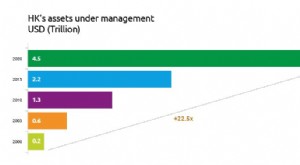 Hong Kong Joins Australia's Exchange of Information: Investment Opportunities
The agreement will help to boost investment in Australian assets through Hong Kong. Jeremy Brugmans, Commercial Director, Intertrust Group Australia, and Quinten Kah, Commercial Director, Intertrust G...
-
Inc Authority vs. LegalZoom: LLC Formation Comparison & Review
Research is the most obvious route to take when seeking help to establish an LLC. Why? It will allow you to whittle down your list and remain with strong contenders based ...