
Ethereum Classic (ETC) Mining: A Comprehensive Guide
The reason ETC can be mined is because of its consensus mechanism--like Ethereum, ETC also is a Proof-of-Work (PoW) cryptocurrency.
Let’s explore each as it relates to Ethereum Classic (ETC).
Choosing an Appropriate ETC Wallet
The mining begins with choosing an appropriate wallet capable of storing ETC. It’s worth mentioning that there are many wallets capable of holding Ethereum, but there are less that can hold ETC, so make sure if you are mining ETC, to find a wallet that is an ETC wallet, not an ETH wallet. All ETH wallets aren’t created equal.
Once you have an ETC wallet, you need to find and download mining software, which differs depending on whether you have an NVIDIA GPU or AMD GPU.
ETC’s Hardware Requirements
The mining begins with choosing an appropriate wallet capable of storing ETC. It’s worth mentioning that there are many wallets capable of holding Ethereum, but there are less that can hold ETC, so make sure if you are mining ETC, to find a wallet that is an ETC wallet, not an ETH wallet. All ETH wallets aren’t created equal.
Once you have an ETC wallet, you need to find and download mining software, which differs depending on whether you have an NVIDIA GPU or AMD GPU.
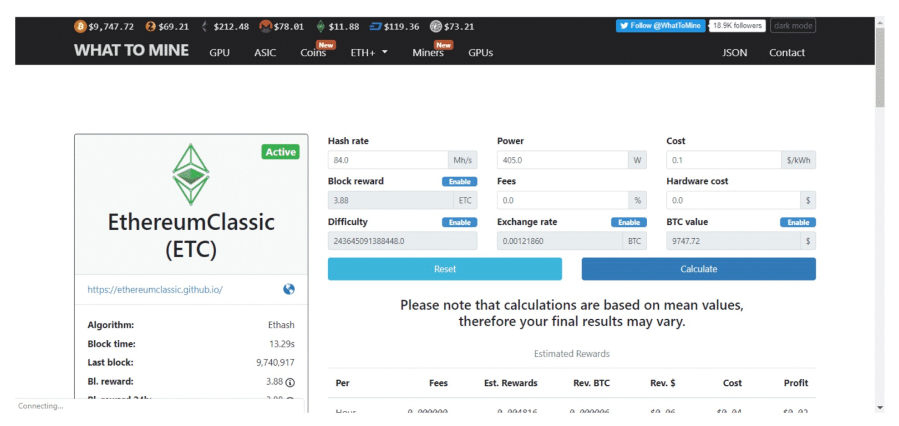
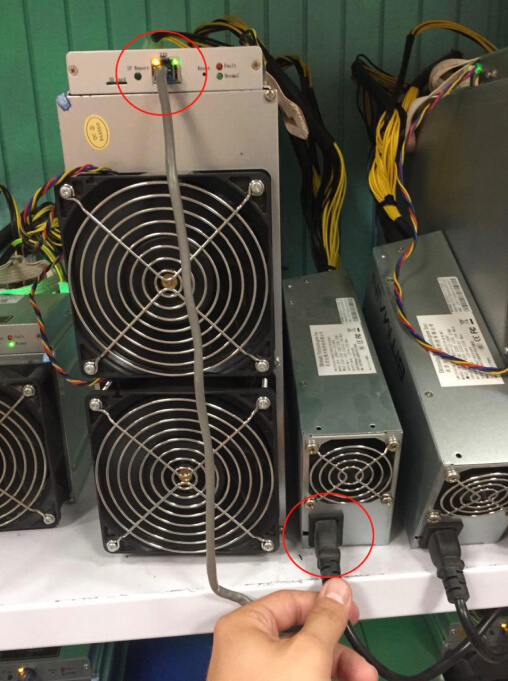
Compared to Ethereum (ETH) and Bitcoin (BTC) mining, ETC’s hardware requirements are significantly lower in that ETC can be mined on GPUs, rather than ASIC rigs. However, an individual has the choice to use either ASIC or GPU, both of which require an appropriate power supply. The GPU rig also imposes the usage of a motherboard, which in turn takes all the cards into a single power unit.
For this reason, the higher-end NVIDIA graphics like 1080 and 1080i and a minimum of 4GB RAM, either dedicated video RAM or system RAM. Equally important is having an unlimited internet bandwidth which provides for unlimited traffic. It’s fair to assume that you would need at least 500MB of traffic for each device per day.
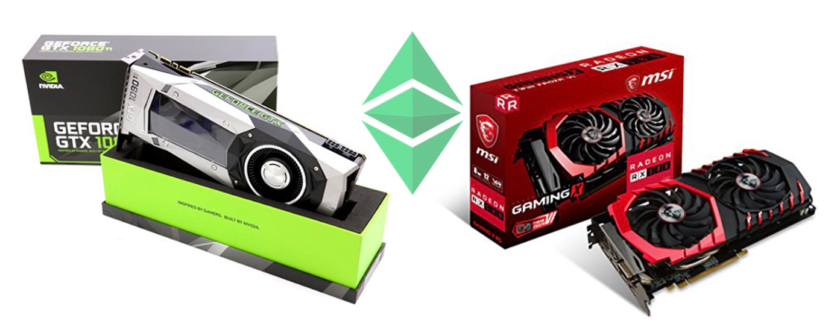 Nvidia and AMD GPU cards used in ETC Mining
This makes it more suitable for miners. But it does help to have a powerfully, custom-built gaming desktop with an NVIDIA or AMD graphics card.
For those who don’t want to concern themselves with all the technical requirements of mining can use MinerGate, which provides a graphical user interface and has no setup requirements other than downloading the application and letting MinerGate know what ETC address to send coins to. While this is an easy solution, it also provides the lowest returns.
Choosing a Pool
Once an individual has created a wallet and chosen the appropriate hardware, the next step is choosing a pool. You must decide whether you want to solo mine or join a mining pool.
Generally, pool mining is more profitable than solo mining, where an individual instead receives a small part of the rewards of the entire pool. In plain, there is some consistent income coming in. In most mining pools, an individual gives up approximately 1% of their mining profits, but combining hash power with other miners allows for an individual to receive regular payouts.
ETC offers a variety of choices for mining pools, most notably Nanopool or Ethermine. If you choose Nanopool, you are provided instructions to follow. Once you make your selection of ETC and proceed with installation, you will be required to provide certain inputs, like server location, algorithm, OS and graphics card information.
Once the hardware is set up, continue through the installation process and you will be on your way to start mining.
-

Ravencoin Mining Guide: Hardware, Profitability & Resources
Ravencoin (RVN) is a Bitcoin fork that enables the issuance of tokens. Feel free to check out the official website and block explorer to get more familiar wi
-
Siacoin Mining: A Comprehensive Guide to ASIC Mining
Sia aims to provide an open-source, low-cost solution for decentralized cloud storage. Mining Siacoin (SC), the network token, is only profitable using ASICs.
Fund information
- Beam Cryptocurrency Mining: A Comprehensive Guide
- Bitcoin SV Mining: A Comprehensive Guide to BSV Mining
- Bitcoin Mining Guide: A Comprehensive Introduction
- Conflux Mining Guide: Start Earning CFX Rewards - [Year]
- Dash Cryptocurrency Mining Guide: Hardware & Resources
- Decred Mining Guide: A Comprehensive Overview of DCR
- Ergo Mining Guide: Get Started with f2pool
- Ethereum Mining: A Comprehensive Guide for GPU Miners
- Firo Mining Guide: Secure & ASIC-Resistant Cryptocurrency
-
Nervos (CKB) Mining Guide: Hardware & Profitability
Currently, Nervos (CKB) is mined via Proof of Work under the Eaglesong algorithm. GPUs are supported. Feel free to check out the official website and block e...
-
Pigeoncoin Mining Guide: GPU Setup & Strategy
Pigeoncoin (PGN) is a community-operated project that aims to end data collection in social media. Pigeoncoin is a fork of Ravencoin and is mined using X21S, ...