
Navigating Risk with Futures Spreads: A Hedging Strategy
Traders are attracted to the futures market because of its fast pace, leverage, and flexibility. Yet, those benefits also come with the risk of large, directional moves that can catch unprepared traders on the wrong side of a trade. For instance, recent volatility in energy and interest-rate futures reminds us to consider using spreads as a way to keep a long-term perspective while softening short-term risk.
Futures Spreads
A futures spread is simultaneously buying one futures contract while selling a related contract. This might be the same underlying contract, but with a different delivery month. Or, it might be two different underlying assets whose price movements react in similar ways to the same factors. The goal is to profit from changes in the differential of the contracts, rather than the outright price change in only one contract. Essentially, you’re removing the directionality of the trade. You’re also limiting the risk of your trade—and your profit—to the widening and narrowing of the spread. This can be a unique benefit.
Calendar Spreads
A calendar spread is the buying and selling of the same futures contract with different delivery months. Buying a calendar involves buying a contract with a near-term expiration, and selling a second contract with a longer-dated expiration. A short calendar is the opposite. (Note: this is the opposite convention for currency and equity-index futures.)
For example, as of this writing, the difference between the Feb ’16 (/CLG6 $41.52) and Mar ’16 (/CLH6 $42.66) crude oil futures is -$1.14. (See Figure1, below.) This spread has been widening for several months, and is now wider than it’s been over the past 12 months. If, at the time, you believed the nature of price movement in the market was mean-reverting, you might conclude from this chart that buying this spread would be appropriate. To buy the calendar spread, you’d buy the Feb ’16 contract and sell Mar ’16 contract against it. You profit if the spread narrows. And you’ll likely lose if the spread widens.
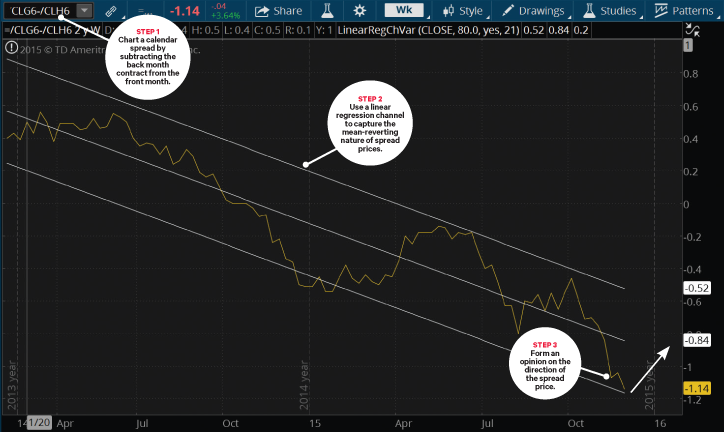
FIGURE 1: CALENDAR SPREADS, FUTURES STYLE
Not completely unlike it’s equity-options brethren, there are some nuances in futures calendars to be aware of. For one, charting them in thinkorswim requires a different type of symbol. But the analysis is a simple three steps. Source: thinkorswim® by TD Ameritrade. For illustrative purposes only.
Managing Risk
Although spread trading can be less risky than an outright futures position, you’ll still need to be cautious. Related markets generally move in the same direction based on the same fundamental information. But there are times when spreads can be equally volatile. Positions should be monitored frequently, even if it’s considered a longer-term investment or hedge. Likewise, positions should be carefully sized to avoid putting too much capital at risk. Always enter and exit both sides of the spread trade at the same time. Avoid exposing one side of the position to more risk.
Traders should always have a stop-loss point. The challenge in spread trading is that stop-loss orders become more complicated and are typically handled manually. Yet, don’t be lulled into the idea that risk might be small because it’s moving slowly. Be disciplined to stop yourself straight out of the trade.
-

Backwardation Explained: Understanding Futures Market Dynamics
What Is Backwardation? Backwardation is when the current price, or spot price, of an underlying asset is higher than prices trading in the futures market. Key Takeaways Backwardation is
-
Understanding Futures Convergence: A Guide for Traders
What Is Convergence? Convergence is the movement of the price of a futures contract toward the spot price of the underlying cash commodity as the delivery date approaches. Key Takeaways
Futures trading
- Intermarket Spreads: Understanding & Trading Strategies
- Index Futures: Understanding Contracts & Trading Strategies
- Understanding Five Against Bond Spread (FAB) Trading Strategy
- Understanding Five Against Note Spread (FAN) Futures Strategy
- Understanding Futures Contracts: A Beginner's Guide to Futures Trading
- Navigating Locked Limit Futures: A Trader's Guide
- Futures Spreads: A Risk Management Strategy for Sophisticated Traders
- Commodity Risk Hedging Strategies: A Guide for Producers & Traders
- Stock Futures Investing: Strategies & Risk Management
-
Introducing Brokers (IBs) in Futures Markets: A Comprehensive Guide
What Is an Introducing Broker? An introducing broker (IB) is a broker in the futures markets who has a direct relationship with a client, but delegates the work of the floor operation and trade...
-
 Contango Explained: Understanding Futures Price Dynamics
What Is Contango? Contango is a situation where the futures price of a commodity is higher than the spot price. Contango usually occurs when an asset price is expected to rise over time. That r...