
Navigating Market Volatility: Understanding and Managing Witching Days
There’re plenty of things investors should probably have a healthy sense of fear about, but arguably, “witching” is no longer one of the biggies.
All the risk that once hit the markets on a single Friday each quarter when contracts for stock index futures, stock index options, stock options, and single-stock futures all expire is now spread over a longer time period. When “triple” witching—or as some call it, “quadruple” witching—looms, you don’t necessarily have to run and hide anymore.
“Witching day isn’t the event it once was,” said JJ Kinahan, chief market strategist at TD Ameritrade. “Back when ‘witching’ was huge, S&P 500 Index futures and options contracts only had a Friday expiration. Now there are Monday, Wednesday, and Friday expirations. So now you have the whole week. There are also weekly options, which allow more opportunity to roll over risk. The individual investor today has more options—it’s a pun, but it’s true.”
Back in the Olden Days ...
A couple of decades ago, volatility associated with triple witching (which got the “quadruple” label after single-stock futures debuted in 2002) sometimes meant not being 100% certain of your position going into the weekend. If, for example, the index fluctuated around an options strike in which you held a short position, you might not know whether (or how many) of those options would be assigned to you.
And remember, we’re talking about the days before electronic order matching; every trade detail—counter-party, price, quantity, and contract month—was negotiated in a pit, and not all the information matched up;
Witching could also be tough on the average retail investor, who didn’t typically have access to the same information as traders on the floor.
From his current perspective, Kinahan can look back fondly on those times, even though it wasn’t as easy for retail investors back then.
Pit Traders Once Held the Cards
“It was great when it was in its heyday,” Kinahan said, discussing his memories of triple witching in the days when he was a young trader in the Chicago pits. “As a market maker, it was fantastic because you held a lot of information and had a lot of knowledge as to what was trading. It was a very volatile few days with lots of opportunity.”
The volatility would often start a day or two before expirations and last right up to the closing minutes, he recalled. Pit traders held a big advantage at the time because they had a physical presence at the point of price discovery. “When I was a young man, we’d see the order flow,” Kinahan remembered. But even pit traders sometimes suffered nasty surprises.
“Today, market-on-close orders have to be in by 3:40 p.m. ET,” Kinahan said. “But back then there were many different rules, so big orders would go in with a minute left, and you could have giant moves with one minute left.”
Retail investors at the time had no access to the order flow and risked sharp losses if they held positions into the close, according to Kinahan. Although triple witching occurred only once a quarter, options expiration at the end of each month was another day that put retail investors at a disadvantage.
Newer Rules and Better Technology Smooth the Process
Rules put into place since then have smoothed out the process a great deal, and technology also helps protect retail investors against the more dramatic impacts of witching.
- The rule Kinahan cited about market-on-close orders being due at 3:40 p.m. ET—20 minutes before the New York Stock Exchange’s closing bell—means there’s less chance of a last-minute shock.
- Another development that has helped calm things down is the availability of weekly options, as mentioned earlier. These allow more opportunity to roll over risk, Kinahan said, and tend to smooth out the process.
- Additional products have also helped cool off the market over the years, including the advent of exchange-traded funds (ETFs). “You used to have less product selection in general, with no ETFs,” Kinahan recalled. “Everyone relied on a few main indices and futures. It was a very narrow set of products and time frames, which meant everything happened in an exponential fashion.”
- Electronic trading technology means any trader with the right tools can now have as much access to the order flow as Kinahan did when he was in the pits, leveling the playing field to some extent. And orders are matched in real time and sent directly to the clearinghouse, so errors are generally rectified in short order.
“Electronic trading has evened the playing field so the retail trader has a fair shot and can manage risk."
“As a retail trader, the fact that it’s different now is a much better thing,” Kinahan said. “Electronic trading has evened the playing field so the retail trader has a fair shot and can manage risk. All orders are now electronic, so it’s not just traders in a pit. Markets are more efficient, and swings are less dramatic in the last few minutes of the day.”
Retail Investors Still Need to Be on Their Toes
All that said, triple (or quadruple) witching still occurs on the third Friday of March, June, September, and December, and those remain days when investors might want to exercise a little more care, just as Kinahan did in the pits long ago.
“I still think you have to be aware of it,” Kinahan said. “Some of the big houses might still use that day because the expirations of their positions match up better. But the good news is there’s no disadvantage for the retail trader on those days. At every expiration, you should have a heightened sense that there might be more movement at the open or close as people unwind baskets of stocks or futures. On every expiration, you should be aware, and on quadruple witching, you have to be more aware.”
Are options the right choice for you?
While options trading involves unique risks and is definitely not suitable for everyone, if you believe options trading fits with your risk tolerance and overall investing strategy, TD Ameritrade can help you pursue your options trading strategies with powerful trading platforms, idea generation resources, and the support you need.
Learn more about the potential benefits and risks of trading options.
Dan Rosenberg is not a representative of TD Ameritrade, Inc. The material, views, and opinions expressed in this article are solely those of the author and may not be reflective of those held by TD Ameritrade, Inc.
-

US Stock Market Performance & Diversification Strategies - August Review
For capital markets, August was all about America. US stocks were up, the US dollar was up, and just about everything international was down. The divergence was driven by superior domestic earnings gr
-

Stimulus Check Outlook: Economic Strength Doesn't Warrant Another Round
Many Americans really want a stimulu
Futures trading
- DirecTV Now Price Increase: What It Means for Cord-Cutters
- Retirement Planning: Debunking Common Myths & Securing Your Financial Future
- American Savings Crisis: Why Most Americans Lack Emergency Funds & Don't Worry
- 6 Essential Traits of Successful Investors | [Year]
- Healthy Eating Costs: Examining the Price of Wellness
- The Happiness Advantage of Having Choices: How Options Boost Well-being
- US Household Debt Surges to Record Highs: What You Need to Know
- The Power of Music in Retail: Boosting Sales & Brand Experience
- Top 3 Investments: Lessons Learned & Common Strategies
-
 Americans' Emergency Savings Rise Above Credit Card Debt: Bankrate Survey
The COVID-19 pandemic and its economic fallout have provided a stark reminder of the importance of building an emergency fund to help keep your finances afloat when the unexpected happens.Bankrate&#x...
-
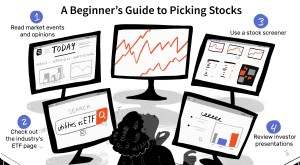 Stock Picking for Beginners: Essential Investment Strategies
So youve finally decided to start investing. You already know that a low P/E ratio is generally better than a high P/E ratio, that a company with a lot of cash on its balance sheet is superior to on...