
ACA Repeal: Potential Tax Cuts and Impacts on Families

Overturning the Affordable Care Act would mean tax cuts for some households as well as the nation's wealthiest people, according to an analysis released Monday by a progressive think tank in Washington, D.C.
The Center on Budget and Policy Priorities published its analysis as a federal appeals court in New Orleans weighs the constitutionality of the ACA, also known as Obamacare — one of the biggest legislative accomplishments of the 44th president's tenure.
Eliminating Obamacare also means eliminating some of the taxes on families that made funding its provisions possible. That includes a 0.9% Medicare tax on single Americans earning more than $200,000 annually and couples earning more than $250,000 annually, according to CBPP.
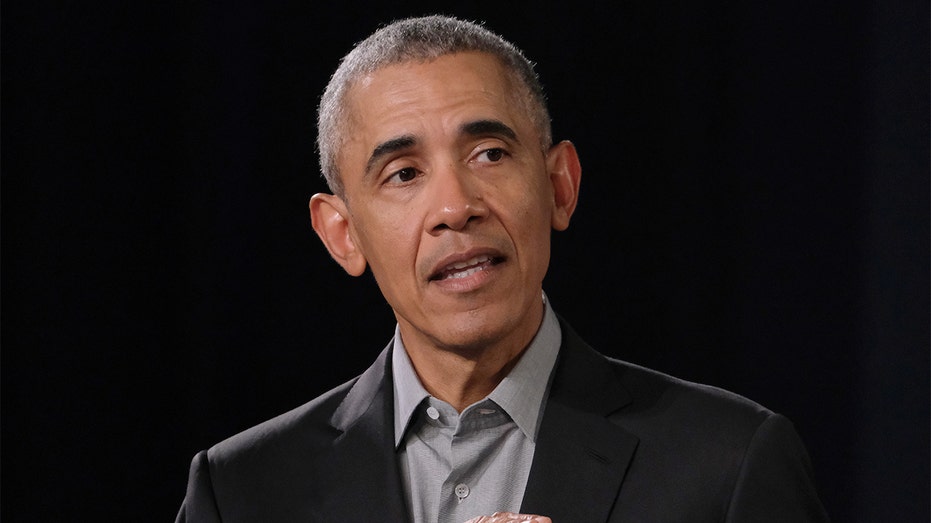
Former U.S. President Barack Obama speaks to young people April 06, 2019 in Berlin, Germany. (Photo by Sean Gallup/Getty Images)
A 3.8 percent Medicare surtax on net investment income that applies to the above earners would also disappear. In total, such high-income households would get tax cuts of $45 billion per year if Obamacare is overturned, according to CBPP.
CBPP's report also focused on the tax cuts the nation's wealthiest households would receive if Obamacare went away. The top 0.001% of households with incomes of $53 million apiece would receive approximately $3.8 billion in combined tax cuts, CBPP calculated.
ELIZABETH WARREN'S MEDICARE-FOR-ALL PROPOSAL WOULD COST JEFF BEZOS $7 BILLION

Doing away with Obamacare would equal a "massive transfer of income from low- and moderate-income Americans to people on the top rungs of the income ladder," according to CBPP's report.
The outcome of the lawsuit to overturn the ACA will affect millions of Americans and could leave up to 32 million people without health insurance by 2026, according to a Congressional Budget Office report from 2017.

GET FOX BUSINESS ON THE GO BY CLICKING HERE
Premiums for policies purchased through marketplaces or directly from insurers, meanwhile, would likely increase by 20 percent to 25 percent in the first year of the new plan, following the enactment, according to the CBO. By 2026, the increase is expected to climb to 50 percent following the elimination of the Medicaid expansion. Average premiums would also likely spike as a result.
Repealing the ACA has been a long-standing goal of President Trump and Republicans, but they failed to do so in 2017 when the Senate narrowly missed the necessary number of votes.
CLICK HERE TO READ MORE ON FOX BUSINESS
In 2018, U.S. District Judge Reed O'Connor in Fort Worth, Texas, struck down the law as unconstitutional because Congress rolled back the individual mandate. O'Connor is a conservative Republican and has previously blocked other policies implemented under former President Barack Obama.
The federal appeals court's decision, which could come any day, was the next step after O'Connor's ruling.
FOX Business' Megan Henney contributed to this report.
-

Real Estate Tax Deductions: A Comprehensive Guide for Homeowners
Real estate tax deduction is one of the best benefits that a homeowner enjoys, but that does not mean you have to own a house to availing this tax exemption. There are other ways also to qualify for t
-

Why File Your Taxes Early? 3 Key Benefits
There's much to be gained by ge
insurance
- Tax Debt Discharge in Bankruptcy: Chapter 7 & 13 Explained
- Tax Implications of Investing: A Comprehensive Guide
- Late Tax Filing Consequences: What Happens If You Miss the Deadline?
- Tax Forms Checklist: Essential Documents for Federal & State Filing
- Tax Filing Guide for Entrepreneurs: Essential Tips & Strategies
- LLC Tax Benefits: Maximize Your Savings & Business Growth
- Unemployment Benefits & Taxes: What You Need to Know
- Understanding & Minimizing Capital Gains Taxes
- Maximize Your Savings: 5 Smart Tax Strategies for 2019
-
Spousal IRA: Tax Benefits and Contributions
When dealing with a spousal IRA, there are several tax issues that you will need to consider. This type of IRA can be a good way to set up a retirement account for your spouse that does not work...
-
Retirement Income Tax Planning: Strategies for Seniors
You will be required to pay income taxes in your retirement. Any income you receive during that period, including Social Security payments, pension payments and retirement fund withdrawals will ...