
Growth Investing Strategies: A Comprehensive Guide for Investors
Investors can take advantage of new growth investing strategiesStock Investment StrategiesStock investment strategies pertain to the different types of stock investing. These strategies are namely value, growth and index investing. The strategy an investor chooses is affected by a number of factors, such as the investor’s financial situation, investing goals, and risk tolerance. in order to more precisely hone in on stocksStockWhat is a stock? An individual who owns stock in a company is called a shareholder and is eligible to claim part of the company’s residual assets and earnings (should the company ever be dissolved). The terms "stock", "shares", and "equity" are used interchangeably. or other investments offering above-average profit potential. When it comes to investing in the stock market, there are always a variety of approaches that can be taken. The goal, however, is generally always the same, regardless of the approach – grow your investments and increase your profits.
Growth investors are continually on the hunt for individual stocks or stock-related investments – such as mutual funds or exchange-traded fundsExchange Traded Fund (ETF)An Exchange Traded Fund (ETF) is a popular investment vehicle where portfolios can be more flexible and diversified across a broad range of all the available asset classes. Learn about various types of ETFs by reading this guide. (ETFs) – that are poised to grow and offer the potential for greater profit. The investments you make should, of course, always fall in line with your personal short-term and long-term financial goals, risk toleranceRisk Averse DefinitionSomeone who is risk averse has the characteristic or trait of preferring avoiding loss over making a gain. This characteristic is usually attached to investors or market participants who prefer investments with lower returns and relatively known risks over investments with potentially higher returns but also with higher uncertainty and more risk., and a number of other factors. Still, there are basic techniques, principles, and strategies that growth investors can follow that suit virtually any individual investing plan.
In this guide, we want to explain growth investing as a strategy itself, and then break down more specific approaches and strategies that growth investors can employ.
To learn more, check out all of CFI’s free Trading GuidesKnowledgeCFI self-study guides are a great way to improve technical knowledge of finance, accounting, financial modeling, valuation, trading, economics, and more..

The Basics of Growth Investing
Growth investing is essentially the process of investing in companies, industries, or sectors that are currently growing and are expected to continue their expansion over a substantial period of time. In the investment world, growth investing is typically looked at as offensive rather than defensive investing. This simply means that growth investing is a more active attempt to build up your portfolio and generate more return on the capital that you invest. Defensive investing, in contrast, tends more toward investments that generate passive income and work to protect the capital you’ve already earned – such as bonds or blue-chip stocks that offer steady dividends.
Investing in Hot Sectors
One approach growth investors can take is to invest in stocks, mutual funds, and ETFs based on specific sectors and industries. The success of businesses in various sectors changes over time. However, it’s usually fairly easy to identify sectors that are “hot” in the sense of producing above-average returns for publicly traded companies.
For example, two sectors that have been particularly hot for a couple of decades or more are healthcare and technology. Companies that deal with technology, technological advances, or are constantly putting out new hardware, software, and devices are good picks for growth investors. The same is true for companies in the healthcare sector. Think about it logically: Everyone, at some point, needs to care for their health and there are companies that are constantly developing new medications, therapies, treatments, and places to go to access this care. The healthcare sector is likely to continue enjoying rapid growth as it serves an aging baby-boomer generation. In fact, these two sectors are related, as many recent technological developments have actually been advances in healthcare technology.
Growth investors can simplify sector investing by taking advantage of investment vehicles such as mutual funds and ETFs that contain a basket of stocks linked to specific sectors. ETFs are an increasingly popular investment option due to their superior liquidity and lower trading costs as compared to mutual funds.
To learn more, check out all of CFI’s free Trading GuidesKnowledgeCFI self-study guides are a great way to improve technical knowledge of finance, accounting, financial modeling, valuation, trading, economics, and more..
Understanding Earnings
For growth investors in stocks, understanding a company’s net earningsNet IncomeNet Income is a key line item, not only in the income statement, but in all three core financial statements. While it is arrived at through is essential. This doesn’t mean simply knowing their current earnings, but also considering their historical earnings as well since this enables an investor to evaluate current earnings relative to a company’s past performance. Also, reviewing a company’s earnings history provides a clearer indication of the probability of the company generating higher future earnings.
A high earnings performance in a given quarter or year may represent a one-time anomaly in a company’s performance, a continuing trend, or a certain point in an earnings cycle that the company continues to repeat over time.
It’s also important to understand that even companies with relatively low, or sometimes even negative, earnings may still be a good pick for a growth investor. Remember that earnings are what’s left over after subtracting all production, marketing, operating, labor, and tax costs from a company’s gross revenue. In many instances, smaller companies attempt to make a breakthrough by funneling more capital toward growing their business, which may negatively impact their earnings in the short run, but in the long run generate higher returns and greater profits for investors. In such a situation, smart investors consider other factors, such as the quality of a company’s management, to ascertain clues as to the company’s true growth potential.
Learn more about earningsNet IncomeNet Income is a key line item, not only in the income statement, but in all three core financial statements. While it is arrived at through.
Growth Investing Through Value Investing
Growth investors are effectively value investors sometimes, in that they seek out companies whose stock may be currently undervalued due to reasons that may be as simple as the fact that the company is relatively new and has not yet caught the attention of many investment analysts or fund managers.
The goal is to grab up shares at a low price of a company that is well-positioned to enjoy a sizeable and continued surge in growth. There are a number of possible ways to approach identifying such companies, one of which we’ve already touched on – looking at companies in hot sectors. Investors who can identify a new, well-managed and well-funded company that is part of a hot sector can often reap substantial rewards. Another possible approach is to examine companies that are on the downslope, such as those that have gone through bankruptcy or reorganization but are likely to survive and recover.
Using the Price-to-Earnings Ratio
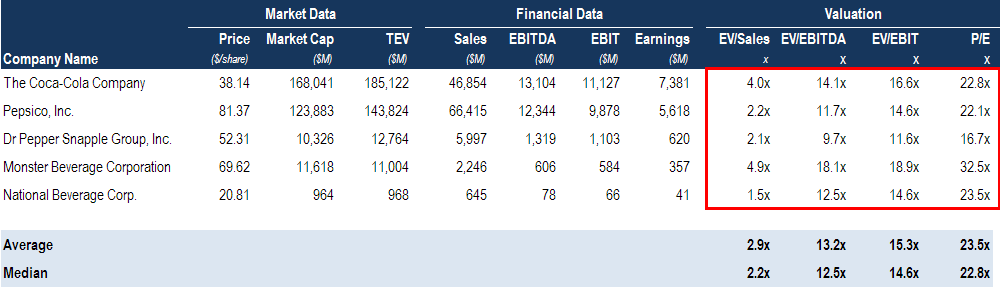
The price/earnings (P/E) ratioPrice Earnings RatioThe Price Earnings Ratio (P/E Ratio is the relationship between a company’s stock price and earnings per share. It provides a better sense of the value of a company. is a tool that growth investors often use to help them in choosing stocks to invest in. As the ratio’s name makes evident, you have to understand a company’s earnings before you can effectively use the tool.
Generally speaking, the higher the P/E ratio, the greater the risk investors are willing to take on a company because of its projected earnings and growth rate.
The P/E ratio is particularly useful for growth investors who are trying to compare companies that operate in the same industry. In established industries and sectors, there tend to be average P/E ratios for that particular industry or sector. Knowing such industry or sector averages makes a company’s P/E ratio a much more useful number than simply looking at it in comparison to the market as a whole.
Looking at a company’s P/E ratio remains a useful analytical tool for growth investors, but adding consideration of another fundamental financial metric can help to fine-tune your investment picks.
Learn more about the P/E ratioPrice Earnings RatioThe Price Earnings Ratio (P/E Ratio is the relationship between a company’s stock price and earnings per share. It provides a better sense of the value of a company..
 Price Earnings RatioThe Price Earnings Ratio (P/E Ratio is the relationship between a company’s stock price and earnings per share. It provides a better sense of the value of a company.
Using the Price-to-Book Ratio
The price-to-book ratio – or P/B ratio – is often considered more the basic analytical metric of value investors as opposed to growth investors. However, the fact is that the P/B ratio can also be utilized as an effective tool in identifying stocks with high growth potential.
The P/B ratio is calculated by dividing a stock’s per-share price by the book value per share. In order to determine the book value of a stock, preferred stock that has been issued must be subtracted from the total stockholder equity. The figure calculated from this takeaway must then be divided by all common shares still outstanding. The final number is the company’s book value per share of stock. It is often helpful for investors, especially growth investors, to compare a company’s book value to its market value. This comparison can provide a good indication of whether a stock is undervalued or overvalued. Companies with high growth potential are frequently undervalued due to heftier debt loads and capital expenditures.
Let’s put this ratio to use. For this example, we’re going to use the S&P 500 Index. A growth investor would, in theory, take a look at all of the stocks, calculating or looking up the P/B ratio for each. Regardless of how the stocks are listed, the growth investor could rearrange them according to their P/B ratio, starting with the highest numbers and ending with the lowest. The companies that fall within the top third of the list would be considered potentially good growth stock picks. Keep in mind that this isn’t a precise science, but more of a helpful example that growth investors can employ to identify and add stocks with the greatest potential for growth to their portfolios.
High-Risk Growth Investments
Growth investing may also extend into investments beyond traditional stock market investing.
Investing in high-risk growth investments – also referred to as speculative investments – is an approach that is not suited for investors with a low threshold for risk. This is a strategy best suited for growth investors who are looking for maximum profits within a relatively short time frame and who have sufficient investment capital to sustain them during possible periods of losses.
High-risk investments include such things as futures, options contracts, foreign currency exchange (forex), penny stocks, and speculative real estate such as land that hasn’t been developed. These investments involve greater risk in that they offer no guaranteed return and their value tends to change quickly (in other words, they’re subject to greater volatility). However, the draw for many investors is that when such investments pay off, they often pay off big.
If you’re considering any of these investments, remember that research is key to success. More so than the average stock or bond investor, you have to know the market you’re investing in very well. Because success is based largely on speculation, we strongly recommend that only experienced investors roll the dice on investment assets such as these.
A Final Note
The reality is that there is a multitude of methods that growth investors can employ in finding investments to complement their existing investment portfolio. As we’ve pointed out, there are also more growth investors who are implementing different tools to help them spot growth stocks and snatch them up at relatively lower prices, with the belief or confidence that these companies will experience considerable growth in the near future. In the end, it is always up to each individual investor to choose the methods that work best for them personally, but it is also always helpful to be aware of different approaches to identifying investments with the greatest potential for providing future profits.
Related Readings
- Investing: A Beginner’s GuideInvesting: A Beginner's GuideCFI's Investing for Beginners guide will teach you the basics of investing and how to get started. Learn about different strategies and techniques for trading
- How to Read Stock ChartsHow to Read Stock ChartsIf you’re going to actively trade stocks as a stock market investor, then you need to know how to read stock charts. Even traders who primarily use fundamental analysis to select stocks to invest in still often use technical analysis of stock price movement to determine specific buy and sell, stock charting
- Technical Analysis: A Beginner’s GuideTechnical Analysis - A Beginner's GuideTechnical analysis is a form of investment valuation that analyses past prices to predict future price action. Technical analysts believe that the collective actions of all the participants in the market accurately reflect all relevant information, and therefore, continually assign a fair market value to securities.
- Stock Investment StrategiesStock Investment StrategiesStock investment strategies pertain to the different types of stock investing. These strategies are namely value, growth and index investing. The strategy an investor chooses is affected by a number of factors, such as the investor’s financial situation, investing goals, and risk tolerance.
-

Stock Rights & Warrants: A Guide for Investors
Companies that need to raise additional capital can do so by issuing additional shares of stock. However, these additional shares will dilute the value of existing shares, which can be a concern for
-

Factor Investing: A Comprehensive Guide to Strategy and Benefits
Factor investing is an investment strategy that involves choosing assets based on a certain set of factors or attributes. Investors who want to follow a factor investing approach should identify chara
invest
- Unlock High Growth: Understanding the Benefits of Growth Stock Investing
- Value Investing: A Comprehensive Guide for Stock Investors
- Strategic Stock Selling: A Guide to Profitable Exits
- Penny Stocks: A Comprehensive Guide to Trading & Investing
- Investing in Stocks for Beginners: A Step-by-Step Guide
- Index Investing: A Beginner's Guide to Building Wealth
- Value vs. Growth Investing: A Clear Explanation
- Stock Options Investing: Risks, Rewards & Beginner Guide
- Investing in Stocks: A Beginner's Guide to the Stock Market
-
 Growth Stocks vs. Value Stocks: Which is Right for You?
Growth stocks generally do better in a bull market than value stocks do. While some investors choose to add only value stocks to their portfolio, others focus mainly on growth stocks. Each ty...
-
Day Trading Guide: Strategies for Short-Term Stock Investing
If you are thinking about venturing into stock day trading, you may want to go through this brief stock investing guide to help you understand day trading, and plan the strategies that can help y...