
Nasdaq 100 Index: Key Facts & Top U.S. Companies
The Nasdaq 100 Index is a basket of the 100 largest, most actively traded U.S companies listed on the Nasdaq stock exchange. The index includes companies from various industries except for the financial industry, like commercial and investment banks. These non-financial sectors include retail, biotechnology, industrial, technology, health care, and others.
Weighting the Index
The index is constructed on a modified capitalization methodology. This modified method uses individual weights of included items according to their market capitalization. Weighting allows constraints to limit the influence of the largest companies and balance the index with all members. To accomplish this, Nasdaq reviews the composition of the index each quarter and adjust weightings if the distribution requirements are not met.
Trading the Nasdaq 100 Index
The Nasdaq 100 is traded through the Invesco QQQ Trust. This product is designed to track the performance of the 100 largest companies on the Nasdaq exchange. Each company in the trust must be a member of the Nasdaq 100 and be listed on the broader exchange for at least two years. Also, listed stocks need to have an average daily trading volume of 200,000 and publicly report earnings quarterly and annually.
Some exceptions are made for newly public companies that have extremely high market capitalizations. Companies with bankruptcy issues are omitted from the Invesco QQQ Trust. On occasion, the composition of the trust may not identically match the Index, but the main objective of the QQQ is still to track the price and performance of the underlying index.
Composition of the Nasdaq 100 Index
The Nasdaq 100 Index is composed of assets in various sectors, excluding financial services. A large portion of the index covers the technology sector, which accounts for 54% of the index's weight. The next largest sector is consumer services, represented by companies like restaurant chains, retailers, and travel services. These stocks account for nearly a quarter of the cap weight thanks to the continued growth of retail giant Amazon (AMZN). Rounding out the index is healthcare, industrials, and telecommunications. The diversity of companies included in the Nasdaq 100 helped drive strong returns for the past two decades.
Criteria for Eligibility
For inclusion in the Nasdaq 100, index securities must be listed exclusively on a Nasdaq exchange. This can include common stocks, ordinary shares, American depositary receipts (ADRs), and tracking stocks. Twenty-seven countries are tied to companies represented in the index. Other grounds for inclusion comprise market capitalization and liquidity. While there is no minimum requirement for market capitalization, the index itself represents the top 100 largest companies listed on the Nasdaq.
-
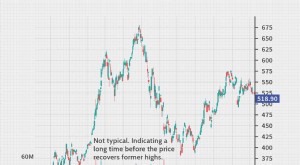
Ulcer Index (UI): Measuring Downside Risk in Trading
What Does Ulcer Index Mean? The Ulcer Index (UI) is a technical indicator that measures downside risk in terms of both the depth and duration of price declines. The index increases in value as
-
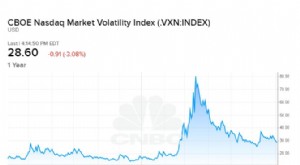
Understanding the VXN: CBOE Nasdaq Volatility Index Explained
The CBOE NASDAQ Volatility Index (VXN) is a measure of market expectations of near-term volatility conveyed by NASDAQ-100 Index (NDX)NASDAQ-100 IndexThe NASDAQ-100 Index is a stock market index that i
Investment fund
- Understanding Performance-Based Stock Indexes: A Comprehensive Guide
- Understanding Stock Market Indexes: A Comprehensive Guide
- Profitability Index (PI): A Comprehensive Guide
- Nasdaq Composite Index: Definition & Key Information
- Index Investing: A Beginner's Guide to Passive Investing
- Understanding Composite Indexes: A Guide for Investors
- NASDAQ OMX 100 Index: Definition, Composition & Key Facts
- Relative Strength Index (RSI): A Comprehensive Guide to Trading
- NASDAQ Index Fund: A Comprehensive Guide for Investors
-
 Understanding Market Neutrality: Strategies for Consistent Returns
What Is Neutral? Neutral describes a position taken in a market that is neither bullish nor bearish. In other words, it is insensitive to the direction of the markets price. If an investor has ...
-
Diffusion Index: Understanding Market Strength & Momentum
What Is a Diffusion Index? Used in technical analysis, a diffusion index measures the number of stocks that have advanced in price or are showing positive momentum. It is useful for determining...