
Protecting Your Down Payment: Secure Storage Options for Homebuyers
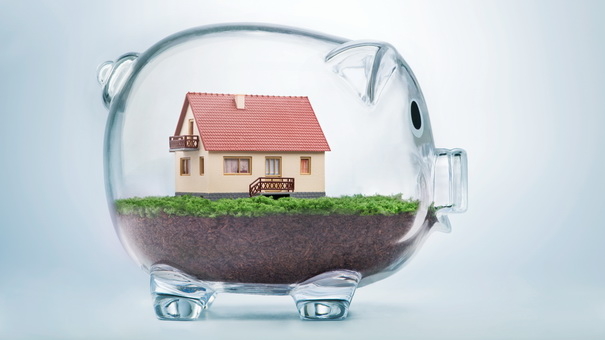
I am in the market to buy my first home in the next few years. I have been saving and researching for a long time, and have learned many of the ins and outs of home buying, thanks to real estate agents, financial advisers, and friends who have generously shared their expertise with me.
Living in New York City, the trickiest part of the process is saving up for a down payment. I have been diligently stashing money away for the past two years, and have become curious about whether or not I am parking my funds in the best place. Here is what I discovered. (See also: 4 Easy Ways to Start Saving for a Down Payment on a Home)
The definition of a near-term purchase
The time horizon of your home purchase can dictate where to place your down payment savings. A near-term purchase is one that will occur in three years or less. If that fits your time horizon for buying a house, the best thing to do is to save your money in high-yield savings, money market, and CD (certificates of deposit) accounts. For near-term purchasers, the critical point of consideration is keeping your money liquid. Of course, you'll still want to compare interest rates from different banks, but keep in mind that you won't be earning a whole lot from these types of accounts.
There is a strategy to using CD accounts
If you decide to use CD accounts for your down payment savings, you will want to use what is known as the ladder method. Let's say you have $10,000. The ladder method instructs you to place $2,500 in a three-month CD, $2,500 in a six-month CD, $2,500 in a nine-month CD, and the final $2,500 in a one-year CD. Here's why: If rates go up, you can quickly take the money returned to you each quarter and place it into the higher-yield account.
Unlike savings and money market accounts, there are penalties for early withdrawals from CDs. If you think there is a chance that you may need your funds for emergency purposes of any kind, it is best to skip CDs and just place the money into a savings or money market account that you can withdraw from at any time without penalty.
There are additional options for longer-term home purchase plans
If you have a longer-term plan for your new home purchase, there are some additional vehicles that may be worth your consideration. Bond funds can sometimes provide a return of 2 to 4 percent, which is significantly higher than savings, money market, or CD accounts. If this option interests you, there are a few points to keep in mind.
Bond funds lose value if interest rates rise, so it is best to consult an experienced financial adviser to get a sense of what is likely to happen to interest rates in the next few years. That said, no one has a crystal ball — so while a financial adviser can make a very educated guess, they cannot guarantee what will happen with interest rates. Risk is a part of investing. Also, unlike savings, money market, and CD accounts, bonds are not insured by the FDIC and you could lose money by investing in them.
The bottom line on down payment savings
Retirement savings can afford to be invested in vehicles like stocks and bonds because we often have decades before we will use the funds. That long time horizon means retirement accounts can weather the risks of a fluctuating market. Down payment funds usually do not have the luxury of time, so investing them in stocks or bonds carries a higher risk.
If you are considering uninsured tools such as bond funds for your down payment savings, know and understand your time horizon, risk profile, and the likely trend of the market rates. That combination of factors will determine the best place to save your down payment funds, and eventually, buy the place you will call home.


Personal finance
- High-Yield Savings Accounts for Home Down Payments | [Bank Name]
- Boost Your Homeownership: How High-Yield Savings Accounts Help with Down Payments
- Next Steps for Your Finances: Maximizing Savings After Reaching Your Emergency Fund
- Navigating Rising Interest Rates: Secure Your Savings
- Smart Financial Steps After Buying Your First Home
- Hidden Costs Draining Your Savings? Identify & Fix These Home Expenses
- Down Payment Savings: Strategies for Homeownership
- Best Places to Store Your Home Down Payment Savings
- Top 7 Personal Finance Apps: Reviews & Comparison (2024)
-
 Short-Term Savings: Optimal Places to Keep Your Cash
For a short-term savings alternative, where should you turn? If you have a long-term investment strategy, then you understand the importance of making your money work for you. But do you apply that sa...
-
 Secure Your Future: Why a High-Yield Savings Account is Ideal for Emergency Funds
You'll want to make smart choices about what to do with your savings. ...