
Debt Payoff Strategies: Proven Methods to Eliminate High-Interest Debt
-
 by
Fiona Smith
by
Fiona Smith
- Updated April 2, 2025

Disclosure: This post may receive compensation from partners listed through affiliate partnerships, at no cost to you. This doesn’t influence our ratings, and the opinions are our own. Learn more here.
There are many guides out there on how to get out of debt fast, but here’s what makes this one unique:
I’ve used the exact strategies in this blog post to help my clients pay off $100,000s in high-interest debt.
And in this post, I’m going to share with you the same 9 ways to get out of debt that I gave to my clients so you can do the same.
Before we dive into the 9 strategies on how to get out of debt fast, I think it’s important to reveal my 3 rules for getting out of debt and staying out of debt permanently:
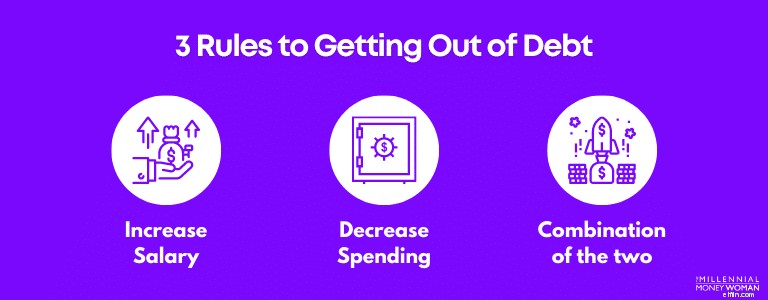
It’s that simple.
If you spend as much (or even worse – more than) you earn, your chances of getting out of debt are very slim, if any.
Now that you know my rules, let’s dive right in!
1. Understand Your Current Debt
Before you even think of pulling out your checkbook and start paying toward your debt, it’s so important to understand your current debt position.
Before you pay off your debt, know how much debt you are in.
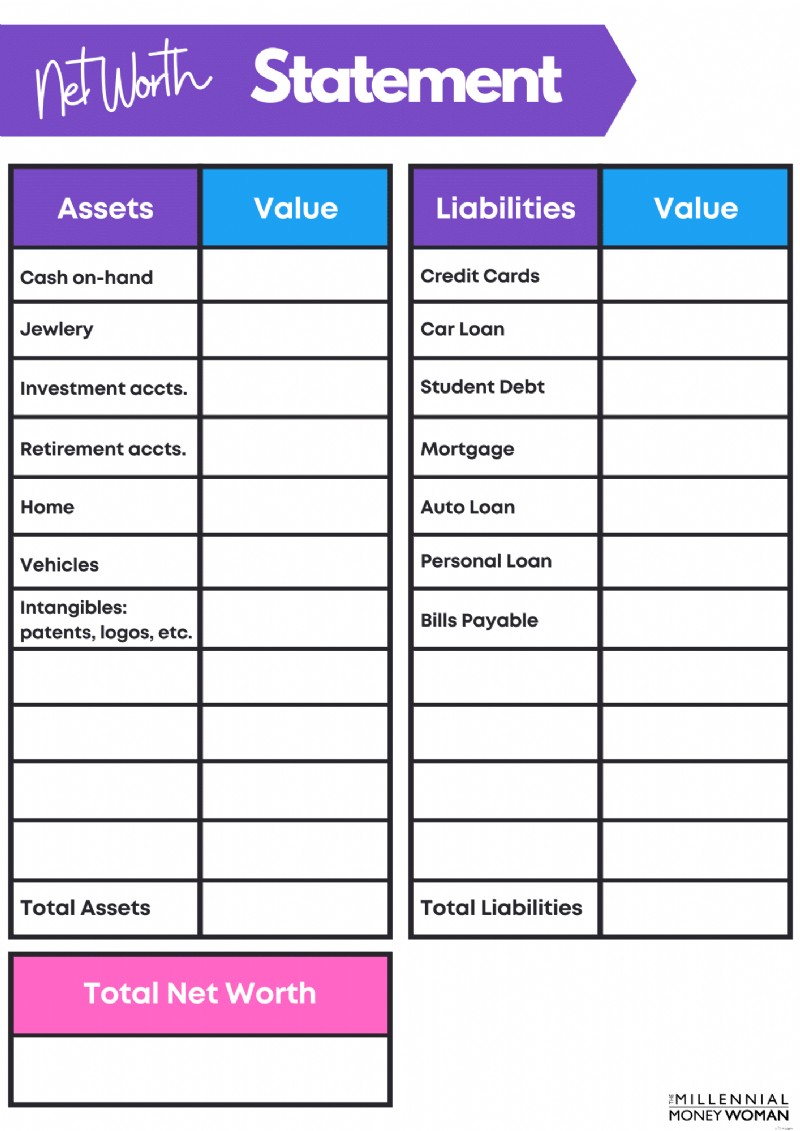
If you want to know how much debt you are in, it’s time to figure out your net worth.
If you haven’t tracked your net worth yet, then check out my free net worth statement template below.
It’s basic but it also gets the job done.
Free Net Worth Template
Sign up below to receive my free net worth template and my latest content updates.
Your net worth will help you gain a better overview of your debt picture.
However, you need to dig further into your debt picture and list the following:
- List your current debt balance
- List the current debt interest rates
Here’s an example:
Credit Card 1
$5,000
29%
Credit Card 2
$2,000
24%
Home Equity Line of Credit
$50,000
10%
Yes, I know it’s uncomfortable to see the raw data as to how much debt you owe, but that’s the only way you can create a game plan to get out of debt, starting today.
2. Track Your Expenses
Guys and gals – if you want to know the very first step to getting out of debt – it’s about understanding how much debt you have.
And to know how much debt you have, you first need to understand the following:
- How much you earn
- How much you spend
It’s really that simple.
You can’t go through life ignoring the numbers – and trust me, coming from a person who is not particularly fond of math, I know that numbers can be daunting.
To become financially successful, become your household’s CFO.
That was probably the best financial advice I ever received (from my multi-millionaire mentor), and it’s time for me to pass this advice on to you.
How do you become the household CFO?
By understanding your income and your expenses… in other words, become familiar with your budget!
If you’re not entirely familiar with some of the budgeting basics, let me illustrate some basic rules for you:
Monthly housing debt
How much you should be spending on your monthly housing bills, including:
– Taxes
– Interest
– Principal
– HOA fees (if any)
– Home owner’s insurance
< 28% gross monthly income
Total consumer debt
Any debt that is a short-term loan (can be repaid within 1 year). This includes:
– Credit cards
– Lines of credit
– Cash advances
< 20% of net monthly income
Total monthly debt
Any debt payments – both long-term and short-term.
< 36% of gross monthly income
As I said, these are budgeting rules of thumb, so take these numbers with a grain of salt.
However, if you find yourself grossly overspending on credit card debt, for example, you’ll know that you will need to make a life change so you can find financial freedom.
Now, if you’re like me – you’ll probably want an app that is:
- Efficient
- Low cost
- User friendly
- Helps you save money
- Points out where you’re overspending
I can’t operate without having a visual effect, so that’s why I would recommend checking out You Need A Budget.
3. Create a Needs, Wants & Wishes List
Next, it’s time to figure out what I like to call your needs, wants, and wishes list.
Needs
Basic living expenses – you must spend this money to survive:
– Rent
– Food
– Utilities
Wants
Expenses that you want to spend, but don’t necessarily need to spend:
– Eating out
– Electronic gadgets
– Going out to the movies
Wishes
Expenses that you would like to spend, but that typically cost a lot and you don’t need to survive:
– Vacations
– New homes
– New (not used) cars
Figure out which of your expenses fall under the needs vs. wants vs. wishes category… and cut out any expense that doesn’t fall under the needs category.
Is that a bit extreme?
Absolutely – but if you are drowning in debt, then you have to take some rather extreme measures to climb out of that hole.
All of the money that you save by cutting out your…
- Wants
- Wishes
…Should now be redirected toward your debt – and I have the perfect 2 methods below (strategies 6 and 7) that could help you slash that debt in a fast and efficient manner.
4. Understand Your Long Term Goals
When you understand your “why,” you’ll see that your actions align with your goals.
Here’s an exercise I want you to do:
- Think about your short term goals – within the next 6 to 12 months
- Think about your mid term goals – within the next 1 year to 5 years
- Think about your long term goals – within the next 5 years and up
When I do this exercise myself, I find that I dig deep into figuring out what I want (and what my husband wants), which ignites our motivation so much more.
And that’s the key: Find the spark that ignites your inspiration and motivation.
Below are my motivations:
- Living a life free from the 9 to 5
- Never disappointing my family
- Never worrying about paying bills
- Having the time to do the things I want
You can’t get out of debt without a crystal clear reason.
That’s why it’s so important to understand your long term goals first, before you start acting.
5. Increase Your Income
Think back to the beginning of this article, where I talked about 3 simple rules to get out of debt and stay out of debt:
- Increase your salary
- Decrease your spending
- Combination of the two
Let’s talk about ways you can increase your income.
And no, I don’t mean simply wait for your employer to give you a raise…
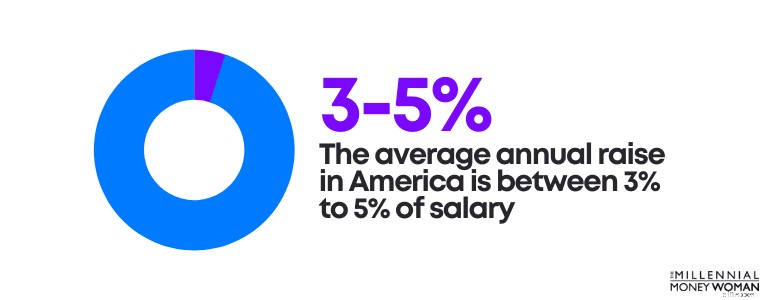
Image: The Millennial Money Woman | Source: Investopedia
You’ll be waiting a long time for your salary to increase to the level you need to pay off your debt.
Instead, consider increasing your income through… you guessed it, a side hustle or through passive income!
6. Use the Avalanche Method
One of my favorite ways to get out of credit card debt is by using what is known as the avalanche method.
Take the illustration below, sorting the debt based on interest rate, as an example.
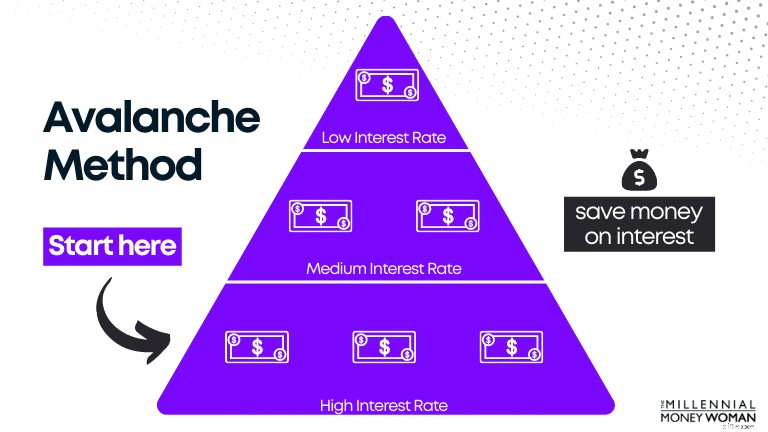
Here, you have different levels of debt, all with different interest rates.
You make minimum payments to all debts except the high-interest rate debt, where you make the most payments in an effort to eliminate the debt as fast as possible (meaning more money in your pocket).
Why do we start by paying off the highest interest first?
The higher the interest, the more money out of your pocket.
If you eliminate the highest interest payment first, you effectively “save” money on interest (as with our example, above).
7. Use the Snowball Method
The snowball method is similar to the Avalanche Method, except with 1 key difference:
- You list the debt balance from least to greatest
Take a look at the illustration below, which looks similar to the Avalanche illustration except it’s sorted based on debt balance, not debt interest rate.
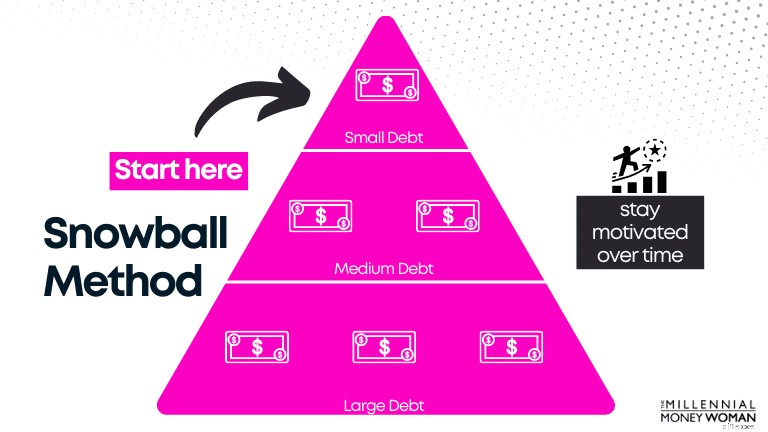
Note how you make the most payments toward your smallest balance debt first.
Once the smallest debt is eliminated, you make payments toward the next highest debt.
The reason why the snowball method may work more effectively than the avalanche method is because you may see more (and faster) successes with the snowball method, which can be very motivating.
If you see more success in a shorter amount of time, your behavior is reinforced.
This, in turn, means you’re more likely to practice these habits to see more success.
Below, I’ve created an illustration to show you the pros and cons of the snowball vs. the avalanche method:
Extra payments are made on
Smallest loan
Highest interest rate loan
Minimum payments are made on
Each debt monthly (excluding highest interest rate)
Each debt monthly (excluding highest interest rate)
When the first debt is paid off…
Pay off the next highest loan balance
Pay off the next highest interest rate
Easiest to stay on track
Yes
No
Saves the most money
No
Yes
Takes the shortest time?
Typically, yes
Often, no
With the avalanche method, although mathematically, it would save you more money, it might be more difficult to practice in real life, since it may take longer for you to see success.
It’s up to you to decide which debt payment strategy will help you accomplish your goals.
8. 0% Interest (or APR) Balance Transfer
The 0% interest balance transfer technique is a dirty little secret of mine – and I’ve recommended this trick to a few of my young professional mentees as well.
Let’s start by reviewing the definition of a 0% interest balance transfer.
In other words, you will not pay interest on the balance you just transferred for the 6 to 12 month promotional period, before you do have to pay interest again on your balance.
Let’s check out the pros and cons of a 0% balance transfer:
Take advantage of the 0% interest rate
May have higher interest rates after the 0% “promotional period” is up
Move your existing debt balance to a credit card with potentially better terms
There could be a balance transfer fee
Type of credit card consolidation method
You run the risk of racking up more debt instead of paying off your existing debt
Here’s when the 0% APR balance transfer will work:
- You are committed to paying off your debt during that 0% APR period
Please do not be like one of my colleagues I knew:
- She had $25,000 of credit card debt
- She transferred her $25,000 to a new, 0% APR credit card
- Instead of chipping away at her balance during the 0% period, she racked up another $5,000 of credit card debt – and ended up having to pay interest on $30,000 of total debt!
If you’re the type of person who doesn’t commit to paying off debt, then this strategy to get out of debt will not work in your favor – because you run the risk of adding more debt to your existing debt.
If that’s the case, I’d suggest considering strategy No. 9 (consolidating your debt).
9. Consider Consolidating your Debt
The last point to get out of debt is to consider consolidating your debt.
Let’s check out the pros and cons of debt consolidation:
Repay your debt sooner
Will not eliminate your financial problems – that’s up to you
Could pay less interest overall – since consolidation plans are fixed schedules (unlike with credit cards, where there is no repayment deadline)
– Loan origination fees
– Balance transfer fees
– Closing costs
– Annual fees
Typically, these costs are rolled into your overall debt, so you’ll pay these along with your monthly debt repayments.
Simplify your finances
Initially may lower your credit score (due to hard credit inquiry to set up the consolidation)
Have a fixed repayment schedule
You may have to pay a higher interest rate, depending on your credit score
In the long run, consolidating could improve your credit score – especially if your payment history is consistent
In the long run, consolidating could improve your credit score – especially if your payment history is consistent.
Consolidating could be a good idea if you:
- Are committed to paying off your debt and not racking up new debt
- Have a good credit score, meaning you can likely qualify for a lower interest rate
- Have too many debt bills and want to simplify your monthly budget (aka pay your bills to just 1 place)
Tally is an app that I would recommend if you are looking to:
- Make payments on time
- Save money in the long run
- Make your payments easier
- Find help managing your debt
- Reduce your overall credit card debt
To qualify for Tally, you must have a minimum FICO score of 660. I should mention that Tally is not available in all states.
Below is a list of states in America that would qualify for Tally:
- Arkansas
- California
- Colorado
- Connecticut
- Florida
- Illinois
- Louisiana
- Massachusetts
- Michigan
- Minnesota
- New Jersey
- New York
- Ohio
- Texas
- Utah
- Washington
- Wisconsin
- Washington D.C.
If you’re interested in exploring other types of debt consolidation loans, then I might also suggest for you to check out Upgrade 👇
With a personal loan through Upgrade you get a fixed rate and term with a clear pay-off date.
This can translate into savings while eliminating the surprises of a high-interest rates that can change any time.
Funds are sent directly to the account that you choose within a day of approval.
FAQs
How do I get out of debt with no money?
The first strategy I would consider to get out of debt with no money, assuming your credit score is in relatively good shape, is to use a 0% balance transfer credit card.
You won’t have to pay interest on your debt for a certain period of time (typically between 6 months to 12 months), which is when you have to commit to paying off your debt as much as possible.
The risk you run when you transfer your debt balance to a new credit card with a 0% APR promotional period is racking up additional debt.
How can I pay off debt if I’m broke?
To pay off your debt when you’re broke, start by creating a budget, increasing your income, making payments on time, figuring out your long-term goals, cutting out all unnecessary expenses, and staying consistent with your payments.
What is the easiest way to get out of debt?
The easiest way to get out of debt is to pay more than the minimum required payment. If you review your budget and expenses, stop spending money on things that you don’t need. That money should be used toward paying off your debt.
Closing Thoughts
The scariest step to getting out of debt is simply looking at your net worth statement and determining how much debt you really have.
Think about it this way:
If you start the journey to getting out of debt today, then today is the lowest point.
Tomorrow will be better and so will the day after tomorrow, and so on.
It’s scary to look at all of that bad debt, but it’s necessary if you want to build a solid financial future.
Remember to find your “why”:
- To build a better future
- To leave a lasting legacy
- To help your family prosper
Those are my reasons to keep working, earning money, and building wealth.
What is your “why”?
Join 30,000+ People That Get My Weekly Tips via Email
Every Saturday morning, you’ll get 1 actionable tip to help you save more money, increase your income, and multiply your wealth 👇
No spam. Just the highest quality tips on the web.
Join 30,000+ others and get access to exclusive tips, strategies, and resources that I don’t share anywhere else 👇
-

Student Budget Snapshot: Balancing College Costs with Parental Support
Editor’s note: There are many different ways to pay for college, and this snapshot shows a student with some support from parents. If you’re a student who is using loans through college, we’d l
-

Credit Builder Loans: Improve Your Credit Score - A Comprehensive Guide
Many or all of the products here are from our partners that pay us a commission. It’s how we make money. But our editorial integrity ensures our experts’ opi
Personal finance
- Accelerate Debt Repayment: Proven Strategies & Tips
- July Deals & Discounts: 4 Hot Savings for Summer 2024
- Combating Evictions: How Individuals Can Make a Difference
- Oregon Unemployment: Job Search Requirements & Benefit Updates
- Financial Planning for Parents: 5 Essential Money Moves
- Financial Planning Before Quitting Your Job: 3 Essential Steps
- Understanding High-Net-Worth Individuals (HNWIs): Definition & Assets
- Bitcoin Trading & Investing: 5 Essential Strategies for Success
- Privacy Policy: Do You Need One? | Legal Requirements & Best Practices
-
 Achieving Financial Soundness: Definition & Roadmap
What does Financially Sound really mean? If someone asked if you were financially sound, would you know how to answer? Even more so, could you explain how to get there? First, let me help ...
-
 Understanding Deductible Waivers in Insurance: What You Need to Know
When you take out an insurance policy, you usually have to accept a "deductible." This is an amount you'd have to fork over before the insurer will pay a claim. For example, if your home...