
Understanding Roundoff in Mutual Funds: A Simple Explanation
A mutual fund is not bought on the basis of the number of shares. It is bought on the basis of units. Through this blog, we will explain to you the concept of roundoff in a mutual fund.
Let’s begin!
How are Mutual Funds Bought and Sold?
A mutual fund is basically a pool of money accumulated from more than one investor for the purpose of investment in different asset classes.
They can be bought through investment platforms or even the AMC directly.
Mutual funds, unlike direct stocks are bought and sold on the basis of units. Let’s explain this to you on the basis of an example.
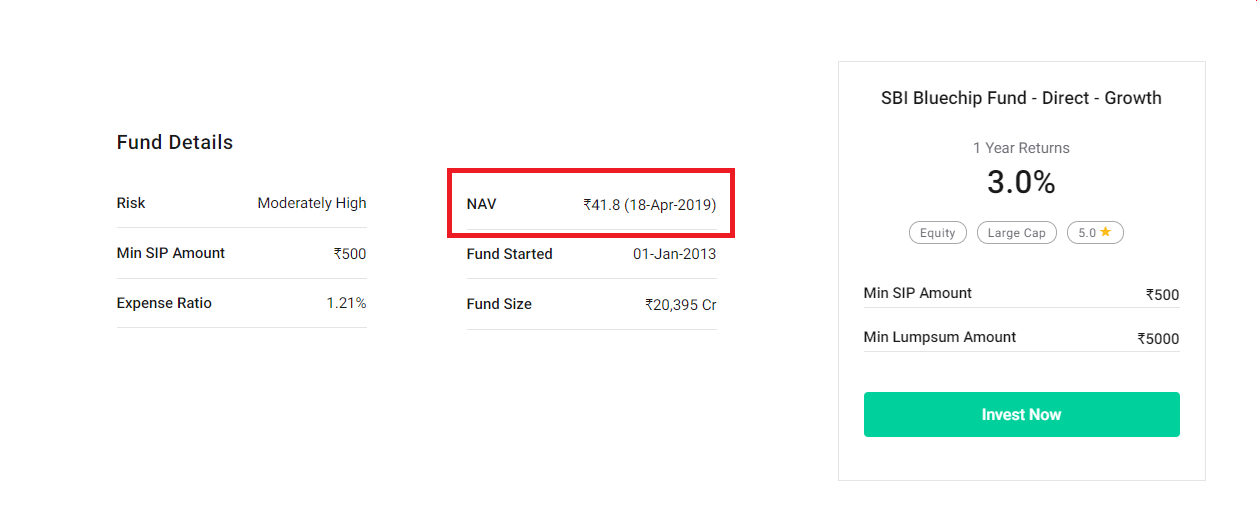
Now let’s say you invest Rs. 5000 in SBI Bluechip Fund. The NAV of which is Rs. 41. 8. The calculation is as follows:
5000/ 41.8 = 119.61
Which means you own 119.61 units of that mutual fund. At this time when you look at your dashboard, you will see that the investment amount will be Rs. 4,999.6.
So where did the Rs. 0.4 go?
When you multiply Rs. 119.61*41.8 = 4,999.6, the 4 paisa remains with the fund itself.
Similarly, many times, you may even get a few paisas extra depending on the NAV of that day.
Should You be Worried?
Absolutely not!
This is an almost negligible amount which you should not be worried off when trading in a mutual fund.
Happy Investing!
Disclaimer: The views expressed in this post are that of the author and not those of Groww
-

Index Funds: 3 Key Benefits for Investors
If you want to be sure of making a profit on your investment, and have already decided on a mutual fund, index funds might be the next addition to your portfolio. These types of funds invest in
-
Infrastructure Funds: Understanding the Risks & Challenges
Infrastructure funds are a type of mutual fund that invests in companies that are involved in infrastructure work in particular areas. While this type of investment might seem attractive to you,
Public investment fund
- Fund of Funds: Benefits & Risks Explained
- Understanding the Legal Framework of Mutual Funds
- Mutual Funds vs. Subaccounts: Understanding Your Investment Options
- Understanding Mutual Fund Drawdowns: A Guide for Investors
- Understanding Pooled Funds: Benefits & Investment Strategies
- Understanding Volatile Mutual Fund Returns: A Comprehensive Guide
- Understanding Mutual Fund Expense Ratios: A Comprehensive Guide
- Top Mutual Funds: Key Criteria & What to Look For in 2024
- Understanding the Role of a Fund Manager in Mutual Funds
-
When to Sell Your Mutual Fund: 4 Key Indicators
When people say “breaking up is hard to do,” they’re not talking about how difficult it is to say goodbye to a poorly performing investment. But knowing when to sell a fund that’s gone astray is trick...
-
ETF vs. Mutual Fund: Understanding the Key Differences
When constructing an investment portfolio, you’ll probably include a variety of stocks and bonds among the securities you purchase. Stocks and bonds can be purchased individually or as part of a bundl...