
Smart Investing: Why High Returns Aren't Always the Best Indicator
Some times, you will see returns like this:
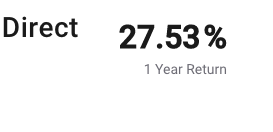 Looks tempting, right?
Rarely, but some times, you will also see returns like this:

Very very tempting.
So is this a sign of a very good mutual fund or…?
It could be a very good fund. Or, it could be a result of luck – something that can’t always be replicated.
Why Is Chasing Returns Not The Right Way To Invest?
1. Mutual Funds Are Of Many Types
Those that give higher returns usually also have a higher risk – and that is okay. You have to take a risk. But make sure you’re aware of the level of risk and are comfortable with it.
Higher risk mutual funds are better for a longer period of investment duration. Risky mutual funds are not suitable for short durations.
If you are investing for the long-term, you can invest in riskier funds. This is why investing for the long-term is advised. You can earn higher returns.
Have a look at this blog to understand more about risk, time, and category of mutual funds.
2. Many Times, Exceptionally High Returns Can Be One-Off Incidents
It won’t keep happening repeatedly.
Many mutual funds once in a while will suddenly perform very well for a very short period of time.
Some people invested in certain mutual funds when their last 1 year returns were showing around 50%. This was a one-off incident. Most people who invested in this fund at this time are seeing negative returns right now.
Sadly, many inexperienced investors start investing in such funds simply because they showed a peak in returns, without analyzing whether the fund strategy is in line with their investor profile.
Do Returns Not Matter?
Of course, returns matter! The entire point is to invest to be able to earn higher returns.
But it shouldn’t be the first thing to look at while investing.
Choose a category of mutual fund to invest in first, then choose the ones with consistently high returns.
So What’s The Solution?
It helps to know more about mutual funds and its various types. Have a look at this: beginner’s guide to mutual funds.
While choosing mutual funds, follow the steps below:
- Decide which categories and sub-categories to invest in based on your goals, investment duration, and risk appetite.
- Decide how much to invest in each of these categories.
- Then, choose good mutual funds in those categories.
Give preference to funds with consistent returns. Don’t invest in mutual funds that have given very high returns recently but have otherwise not given great returns
This way, you’ll be filtering out mutual funds that are not suited for you or have had a recent spike in performance.
Conclusion
Try to get the highest returns possible, but don’t use returns as the only factor while choosing a fund to invest in.
-

Understanding & Calculating Mutual Fund Cost Basis for Taxes
Trying to calculate your cost basis mutual funds for tax purposes can be complex, especially if you are not keeping up with it. The cost basis determines how much tax needs to be paid on the inv
-
Investing Internationally: Understanding the Benefits of Mutual Funds
International mutual funds are a type of investment that allows you to get involved in other financial markets and get away from the traditional financial markets. Here are the basics of interna
Public investment fund
- The History of Mutual Funds: Pioneering Investments & Their Origins
- Fund of Funds: Benefits & Risks Explained
- Understanding Volatile Mutual Fund Returns: A Comprehensive Guide
- ETF vs. Mutual Fund: Understanding the Key Differences
- Mutual Funds in India: 10 Essential Investing Tips
- Understanding Side Pocketing in Mutual Funds: Protection for Investors
- The 15*15*15 Rule: How to Achieve Financial Freedom with Small Investments
- Mutual Funds Explained: A Simple Guide to Investing
- Mutual Funds vs. Stocks: Understanding the Key Differences
-
Growth Mutual Funds: Potential & Benefits for Investors
If you want to invest your money in a reliable way, then you should consider growth mutual funds. These funds have a number of benefits which mean that you can get reliable income, as well as im...
-
Choosing the Right Mutual Funds: A Comprehensive Guide
If you are ready to invest your money into mutual funds but cant decide which to buy, you should ask yourself a few simple questions. The questions can help you determine which fund will fit int...