
Protect Your Social Security: Avoid These Common Benefit-Reducing Mistakes

Millions of seniors count on Social Security as a major source of retirement income. If you're planning to do the same, you'll need to do your part to avoid reducing your benefits -- and that could mean steering clear of the following mistakes.
1. Not working a full 35 years
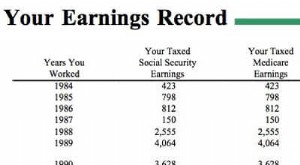
Your Social Security benefits are calculated based on your wages during your 35 highest-paid years on the job. But for each year you don't have an income on record, you'll have a $0 factored into your personal equation, thereby resulting in a lower monthly benefit.
To avoid that, make sure you put in a full 35 years in the workforce. Doing so could actually help boost your benefit in a couple of ways -- first, by avoiding those dreaded $0s, but also, by potentially factoring higher wages into your calculation. Many people earn more money later on in their careers than earlier on. If your earnings are now at their peak, and you work another year to make it a full 35, you may be adding a salary that's far greater than what you earned three decades prior (even though your previous wages will be adjusted for inflation when determining what monthly benefit you get).
2. Not waiting until full retirement age to file
Though your earnings history will determine your monthly Social Security benefit, you won't be entitled to collect all of it until you reach full retirement age, or FRA. Your FRA will hinge on your year of birth, and if you were born in 1960 or later, it's 67. Otherwise, it's 66, or 66 and a specific number of months. You can file for Social Security as early as age 62, but for each month you sign up ahead of FRA, your benefits will get reduced on a permanent basis. And that's a bad thing to have happen if you don't have a lot of money in retirement savings and need those benefits to ensure that you're able to make ends meet as a senior.
3. Delaying benefits beyond age 70
Just as you get the option to sign up for Social Security before FRA, so too can you delay benefits past FRA and boost them by 8% a year in the process. But don't postpone your filing too long. Once you turn 70, you'll stop accruing the delayed retirement credits that increase your benefits, so waiting beyond that point could mean missing out on income that could've otherwise been yours.
4 RETIREMENT PLANNING STRATEGIES TO LEAN ON IN UNCERTAIN TIMES
4. Retiring in a state that taxes benefits
Your Social Security benefits may be subject to federal taxes if your earnings exceed a certain threshold. But some states impose their own tax on Social Security as well. These 13 states tax benefits to some degree:
- Colorado
- Connecticut
- Kansas
- Minnesota
- Missouri
- Montana
- Nebraska
- New Mexico
- North Dakota
- Rhode Island
- Utah
- Vermont
- West Virginia
Now if you're a lower earner, you may qualify for an exemption in most of these states that will get you out of paying those taxes. But Minnesota, North Dakota, Vermont, and West Virginia offer no exemption whatsoever.
The last thing you want to do is slash your Social Security income and struggle in retirement because of it. Take care to avoid these mistakes to ensure that you get as much money from Social Security as you're entitled to.
CLICK HERE TO READ MORE ON FOX BUSINESS
-
Check Your Social Security Benefits Online: Estimator & Information
Last week, I drove out to the box factory to see my brother Jeff and my cousin Nick. Ostensibly, I made the trip to check up on Moms financial situation. Really, though, it was an excuse to spend
-

Social Security Taxes: Do You Have to Pay?
This is one of the most-often asked questions by many people who will soon start receiving Social Security. It has become especially common recently as a growing number of Americans are continuing to
retire
- Claim Social Security Early? 3 Benefits of Filing at 62
- Protect Your Social Security: 3 Ways to Avoid Losing Benefits
- COVID-19's Potential Impact on Social Security Benefits
- Social Security Claiming: 3 Essential Steps Before You File
- Protect Your Social Security: 3 Factors That Could Reduce Your Benefits
- Maximize Your Social Security Benefits: 4 Proven Strategies
- Maximize Your Social Security Benefits: A Comprehensive Guide
- Social Security Benefits & COVID-19: What You Need to Know
- Social Security Benefits: Optimal Timing Strategies for Retirement
-
401k and Social Security Disability: Understanding the Impact
If you have a disability that prevents you from working, you may be entitled to Social Security disability benefits. Your eligibility depends on your work history, and the amount of your benefit depen...
-
 Social Security COLA: How Your Benefits Are Calculated & What to Expect
Experts expect a modest increase in Social Security benefits will be announced this week, following a 1.6% bump in 2020. The Social Security Administration uses a formula to determine what the co...