
Secure Your Retirement: A Powerful Investment Beyond Social Security

Social Security benefits can go a long way toward providing a comfortable retirement, but many older adults depend on them too much.
Your monthly checks are meant to replace only around 40% of your pre-retirement income. But nearly one-quarter of married couples and close to half of unmarried beneficiaries depend on Social Security for at least 90% of their income in retirement, according to the Social Security Administration.
IS IT TIME FOR AN EARLY RETIREMENT? USE THIS CHECKLIST
And there's a chance benefits could be reduced. The money coming in from payroll taxes isn't enough to cover current retirees' benefits, so the SSA has been leaning on its trust funds to cover the deficit. Those trust funds are expected to be depleted by 2034, at which point the SSA will only be able to pay approximately 76% of projected benefits. In other words, your monthly checks could be slashed by nearly 25% if Congress doesn't come up with a solution relatively soon.
Because Social Security benefits may not be the safest form of retirement income right now, it's more important than ever to build a healthy retirement fund. And there's one type of investment in particular that can help ensure your senior years are financially secure.
Balancing risk and reward when investing
As you're investing for retirement, you'll want to be aggressive enough to earn relatively high rates of return, but safe enough that you don't risk losing your life savings if the market takes a turn for the worse.
That can be tough, but there's one type of investment to make it a little easier to balance risk and reward: index funds.
Index funds are large groupings of securities that track a certain index, such as the S&P 500 or the Dow Jones Industrial Average. Because you can't invest in the indexes themselves, investing in a fund that mimics an index's performance is the closest you can get. So, for instance, if you invest in an S&P 500 index fund, you're investing in the 500 companies that make up the S&P 500.
43% OF AMERICANS PLAN TO DELAY RETIREMENT DUE TO COVID-19
One of the most noteworthy proponents of index funds is world-renowned investor Warren Buffett. During the Berkshire Hathaway annual shareholders meeting in May, Buffett noted that "for most people, the best thing to do is to own the S&P 500 index fund."
The advantages of index funds
There are two major perks in an index fund. First, your investments are instantly diversified. You're investing in dozens or even hundreds of stocks at once. Diversification is key to building a healthy retirement fund because if a few of the stocks in your index fund don't perform well, you likely won't see drastic losses.
CORONAVIRUS FORCING EARLY RETIREMENT? HERE ARE YOUR OPTIONS
Of course, if the entire stock market falls, like we saw earlier this year, your index fund will likely drop in value as well. But the second advantage of index funds is that because they track indexes, they're more likely to recover from downturns.
Indexes like the S&P 500 are strong representations of the stock market in general. So if the market crashes, the S&P will fall as well. But historically, the stock market has recovered from every crash, no matter how severe. That means indexes like the S&P 500 will bounce back, and so will your index funds.
Are index funds right for everyone?
The downside to index funds is that they're simply average. Because they tend to follow the market, you won't see explosive short-term gains like you could with individual stocks. But for many people, average is good enough. You may not see your earnings skyrocket each year in an index fund, but you're also limiting your risk.
SHOULD YOU RETIRE IN 2020?
If you're looking to beat the market and maximize your investments, though, you may want to choose individual stocks. There's nothing wrong with this approach, and it can be a smart way to save. But it does involve a lot of time and commitment because you'll need to research each stock you invest in to ensure it's a solid company that will perform well over the long run. It can also get expensive because you should aim to invest in at least 10 to 15 different stocks to make sure you're diversifying your portfolio properly.
For those who want to take a hands-on approach, investing in individual stocks could be the right option. But if you're looking for a less research-intensive, "set it and forget it" way to invest, index funds could be your best bet. You may not see lucrative year-to-year gains, but slow and steady often wins the retirement race.
GET FOX BUSINESS ON THE GO BY CLICKING HERE
-
Average Social Security Benefit in May 2021: A Detailed Breakdown
Social Security offers a monthly benefit check to many kinds of recipients. As of May 2021, the average check is $1,430.73, according to the Social Security Administration – but that amount ca
-

Early Social Security Retirement: Weighing the Pros & Cons
When you are dealing with Social Security, early retirement may not always be in your best interests. Here are a few things to consider about when you should start taking Social Security benefit
retire
- Social Security Strategies for Married Couples: Maximizing Retirement Income
- Bitcoin vs. Social Security for Retirement: A Comprehensive Comparison
- Maximize Your Social Security Benefits: The Strategic Advantage of Claiming at 70
- Optimal Social Security Claim Age: Maximizing Your Retirement Benefits
- What Can You Buy with a Typical Social Security Check in 2019?
- Maximize Retirement Security: Understanding Social Security Benefits
- Social Security Garnishment: Understanding Debt Repayment by the Federal Government
- Social Security Benefits: When is the Best Time to Claim?
- Understanding Social Security Retirement Benefits: A Comprehensive Guide
-
Understanding the Modern Retirement Income Model: Beyond the Three-Legged Stool
The “three-legged stool” is an old phrase that many financial planners once used to describe the three most common sources of retirement income: Social Security, employee pensions, and personal savi...
-
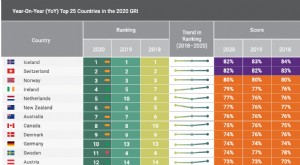 U.S. Retirement Ranking: A 2020 Global Overview
The U.S. ranked as the 16th best country to retire in for 2020, right in the middle of the pack when it comes to retiree conditions around the world. In 2020, the world was confronted by the coro...