
Understanding Market Liquidity: A Guide for Investors
A liquid market holds sufficient trading volume so that you are able to execute a trade near the price that is available in the market. Liquidity is often a function of the size of the trade you wish to make. Larger share quantities require greater liquidity. However, for most retail investors, a liquid market allows them to trade easily and quickly. A hallmark of a liquid market is a small spread between the bid and ask prices. Often, the spread is little as one cent, or a penny. This means that if you are willing to give up one cent, you can fill your order immediately.
-

Fair Value vs. Market Value: Understanding the Difference
Let's say you need to get something valued — an asset, property, shares of stock or a company. The valuer typically will apply a measure called "fair value" or "fair market value&qu
-
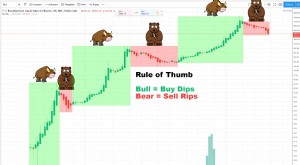
Bull Market vs. Bear Market: Understanding Trends & Trading Strategies
How to Tell the Difference Between a Bull Market and Bear Market… And How to Trade a Bull Market and Bear Market A bull market is when the price action is in an uptrend, a bear market is wh
Stock basis
- Market Basket: Understanding Market Basket Analysis & Index Funds
- Understanding Yo-Yo Markets: Volatility and Investment Strategies
- Understanding Bull Markets: A Comprehensive Guide
- Money Market Accounts vs. CDs: Which is Right for You?
- Understanding the Bullion Market: Gold & Silver Trading
- Primary Market: Definition, Function & How It Works
- Understanding Bear Markets: Causes, Characteristics & Impact
- Understanding Mid-Cap Stocks: Definition & Characteristics
- Understanding Liquid Markets: Definition & Key Characteristics
-
 Market Sentiment Analysis: Understanding Investor Confidence & Trading Decisions
Market sentiment analysis is a type of analysis that many individuals use to make stock trading decisions. Market sentiment is essentially the overall feel of the market. This could be described...
-
Understanding Market Growth: Factors & Trends
Market growth is the measure of how desirable a product or service is on the general market. It is essentially a measure of the change in demand over time. Of course, demand does not exist in a ...