
How Miann & Co. Scaled from Small Toy Business to Global Lifestyle Brand with QuickBooks Commerce
This case study features Miann & Co (formerly known as La De Dah Kids) and how they use QuickBooks Commerce to unify their entire order and inventory process. We spoke with Terry Meyer, director and co-founder of the company, to find out how he and his wife, Rebecca, took a small range of natural children’s toys and turned it into lifestyle brand for the whole family that ships 1,200 orders per month, globally.
 What inspired you to start your own business?
Our son suffered from allergies and eczema, so we needed toys that were made using natural fibres like 100% cotton. Although there were a lot of plush toys on the market, it was hard to find toys that had a handmade feel to them. We saw a gap in the market for these children’s products and La De Dah Kids (now rebranded as Miann & Co) was born.
What sets your brand apart?
We only use natural fibres like cotton and some of the clothing range is made from organic cotton. We also work with a women’s co-op in China for production and our handmade crocheted toys are made from the comfort of the ladies’ homes.
How do you and Rebecca share business responsibilities?
Rebecca designs our products and liaises with the workers and factories in India as well as in China. I focus on running the business - from admin, finances, IT, and logistics. We also hired our first staff member in 2011 and today we have 3 permanent staff members, in addition to casual staff to help with packing orders. 
What was life like before QuickBooks Commerce?
We used an accounting system that had some inventory management capabilities, but it was very basic. The range wasn’t as big then as it is now, so we used a lot of Excel spreadsheets, which was very time consuming and left a lot of room for human error. It was a lot of responsibility trying to keep those sheets up-to-date.
How did you discover QuickBooks Commerce?
Our range of products grew from 50 SKUs to around 1,000 SKUs, and then we received our first wholesale order at the end of 2010. We realized it would be impossible to manage the business without an inventory management system.
I came across QuickBooks Commerce after conducting some online research. There were a lot of people who had reviewed it online, so our decision was based on their experiences.
Why did you choose QuickBooks Commerce?
I felt it would fill a lot of gaps, particularly as an inventory and order management system that does both wholesale and retail. Not a lot of inventory management systems would integrate with various pieces of software we used, such as Shopify and StarShipIT. For us it was all about trying to find programs that would integrate with each other, since we needed a more seamless operations system. QuickBooks Commerce ticked all of the boxes for us.
What other integrations do you use and how do they work together?
We use Xero for accounting, StarShipIT for shipping and tracking, and we have some add-ons in Shopify. All of our wholesale and online transactions go through QuickBooks Commerce before going anywhere else to maintain inventory accuracy. Then, all of the orders and addresses come through StarShipIT for processing and label printing.
You mentioned you do wholesale - how do you manage your wholesale customers?
All of our wholesale customers are set up in QuickBooks Commerce and one of the first things that customers get is a login to the QuickBooks Commerce B2B eCommerce Store. This has made our lives a lot easier. In the past, an employee had to sit and manually enter orders into the system which would take up the majority of the day, as we can get up to 200 wholesale orders everyday. So, if the customer places the order themselves, it takes a lot of work off of our hands.
What does life after QuickBooks Commerce look like?
Life with QuickBooks Commerce sees us saving half a day, since we don’t have to check orders before they go out. Customers enter orders themselves so there is no room for error. Our inventory is accurate; QuickBooks Commerce keeps us up-to-date on the stock available, so I don’t have to run around and physically check our stock.
In terms of customers entering their orders directly into the system, this saves me at least 5 minutes per order. Receiving up to 10 orders a day, this saves me approximately 1 hour a day, or 5 hours a week just on that 1 task alone.
In terms of warehousing, everything happens using 2 carriers – all of our local orders go via AusPost and internationally through DHL. This keeps shipping simple, not just for us, but also for our returning customers, as they know how they will receive their orders.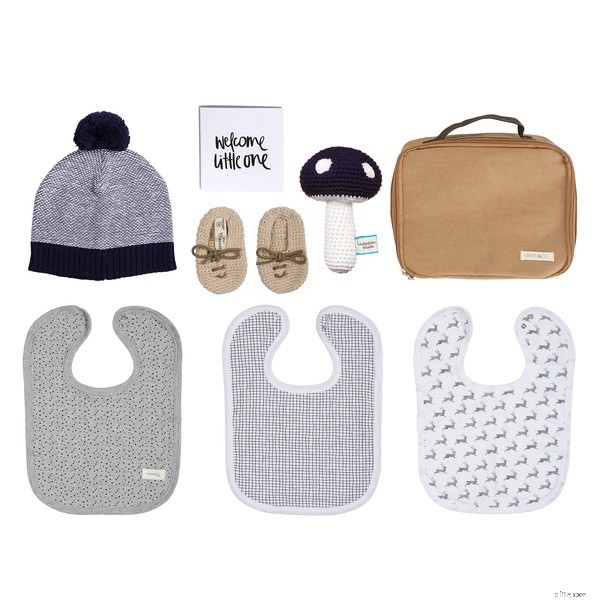
How do you promote and market your business?
We rely on social media, particularly Instagram and Facebook advertising. We have an in-house graphic designer who does the majority of our social posts and advertising, while Rebecca does some of the imagery. We also have an annual retail calendar with sales and seasonal promotions planned out for the next 12 months.
Where does your business stand today?
Today we stock around 310 shops across Australia and New Zealand. We also stock quite a few shops in Europe, United States, and the United Kingdom, while South Korea has become a big market for our business as well. We take a lot of online orders, with a 70/30 split between online retail orders and wholesale orders.
What’s on the horizon for Miann & Co?
Our business is always evolving and international expansion has been a big focus for us. We would like to take the business to the U.S. and set up there. We also want to add a clothing range for older kids and adults. In the next month or so, we have a new clothing range coming out – for older children.
Up until recently, we’ve focused on creating products for babies and toddlers who are 1-18 months, but now we will create products for kids up to 5 years of age. If that does well, we might even extend it beyond 5 years.
Coco Moon: where eCommerce meets a mother's love
Innova Distribution case study: a nose for the right apps
Rohr Remedy case study: natural skincare wholesaler and retailer
-

Wealthsimple: Is It a Secure and Reliable Investment Platform?
You know what we love most about potential clients? Besides their innate charm and appreciation for classic memes? It’s their healthy skepticism. And given the fact that some of the wealthiest, most
-

Nexo: Crypto Lending & CeFi Explained | Secure Loans with Crypto
NEXO is the world’s largest crypto lender operating in the centralized finance scene, or CeFi, based out of Switzerland. Launched in April 2018, NEXO made a quick and powerful name for itself by offer
Stock management
- The Decline of IPOs: Why Fewer Companies Are Going Public and What It Means for the Economy
- Range Accrual Notes: Understanding & Investment Potential
- Fiduciary: Understanding the Role and Responsibilities
- Diversification Strategies for Mutual Fund Investors: Mitigating Risk & Maximizing Returns
- Bitcoin Trading: A Comprehensive Guide to Getting Started
- Our Money Matters: Financial Wellness Program for Students of Color
- SKU Numbers: A Comprehensive Guide to Product Coding
- TradeGecko 2017: Key Product Highlights & Commerce Trends
- Product Manager - Build Financial Empowerment with You Need a Budget (YNAB)
-
Stocks & Bonds: A Beginner's Guide to Essential Investments
By far, stocks and bonds are two of the most prolific types of securities available on the market. They are basic staples of both small and large investors the world over. But with a myriad of ...
-
Spring Yard Work & Productivity: A Portland Perspective
Spring has sprung here in Portland, and that means yard work. Ill spend most of March completing my project for Audible and The Great Courses — which means things around here may be slow ...