
Inventory Management: Strategies for Business Growth & Profitability
At TradeGecko, we live and breathe inventory management and champion the value of effective inventory management techniques in achieving business growth. But the reality is that many businesses – large and small – overlook how critical inventory control is to profitability and scalability.
We take a deeper look at the costs of ignoring inventory management, as well at what to do (and not to do) when it comes to managing inventory.
The cost of poor inventory management methods
According to research by IHL, ineffective inventory management costs eCommerce businesses a huge $1.75 trillion in lost revenue every year. These global losses fall into three categories: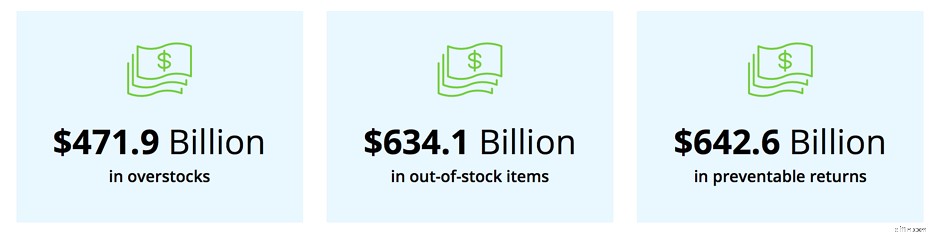
On average, the combined impact of overstocks, out-of-stocks, and preventable returns adds up to 11.7% of annual lost revenue for every business. In other words, poor inventory management methods that lead to the common issues above have a quantifiable negative impact on your bottom line.
And that’s just scratching the surface. Out-of-stock problems and preventable returns go hand-in-hand with decreased customer satisfaction, which puts you at risk of losing valuable customers who turn to other businesses with better order fulfillment capabilities.
What’s more, it costs five times as much to acquire a new customer than to retain an existing one, so you’re now looking at additional customer acquisition costs that could have been avoided by building brand loyalty through providing a good customer experience – all thanks to smart inventory control methods.
Epic fails in inventory management
You might think that a half-baked inventory management strategy is something only small businesses encounter, but many large and once-profitable companies have fallen prey to the negative repercussions of a poor approach to managing inventory.
Retail toy giant Toys ‘R’ Us suffered from chronic inventory management problems for years that saw the company left without stock during peak sales periods. According to a report by The Wall Street Journal, on Black Friday in 2015, the retailer’s website was in stock 62% of the time on the 100 top-selling toys, well below the recommended 95% recommended stock level. This left many customers no choice but to head to Amazon or other retailers to find their products – and the company's North American operations filed for bankruptcy in September 2017.
In 2015, Target was forced to abandon its planned 133 store openings in Canada after multiple inventory management and logistics failures – one of which was that barcodes on popular Barbie toy cars didn’t match the numbers in Target’s system – caused a massive pile-up at their distribution centers and empty shelves in-store. Inadequately planned inventory and supply chain management strategies ended up costing the company $941 million in losses.
Blind spot → full visibility: automated inventory management & demand forecasting
Knowing that even some of the world’s largest companies suffer from inventory management challenges, is there any hope for small to medium-sized businesses? Absolutely! Nailing inventory management comes down to three key steps:
- Vetting and setting up a reliable inventory management system
- Generating and monitoring demand forecasts (so you can tweak your approach based on demand)
- Automating inventory management and supply chain processes (to save time and reduce the likelihood of human error)
These three pillars will give you the right foundation for sustainable growth, accurate order fulfillment, and a good customer experience.
Here’s how three businesses owners have transformed their inventory management approach using TradeGecko.
Dirty Knees Soap Co.
Based in north-western Minnesota, Dirty Knees Soap Co. sells eco-conscious skincare products to retail and wholesale customers throughout the US. After starting off with a SWOTS (See What’s On the Shelf) inventory management approach, they began using TradeGecko to automatically import orders from Shopify and enable wholesale customers to shop and pay invoices via TradeGecko’s B2B eCommerce platform.
Dirty Knees Soap Co.’s founder, Heidi Danos, says moving to an integrated approach has been transformative:
Brooklyn Bicycle Co.
Brooklyn Bicycle Co. has been building quality bikes and selling them at an affordable price since 2011. The business uses TradeGecko to forecast sales, revenue and cash flow on a quarterly or yearly basis. The majority of the company’s sales happen between March and September, and the system allow the team to accurately forecast demand and growth while still accounting for seasonal fluctuations.
With good visibility into the months ahead from a sales and growth perspective, the business can make data informed decisions about operational processes and investments:
Philippe V
Luxury eyewear, jewelry, and accessories brand Philippe V, allows sales reps and distributors around the world to self-order online through TradeGecko’s Mobile App and B2B eCommerce platform. Automatically synced stock updates give the company full visibility over their inventory at any given time, without them having to list a finger.
-

EOQ & Inventory Metrics: Optimize Your Stock Levels | TradeGecko
TradeGecko has produced a series of inventory management videos, brought to you by our very own Geckos, to delve into the basics of inventory management. To learn all about Economic Order Quanitity (E
-

3 Pillars of Effective Inventory Management for eCommerce Success
As we’ve previously discussed, nailing inventory management is critical to keeping up with the explosive growth of the eCommerce market and providing an exceptional customer experience – yet it remain
Stock management
- Inventory Management: Optimizing Supply Chain & Financial Health
- Inventory Management: Concepts, Trends & Best Practices
- Understanding and Addressing Inventory Inefficiencies
- Inventory Management Systems: Streamline Operations & Visibility
- Cloud Inventory Management: Optimize Stock & Reduce Costs
- Inventory Management: A Comprehensive Guide to Benefits, Types & Techniques
- Salesforce Inventory Management: A Beginner's Guide (Workarounds)
- Effective Inventory Management for Food & Beverage Businesses
- Excel Inventory Management: 7 Essential Tips & Free Template
-
 Xero Tracked Inventory vs. TradeGecko: A Feature Comparison
In the first in a series of guest posts by Heather Smith, author of ‘Xero for Dummies’, we asked Heather to reflect on the introduction of the Tracked Inventory feature in Xero, and what it means to T...
-
 Inventory Management Mistakes: Avoid Costly Errors & Boost Profits
Inefficient inventory management can ruin your business. Be aware that we’re all prone to making costly mistakes that can spell the end for your business. Even Nike wasn’t immune. In early 2000s, lack...