
Weeks on Hand: Definition, Calculation & Importance for Businesses
Weeks on hand refers to the average amount of time it takes a business to sell the inventory it has on hold. For businesses where there is high, recurring demand, this metric can also be measured in days.
Why is weeks on hand an important metric?
Weeks on hand is an important metric for small businesses because it provides a snapshot into the health of the business. Because weeks on hand shows the time it takes to distribute an aggregate value of a company’s inventory – it is an easy way for potential investors and stakeholders to measure a company’s performance.
 Inventory takes up a significant amount of a company’s working capital and it incurs a carrying cost. Therefore, fewer weeks or days on hand is an indication that the stock is being moved at an optimized rate.
Inventory turnover, the first step to calculate weeks on hand
Inventory turnover is a ratio that measures the number of times inventory is sold or consumed in a given time period. It is an essential component of the weeks on hand formula.
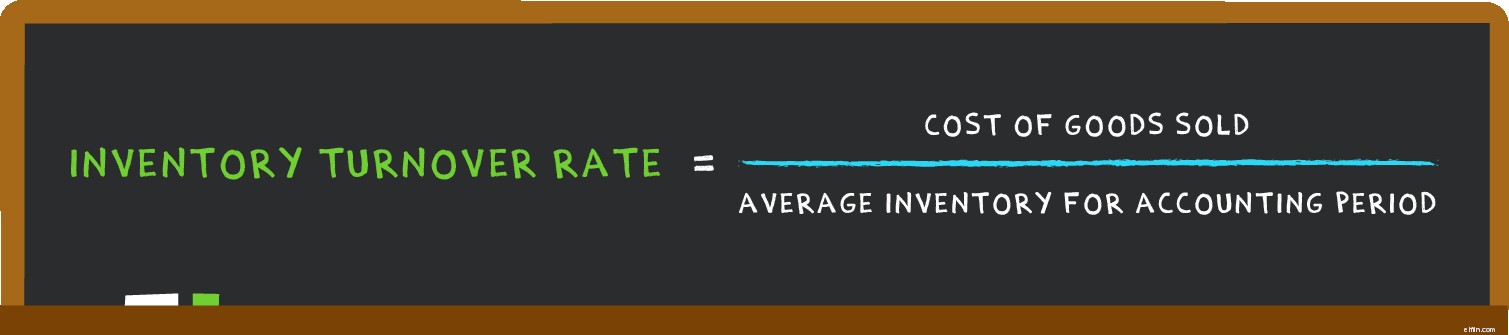
Also known as inventory turns, stock turn, and stock turnover, the inventory turnover formula is calculated by dividing the cost of goods sold (COGS) by average inventory.
The formula to determine turnover rate is as follows:
Inventory turnover rate = Cost of Goods Sold / Average inventory for the accounting period
 Inventory turnover calculator:
÷
+
2
Weeks on hand formula
- Take your accounting period in weeks (52 weeks).
- Divide the accounting period by your inventory turnover rate.
Weeks on hand calculator
Weeks on hand —
Example:
Assuming you have COGS of $5 million and your average inventory is $500,000;
Turnover rate = 5,000,000 / 500,000
Turnover rate = 10
Weeks on hand = 52 / 10
Weeks on hand = 5.2 weeks
Days on hand = 365 / 10
Days on hand = 36.5 days
So there you have it, the weeks (and days) on hand metric for your inventory. Once you have this measurement, the next step is to find ways to have fewer weeks on hand and increase efficiency.
Weeks on hand refers to the amount of time it takes to sell the inventory on hold. This measure can help determine the PAR (Periodic Automatic Replenishment) inventory level that an organization should have at all times. Establishing inventory PARs allows you to set-and-forget your inventory ordering, with orders placed once a certain threshold for each item is reached. This also reduces the chances of over-ordering.
Having high demand may seem like the most obvious way to reduce your weeks on hand but without proper inventory management, it could actually have the opposite effect. High demand, without the proper warehousing and shipping workflows in place, could lead to delays in replenishment and in deliveries all of which keep stocks on your shelves for longer.

Investing in tools like QuickBooks Commerce that automate large parts of your inventory and order management workflows could help free up your working capital and decrease the number of weeks you have inventory on hand.
-

Perpetual Inventory System: A Comprehensive Guide for Businesses
Any business owner will tell you that effective inventory management is the lifeline of any business. A company has to find an optimal balance between too much inventory that accumu
-

SKU: Understanding Stock Keeping Units for Inventory Management
SKU (Stock Keeping Unit) is a product code that you can use to search and identify stock on hand from lists, invoices, or order forms. It is a term that is typically used when talking about inventory
Stock management
- Inventory Management: Types, Examples & ROI Analysis
- Inventory Valuation: Methods, Importance & Impact on Your Business
- Understanding Days of Inventory on Hand (DOH): A Comprehensive Guide
- Neobanks Explained: Are They the Right Banking Choice for You?
- Work-in-Process (WIP) Inventory: Definition, Calculation & Importance
- Beginning Inventory: Definition & Calculation Formula
- Understanding HS Codes: Definition, Usage & Importance
- CD Loan: Borrow Against Your Certificate of Deposit - Pros & Cons
- Routing Numbers: Understanding Your Check's ABA & Bank Details
-
Income vs. Wealth: Understanding the Key Difference
Back when I was in college and at least partially supporting my education as a real estate agent, I learned the not so subtle difference between income and wealth. I was out driving with a colleague (...
-
 Navigating Unemployment Delays: Financial Strategies for Job Seekers
As lawmakers struggle to come to terms on unemployment relief, jobless workers continue...