
Next Eleven Countries: Emerging Economic Powerhouses
What Is Next Eleven?
The next eleven, also known as N-11, are the eleven countries that are poised to become the biggest economies in the world in the 21st century, after the BRIC countries. The N-11 was chosen by Goldman Sachs Group, Inc in a 2005 paper exploring the potential of BRIC and the N-11. The next eleven are South Korea, Mexico, Bangladesh, Egypt, Indonesia, Iran, Nigeria, Pakistan, the Philippines, Turkey, and Vietnam.
Understanding Next Eleven
The next eleven were named in a paper called "How Solid are the BRICs?" by Jim O'Neill, Dominic Wilson, Roopa Purushothaman, and Anna Stupnytska of Goldman Sachs, published December 1, 2005. The purpose of the paper was to review the performance of the BRIC countries, which are Brazil, Russia, Indian, and China. Goldman Sachs had previously named the BRICs the next countries to have world economies. The paper reviewed the progress of the BRICs, but then in a section entitled, "Are There More 'BRICs' Out There? A Look At the N-11" introduced the idea of a larger set of countries that were likely to develop on a slower trajectory than the BRICs would, but could still become world powers.
The authors of the paper created a Growth Environment Score (GES) to help them rate the countries and their potential for growth into world economies. The components of the GES are macroeconomic stability, macroeconomic conditions, technological capability, human capital, and political conditions. According to the paper, "...strong growth is best achieved with a stable and open economy, healthy investment, high rates of technology adoption, a healthy and well-educated workforce, and a secure and rule-based political environment." Countries were examined, and the next eleven were chosen. The authors of the paper used mathematical modeling to create charts of which countries could have the strongest economies 20 and 45 years after the paper was published, measuring income per capita and the largest economy.
South Korea
South Korea, referred to as simply "Korea" in the paper, scored among the highest of all the countries considered, and was seen as a rapidly-developing, growing economy that was, however, still lagging behind the BRICs. Of all the countries in the N-11, South Korea has probably lived up to the predictions most closely, with a robust economy and high scores on the GES measures from the original paper. Mexico was also seen as advancing rapidly and having great potential.
-
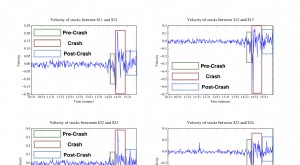
Understanding Flash Crashes: Causes, Risks, and Investor Protection
Soon after the Great Recession, the U.S. stock markets plunged – and rebounded within 36 minutes. The Dow Jones Industrial Average dropped more than 9%, losing
-

Financial Insights & Strategies | Expert Advice for Wealth Building
Over the past 2 years I’ve written over 300,000 words about money, spent over 200 hours talking and recording for the podcast, answered over 1,700 reader emails, and done over 200 media interviews all
stock market
- Spot Next (S/N) in Forex Trading: Definition & Explained
- Paper Trading: A Beginner's Guide to Risk-Free Stock Market Practice
- Understanding Potential Market Corrections: What Investors Need to Know
- The Impact of Corruption on Emerging Economies: A Comprehensive Analysis
- Understanding Less-Developed Countries (LDCs): Challenges & Development
- Commercial Paper: A Beginner's Guide to Short-Term Debt
- Paper Trading: A Beginner's Guide to Risk-Free Stock Market Practice
- Top Paper Trading Platforms: Practice Investing Risk-Free
- Understanding Debt: Historical Context and Modern Challenges
-
 The Unique Composition of U.S. Currency Paper
What Type of Paper is Money Printed On The paper found in dollar bills isn't like the paper in your printer. In one sense, it may not be paper at all. Where most paper is made with wood p...
-
 Safely Cleaning U.S. Paper Money: A Guide
You can remove some dirt and stains from money if you are careful. United States paper money is composed of 75 percent cotton and 25 percent linen rather than wood pulp. This makes the curren...