
Portfolio Protection & Profit Taking: A Disciplined Approach
The most commonly used risk and profit management strategy is to identify a target price. This target price(s) is used as a stop loss (e.g. to get out of the investment with a small loss) or to take your profit (e.g. exit the investment with gain). For example as an investor you decide that you will sell your investment if the stock you just purchased drops by $7, and exit your investment if it appreciates by 25%. You could rely on fundamental or technical analysis to determine your exit points.
Using fundamental analysis, you may have selected a stock with Price/Book ratio (P/B ratio) below the market's P/ B ratio, and decide that you will exit your investment if the stock's P/B ratio becomes greater than the market's. At this point, the investor believes that the stock is fairly valued. Using technical analysis, the investor may have identified a long term support level, and decides to exit the investment if the price drops below that level. One could use a combination of fundamental and technical analysis to develop his exit strategy. I explained some of these strategies in my previous articles.
A second method of protecting your portfolio or taking profit is use of index or equity options. Equity options give you the right to buy (call options) or to sell (put options) your investment at certain price by certain date.
Prices of the equity put options move in the opposite direction of the stock price. For example, an investor who bought a stock could purchase a protective put option, so that a drop in his or her initial investment is to some extent offset by an increase in the price of his protective put option. Prices of equity call options move in the same direction as the stock price. For example, if the investor has sold a call option on his stock, a covered call option, would pocket the premium if his stock moves sideways. In both cases you protect your initial investment using equity options.
Risk and profit management techniques are an essential part of any stock and fixed income portfolio. However, they require an in-depth knowledge of fundamental as well as technical analysis. In my next article, I'll explain protective put and covered call options in more detail, and tell you why it's the preferred method of profit and risk management.
-

Mastering Personal Investment Management: Diversify for Success
Personal investment management is the cornerstone of a profitable investment portfolio. Effective management allows you to diversify your personal investments more successfully.Reasons to Diversi
-
Portfolio Protection: Strategies for Navigating Market Volatility
Extreme events do not occur regularly within a market, but when they do occur they cause great destruction to unprepared investors. For example, a sudden market crash such as the one that occurr
risk management
- Global Stock Funds: Diversification and Portfolio Strategy
- Is Your Portfolio Ready for 2024? 3 Signs It Needs Review
- Mutual Fund Rebalancing: A Guide to Maintaining Portfolio Balance
- Pyramiding Your Way to Profits
- Using Dividend History to Evaluate Stock Investments
- Choosing the Right Stock Investment Seminar: A Buyer's Guide
- Stock Investing for Beginners: Protecting Your Profits
- Stabilize Your Portfolio: The Benefits of Bond ETFs
- Portfolio Monitoring: A Guide to Tracking Your Investments
-
 Track Your Stocks: A Guide to Using Yahoo Finance
Yahoo Finance gives you real-time information about your portfolio. Trawling through lists of stock market constituents to determine how your portfolio is performing can be frustrating and ti...
-
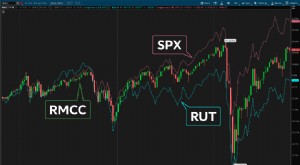 Mid-Cap Stocks: A Smart Addition to Your Portfolio?
“Middle of the road” is a term that sometimes gets a bad name. To some, it might imply dull, or mediocre. That’s not the case, however, with mid-cap stocks. While the big boppers in the Dow and Nasdaq...