
Understanding Hobby Losses: Tax Implications & Deductions
The phrase “hobby loss” is a term used in accounting and tax that defines a particular type of loss or expense. A hobby loss refers to a net loss generated from a recreational activity or in the pursuit of a hobby that cannot be used to offset unrelated income for tax purposes.

The Internal Revenue Service (IRS) defines a hobby loss as an expense associated with a recreational activity or something undertaken for pleasure, provided that the said activity generates revenue of sorts. Per the IRS definition, you are able to deduct some expenses stemming from the activity but cannot exceed the gross income for the activity to create a loss.
Many taxpayers participate in recreational activities or hobbies that generate losses. If however the activity is undertaken to generate a profit it could be considered a business and net loss would be deductible against other income. Therefore, differentiating between a hobby and a business is important for tax purposes and reporting, seeing as different activities and expenses are treated differently in terms of taxation.
Summary
- The phrase “hobby loss” is a term used in accounting and tax that defines a particular type of loss or expense that is not deductible against other unrelated income.
- The Internal Revenue Service (IRS) defines a hobby loss as an expense associated with a recreational activity you undertake for pleasure and not for profit, provided that the said activity generates some revenue.
- Per the IRS definition, losses or expenses are deductible up to the amount of actual reported income generated by the recreational activity and not beyond that.
The IRS and Hobby Loss
The IRS Internal Revenue Code Section 183, also referred to as the “hobby loss rule,” serves as a guide on what expenses (losses) can be deducted from income generated from hobbies and other not-for-profit or recreational activities.
Although the method of determining what is a hobby by the IRS is somewhat complex, the concept of how to compute a hobby loss is relatively simple. The federal agency published a guide that informs the definition of what is considered to be a “for-profit activity” concerning hobbies or recreational activities.
The IRS’ Internal Revenue Code section 183 was originally established to minimize the number of taxpayers (businesses or other natural persons) who were deducting and/or reporting unqualified expenses as business losses, even though the expenditure items may have been associated with hobbies and other not-for-profit or recreational activities. The revenue code was established to apply to individuals, partnerships, trusts, S corporationsS Corporation (S Subchapter)An S Corporation (S Corp) is a closely held corporation (Limited Liability Company (LLC), partnership, or C Corporation) that is treated as a, and trusts, but excludes C corporations.
The IRS declared that taxpayers would be prohibited from deducting losses for activities that were not participated in to generate a profit – e.g., filming, racing, animal breeding, writing, etc. – and that the losses cannot be deducted beyond the revenue generated.
Allowable Deductions
For taxpayers whose activities do indeed constitute a hobby, the IRS has outlined the following sequence of allowable deductions that can be claimed and recorded as itemized deductions:
- “Deductions that a taxpayer may take for personal as well as business activities, such as home mortgage interest and taxes, may be taken in full.”
- “Deductions that don’t result in an adjustment to basis, such as advertising, insurance premiums, and wages, may be taken next, to the extent gross income for the activity is more than the deductions from the first category.”
- “Business deductions that reduce the basis of property, such as depreciation and amortizationAmortizationAmortization refers to the process of paying off a debt through scheduled, pre-determined installments that include principal and interest, are taken last, but only to the extent gross income for the activity is more than the deductions taken in the first two categories.”
Factors That Outline Whether an Activity is For-Profit
Referencing the IRC Section 183, the key elements for deciding whether or not an activity is for-profit include:
- The manner in which the activity is carried out or conducted –i.e., is it conducted in a businesslike manner?
- The respective taxpayer’s qualification(s) concerning the activity.
- The time spent on the activity.
- The venture’s assets and their value appreciation potential.
- The taxpayer’s history with the same or varying activity(ies).
- The success or failure of the activity.
- The amount of infrequent returns relative to losses and the taxpayer’s investment.
- The financial status of the taxpayer – i.e., will the taxpayer benefit from the losses? What is their main source of income?
- The taxpayer’s pleasure or recreation, resulting from the activity – i.e., does the taxpayer partake in the activity for pleasure?
Additional Resources
CFI offers the Commercial Banking & Credit Analyst (CBCA)™Program Page - CBCAGet CFI's CBCA™ certification and become a Commercial Banking & Credit Analyst. Enroll and advance your career with our certification programs and courses. certification program for those looking to take their careers to the next level. To keep learning and developing your knowledge base, please explore the additional relevant resources below:
- Double TaxationDouble TaxationDouble taxation is a situation associated with how corporate and individual income is taxed and is therefore susceptible to being taxed twice.
- Flow-Through EntityFlow-Through EntityA flow-through entity is a legal business entity whose profits flow directly to the investors or owners and only they are taxed on the income.
- How the Government Makes MoneyHow the Government Makes MoneyThe primary way that the United States government makes money is through taxation. In section 8 of the first article of the Constitution, the US Congress is
- Schedule CSchedule CThe Schedule C tax form is used to report profit or loss from a business. It is a form that sole proprietors (single owners of businesses)
-

Accrued Interest Explained: Accounting & Financial Definition
Accrued interest refers to interest generated on an outstanding debt during a period of time, but the payment has not yet been made or received by the borrower or lender. SummaryUnder accru
-
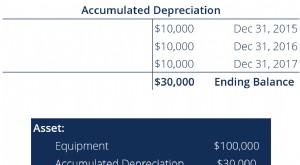
Understanding Accumulated Depreciation: A Comprehensive Guide
Accumulated depreciation is the total amount of depreciation expense allocated to a specific asset PP&E (Property, Plant and Equipment)PP&E (Property, Plant, and Equipment) is one of the core
Accounting
- Understanding Value at Risk (VaR): A Comprehensive Guide
- Understanding Capital Losses: Definition, Calculation & Examples
- Loss Aversion: Understanding the Psychology of Financial Decisions
- Activity Cost Drivers: Definition & Importance for Profitability
- Understanding Foreign Exchange Gains & Losses: A Comprehensive Guide
- Understanding Net Loss: Causes, Impact, and Accounting Principles
- Profit & Loss Statement (P&L): Definition & Key Components
- Activity-Based Management (ABM): Definition & Benefits
- Hobby vs. Business: A Simple Test to Determine Your Status
-
 Understanding Accounting Methods: Cash vs. Accrual
An accounting method refers to a set of rules that a company adheres to when keeping its financial records and reporting financial transactions. The transactions are recorded in a manner that accurate...
-
 Accrued Income Explained: Definition & Accounting
Accrued income is income that a company will recognize and record in its journal entries when it has been earned – but before cash payment hast been received. There are times when a company will...