
Overdraft Protection: Understanding Fees & Alternatives
Having overdraft protection on your checking account is a convenience, but it’s not a cheap one. The median overdraft fee among retail banks is $34, according to the Consumer Financial Protection Bureau (CFPB).
While the prospect of paying a punitive fee for overdrawing your account is scary, there are plenty of ways to avoid it, including using your credit card.
In this guide, you’ll learn more about how overdraft protection works, why it’s essential to avoid them, and what options you have to do so.
How overdraft protection works
Having a check bounce or your debit card declined isn’t just embarrassing. It can also have other adverse consequences. For example, a lender could assess a late fee, and an insurance company could threaten to cancel your policy.
Overdraft protection makes it possible to overdraw your checking account, so you avoid these situations. You have to opt-in for this service, either when you first sign up for the checking account or later on.
And while many people may think they’ll never actually need overdraft protection, the numbers tell another story. The CFPB estimates that consumers pay $17 billion annually in overdraft and non-sufficient fund fees.
Why you should avoid overdraft fees
In 2014, the CFPB found that the majority of debit card overdraft fees are incurred on transactions of $24 or less. Also, consumers repaid most overdrafts within three days.
To give you an idea of how insane that is, if you were to take out a $24 loan and repay it in three days, a $34 overdraft fee would represent an APR of 17,000%.
If you’re constantly overdrawing your account because of financial issues, paying the fee over and over again can make it hard to get back on your feet.
Fortunately, some banks have softened their overdraft policies, opting not to charge an overdraft fee on smaller purchases.
But if you find that you’re consistently overdrawing your account or you don’t want to have to deal with a potential overdraft fee, there are other solutions.
4 ways to eliminate overdraft fees
There are four main ways banks make is possible to avoid overdraft fees. Not all banks offer these alternatives, though, so you may need to switch to a different bank to get the flexibility you want.
1. Apply for an overdraft line of credit
Instead of charging a fee every time you overdraw your checking account, some banks offer a revolving credit line instead. You’ll typically pay an interest rate on your negative balance, but if you pay it off within a few days, you’ll pay just pennies.
The only drawback to this option is that you need decent credit to get approved. Also, the bank will run a hard credit check to determine whether you qualify, which could affect your credit score.
2. Opt-in for an automatic savings transfer
Some banks allow you to use your savings account to cover a shortfall caused by an overdraft. You have to set it up through the bank, but many banks don’t charge a fee to do it. If you don’t bring your account in the black by the end of the day, the bank will initiate the transfer.
Just keep in mind that federal laws require banks limit you to six withdrawals from any savings account each month. So, if an overdraft savings transfer pushes you beyond that limit, you may be on the hook for that fee.
3. Get a bank with no overdraft fees
Big banks aren’t likely to give up overdraft fees anytime soon, but some online-only banks are starting to eschew the charge.
, for example, doesn’t charge any overdraft or any other fees you’ll typically find with a traditional bank.
Chime Disclosure - *Chime is a financial technology company, not a bank. Banking services and debit card provided by The Bancorp Bank or Stride Bank, N.A.; Members FDIC.(1)Save When I Get Paid automatically transfers 10% of your direct deposits of $500 or more from your Checking Account into your savings account.
^Round Ups automatically round up debit card purchases to the nearest dollar and transfer the round up from your Chime Checking Account to your savings account.
4. Connect your credit card
Some major banks that offer both deposit accounts and credit cards allow you to connect your credit card to your checking account for overdraft protection.
If you already have these types of accounts with one bank, you don’t have to apply for an overdraft line of credit or worry about issues with savings withdrawal limits. Here are a few banks that offer this feature:
- Bank of America
- U.S. Bank
Just remember, your checking account and credit card need to be from the same bank. Also, your credit card interest rate may be high, so pay off the balance before the due date to avoid interest.
Credit cards that can provide overdraft protection
If you’re thinking about using a credit card to provide overdraft protection without a fee or interest (as long as you pay it off before the due date, that is), here is a great option to consider.
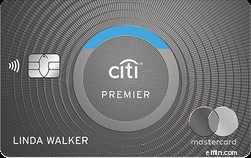
Citi Premier® Card
In A Nutshell
The Citi Premier® Card kicks off with a limited-time 80,000 bonus ThankYou® Point intro offer after spending $4,000 in the first three months of account opening. The everyday rewards program offers 3 points per dollar spent in a variety of categories and has no foreign transaction fees.
Read review Apply Now On the Citi Secure WebsiteIn A Nutshell
The Citi Premier® Card kicks off with a limited-time 80,000 bonus ThankYou® Point intro offer after spending $4,000 in the first three months of account opening. The everyday rewards program offers 3 points per dollar spent in a variety of categories and has no foreign transaction fees.
Read review Credit Score Requirements: Credit Score requirements are based on Money Under 30’s own research of approval rates; meeting the minimum score will give you the best chance to be approved for the credit card of your choice. If you don’t know your credit score, use our free credit score estimator tool to get a better idea of which cards you’ll qualify for. *Money Under 30 uses a FICO 8 score, which is one of many different types of credit scores. *A creditor may use a different score when deciding whether to approve you for credit. ? Poor 500-599 Fair 600-699 Good 700-749 Excellent 750-850What We Like:
-
Limited Time Offer: Earn 80,000 bonus ThankYou® Points after you spend $4,000 in purchases within the first 3 months of account opening. These points are redeemable for $800 in gift cards at thankyou.com
-
Three points per dollar spent at Gas Stations, Supermarkets, Restaurants, Hotels and on Air Travel
-
No foreign transaction fees
- For a limited time, earn 80,000 bonus ThankYou® Points after you spend $4,000 in purchases within the first 3 months of account opening
- Earn 3 Points per $1 spent at Restaurants and Supermarkets
- Earn 3 Points per $1 spent at Gas Stations, Air Travel and Hotels
- Earn 1 Point per $1 spent on all other purchases
- Annual Hotel Savings Benefit
- 80,000 Points are redeemable for $800 in gift cards when redeemed at thankyou.com
- No expiration and no limit to the amount of points you can earn with this card
- No Foreign Transaction Fees on purchases
Apply Now >>
The Citi Premier® Card allows borrowers to earn an impressive 3x points per dollar spent on air travel, hotels, supermarkets, restaurants, and gas stations. Borrowers also earn 1x point per dollar spent on all other purchases.
When you first open a card, you’re eligible for a welcome offer of 80,000 bonus points when you spend $4,000 in the first three months (that’s worth $800 in gift cards at thankyou.com). Other perks include:
- No foreign transaction fees.
- $100 annual hotel savings benefit.
- Flexible redemption options.
- Ability to transfer points to participating airline loyalty programs.
The Citi Premier® Card does come with a $95 annual fee, but that price is well worth it for consumers who travel frequently and want to maximize their rewards.
See card details/apply.
Summary
Overdraft fees can feel like a kick when you’re already down, but avoiding them is pretty easy. Because not all banks offer all of these options, though, you may be limited to what your bank provides.
If that’s the case, consider switching your bank to the institution you have a credit card with or changing banks to one that offers one of the other solutions we provided. Getting rid of overdraft fees for good will not only be good for your wallet, but it can also provide you with more peace of mind.
Read more
- Credit Card Basics—A Guide For Teens
- Are Joint Credit Card Accounts a Good Idea?


banking
- Waive Overdraft Fees: A Step-by-Step Guide
- Prevent Overdraft Fees: A Comprehensive Guide to Account Management
- Understanding and Protecting Yourself from Overdraft Fees
- Avoid Overdraft Fees: 3 Proven Strategies to Save Money
- Major Banks Reduce Overdraft Fees: What Consumers Need to Know
- CDs and IRA CDs: A Comprehensive Guide to Secure Retirement Savings
- Understanding Overdraft Fees: How They Work & How to Avoid Them
- Decoding Bank Fees: How to Avoid Hidden Charges & Save Money
- Understanding Bank Fees: Why Are They Charged?
-
 Online Banks: Advantages & Disadvantages - A Comprehensive Guide
There are plenty of good reasons to opt for online banking -- but there are some downsi...
-
 Internet Banking: Benefits, Drawbacks & Is It Right for You?
With the steady rise of internet banking, also known as online banking, you can now do your banking without ever leaving home. On top of convenience, online banks offer a ton of other perks— like high...