
Reversing Debit Card Charges: What You Need to Know
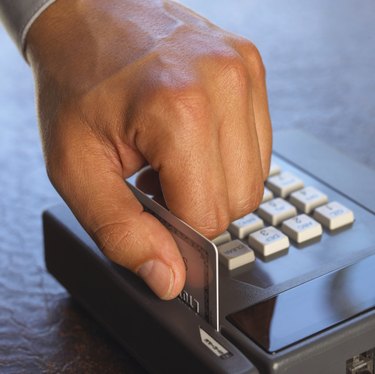
Banks have programs that are designed to prevent debit and credit card fraud by unscrupulous merchants. When merchants fail to deliver a product or service that they already charged to a debit card a consumer can complain to her financial institution, which can then reverse the charge. However, while banks take the protection and security of their customers seriously, they also don't want customers abusing the system. Charge reversals require specific criteria and usually a brief investigation to ensure that requests are fair and legitimate.
Legitimate Reasons
Banks require customers to have legitimate cause for a charge reversal. This can be difficult to define when it comes to dissatisfaction with services. However, as a general rule, gross negligence or failing to complete a requisite task indicates that a merchant didn't deliver a promised service. For example, a cleaning service that showed up late, stayed for only one out of four promised hours and left the premises mostly uncleaned didn't fulfill its obligation. Similarly, an auto mechanic who didn't successfully repair a vehicle most likely didn't deliver the service he should have.
Nonqualifying Situations
Bank customers have to weigh a merchant's performance carefully before requesting a charge reversal. Customers who complain wrongfully and abuse the system may have trouble getting help from their bank when a situation that legitimately calls for a reversal arises. Being dissatisfied with an attitude or customer service skills alone doesn't make a legitimate claim. For example, a customer upset by an auto mechanic who was rude, took longer than promised to complete work and charged high rates may have real gripes, but does not qualify for a charge reversal. In the end, the mechanic completed the work and the customer agreed to the rates, making the transaction legal and valid.
Investigations
To avoid lawsuits and government scrutiny, banks need to carefully document debit card charge reversals. Although a bank may want to champion its customer's cause, it has to have proof that a merchant didn't deliver proper service. Therefore, banks will often ask customers to make written statements and provide any receipts or documentation that supports their story. Additionally, banks may contact merchants and their banks to collect their statements before making a final decision on a charge reversal.
Alternatives
Banks have limited parameters for reversing charges. Just because a bank doesn't have enough grounds to reverse a charge doesn't mean a customer doesn't have a legitimate gripe. Instead of turning to a bank for a charge reversal, consumers can contact their state attorney general's office or the Better Business Bureau to report poor business practices. Additionally, consumers can file lawsuits -- including small claims -- against offending businesses.
-

Charge Card Credit: Understanding Liquidity and Assets
The available credit on your charge card isn't a liquid asset or even an asset of any type, although it can increase your ability to make purchases. In accounting terms, assets are what you own, w
-

Employer Access to DD214 During Background Checks: What You Need to Know
Image of a job interview. Background checks are a common pre-employment requirement. When you complete an application, whether online or on paper, you must give your consent if a background c
budgeting
- Prepaid Debit Card Seizure: What You Need to Know
- Unauthorized Debit Card Charges: What You Need to Know
- Debit Card Fraud: How to Dispute Unauthorized Charges & Cancel Your Card
- Debit Card Restrictions: Why They Happen & How to Resolve Them
- Deposit Checks on Your Prepaid Debit Card: Methods & Options
- Reverse Debit Card Purchase: Understanding and Resolving Unauthorized Charges
- Debit Card Deactivation: Reasons & How to Prevent It | [Bank Name/Financial Institution]
- Reversing Debit Card Transactions: A Comprehensive Guide
- Debit Card Authorization: Authorized Users vs. Sharing PINs - What You Need to Know
-
 Debit Card Preauthorization: What You Need to Know
A woman using her debit card on her computer. Before you can pay for something with a debit card, the store, website or other merchant may check with your bank to make sure your card is legit...
-
 Understanding Debit Card CVV: Security Codes Explained
What Is CVV in a Debit Card? The CVV number is the card verification value or security code on a debit card. Major debit card issuers, including Visa, Discover and MasterCard, use three-digit...