
Lost Payroll Check? How to Recover Your Stale Payment
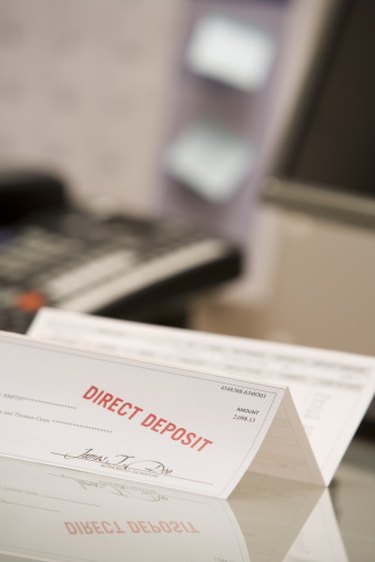
You've come across an old payroll check that for some reason never made it into your bank account. You worked hard for the money, but the check says "Void after . . . " some period of time. You're not certain you will be able to claim the money. Although this doesn't happen often, you may be able to simply have your employer reissue the check. If not, there are state laws to help you claim the money.
Payroll Accounts
Your employer paid your salary out of its payroll account, which it set up with the bank. When it issued your check, it debited the account; the funds were subtracted from the balance. Even though you never cashed the check, that money was made unavailable for other payments. In effect, the money is missing until the check is cashed and remains an unpaid liability.
Void Checks
When a company orders checks for its payroll account, it specifies a "Void" date, which is usually on the face of the check. If the check states "Void after 90 days," for example, then you may not be able to cash or deposit the check (some banks will overlook the void date). By the Uniform Commercial Code, which guides banks in their operations, checks more than six months old are considered "stale-dated" and can be rejected.
Reissuance
Each business sets a policy, in cooperation with its bank, of how to handle "stale-dated" checks. Many companies will simply reissue a check if not more than a year, or in some cases two years, have passed since the original date of the check. Ask your employer about the reissuance policy.
Voids and Stop Payments
You have a check reissued by returning it to your employer and requesting it void the old check and issue a new one. This process returns the funds to the account, allowing the company to write a new check and balance the account. If you lost the check, the employer may incur a bank fee to carry out a stop payment, which may be deducted from the new check.
Unclaimed Property
Each state has laws concerning unclaimed property, including payroll and other checks. After a period of time has lapsed, and the check goes uncashed, then it is legally unclaimed. In New Jersey, for example, the period of time for unclaimed property is three years. At the end of this period, the issuing company is supposed to turn the funds over to the state. The state holds these funds as unclaimed until you, or your heirs or designated agent, files a claim. You or your representative must complete a claim form, which is usually available on the state's official web site, and provide identification. The state agency will process the claim and, if the claim is approved, render the unclaimed funds to you.
-
Cashing Checks in Canada: Rules, Holds & Requirements
Most Canadian checks can be cashed at Canadian banks. Checks can be a handy way to transfer money, pay rent or carry funds. In Canada, cashing a check doesn't have to be challenging. With
-
Check Writing Best Practices: Avoid Errors & Protect Your Credit
Write your checks the correct way to avoid mishaps. Writing checks is a necessary evil when you need to pay your bills. You need to clearly write who the money is for and how much money you a
budgeting
- Understanding Check Deposit Hold Policies: A Comprehensive Guide
- Cashing an Old Insurance Check: What You Need to Know
- Cashing a Paycheck Out of State: Your Options Explained
- Securely Destroy Old Checks: Protect Yourself from Fraud
- Checks as Payment: Are They Considered Cash?
- Bad Check Laws: Understanding Criminal & Civil Penalties
- Track Your Checks: Online Check Imaging & Fraud Prevention
- Payroll Check Expiration: How Long Can You Wait to Cash It?
- Check Expiration Dates: How Long Can You Cash an Old Check?
-
 Cashing a Check Made Out to Someone Else: What You Need to Know
It's incredibly difficult to cash a check made out to another person even if that person is your husband. Generally, banks will only cash checks for the payee shown on the face of the check, upon ...
-
 Understanding Stop Payment Laws on Checks: A State-by-State Guide
Stopping a payment on a check is a costly action. Stopping the payment of a check is a necessity at times, such as when the checks are lost and the check is written by someone other than the ...