
Decoding Your Check: Locating Account & Routing Numbers
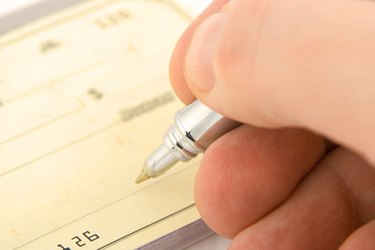
Checks are useful for authorizing payment for a purchase without the risk of using cash or credit. The amount of a check is withdrawn directly from your account using the sequence of numbers at the bottom of the check as identifiers. These three blocks of numbers typically include the routing number or bank identifier, bank account number and check number. Knowing how to read your checks will make purchasing easier.
Step 1
Locate the series of numbers at the bottom of your check. This series will include a routing number, bank account number and check number. The check number is most readily identifiable, as it is always matches the check number appearing at the top of the check.
Step 2
Identify the series of numbers surrounded by the |: symbol. This symbol denotes the routing number, also known as the bank identifier. In the United States, the routing number will always contain nine digits.
Step 3
Find your account number. The length of the account number will vary depending on your bank, but should contain no more than 17 digits. The account number will usually be followed by the ||' symbol.
Warning
Sometimes, the check number will also be surrounded by the ||' symbol. To be sure, always check this number against the number appearing at the top of the check.
-
Verify Bank Account Ownership: Protect Yourself from Check Fraud
Can you confidently accept checks? Bank fraud has become an increasing problem as a result of technological advances. One of the main areas of concern is check fraud. Criminals wash checks wi
-

Decoding Checks: A Simple Guide to Routing & Account Numbers
Banks often ask customers to provide an account number and routing number in order to make transactions, such as wire transfers. The account number tells banks which account money is to be drawn from,
budgeting
- Obtaining Canceled Checks: A Quick & Easy Guide
- Postdated Checks: A Guide to Writing and Using Them
- Legally Accessing Bank Account Information: Power of Attorney & Legal Responsibilities
- Changing Your Bank Account Number: A Step-by-Step Guide
- Quick & Easy Ways to Check Your Bank Account Balance
- Wire a Check to a Bank Account: A Step-by-Step Guide
- Understanding Bank Numbers on Checks: A Comprehensive Guide
- Cashing a Check Without a Bank Account: Your Options
- Easy Ways to Check Your Bank Balance: Online & In-Person
-
 Find the Bank from an Account Number: Routing Numbers Explained
A bank account number won't get you very far if you're trying to identify the bank where the account is held. You'll need the bank's routing number for that, but it's really very e...
-
 Cashing a Cashier's Check Without a Bank Account: Your Options
Cashier's checks are generally considered to be a safe and secure way of making a payment. Cashing one of these checks can, however, present a problem if you don't have a bank account of your ...