
Create a Realistic Home Budget: A Step-by-Step Guide

Although planning your home budget probably isn't the most exciting item on your to-do list, it is extremely important. Being realistic with yourself about your household finances can be a tough pill to swallow for some. But if you feel like there is never enough money to go around – or you find yourself having trouble saving – then you likely need to draw up or revisit your home budget.
Home Budgeting: Getting Started
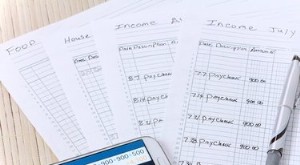
Before you set out to make a home budget, you first need to determine which method or system of accounting and budgeting you plan to use. While there are several different types of home budget systems you can use, the tried and true method of using a notebook and pen has withstood the test of time. As long as you're able to accurately keep track of all your income sources and expenses, then this will be the least expensive and possibly the easiest option to get you started – especially if you don't have access to a computer.
If you lean more to the tech-savvy side, you may want to formulate your household budget using a spreadsheet, online calculator or budget-planning software. While you can find a plethora of budget spreadsheet templates online for free, some of the more popular budgeting software available, such as Quicken®, will likely come at a cost. However, with a little research, you can find free web-based software options, like Mint®, as well.
Determine Your Income and Expenses
Now that you have your system in place, you will need to sit down and figure out how much income your household brings in each month and all of your expenses. Income means everything you receive by way of money from all sources, such as a full-time job, child support or alimony. Do you walk dogs as a side gig? That counts as income. If your wife gets paid to teach piano lessons, then include that too. Add everything up and this represents your total monthly income.
Next, you will need to itemize your expenses. Expenses tend to fall into three main categories: fixed, variable and discretionary. Fixed expenses are expenses that largely remain the same month to month for at least a year, such as rent, mortgage, cell phone and cable costs. Variable expenses are the expenses you expect each month, but that can change a bit, such as purchasing gasoline for your car or groceries for your family. Lastly are discretionary expenses, which include things like entertainment, dining out and vacations.
After you have detailed all of your monthly fixed and variable expenses, you can subtract this amount from your total monthly income. If you have money left over after doing the math, congratulations! You can either save this money or splurge on something from your discretionary expenses.
Make Adjustments as Necessary
However, if you notice that you have very little or no money left after you subtract your fixed and variable expenses from your total monthly income, then you need to lower your expenses. Identify which area of your budget can be pared down so you can have more left over for discretionary expenses and savings. Reducing or eliminating expenses that aren't completely essential to your month-to-month existence and being frugal for a month or two will go a long way toward keeping some extra dollars in your pocket at the end of the month.
Stick to a Budget
Going through the trouble of making a home budget will be all for nothing if you don't stick to it. Document and keep track of every dime you spend. This will help you clearly identify where your budget is falling short. You may not think much of your daily coffee run, but little purchases like these add up quickly, and before you know it, your monthly budget is blown.
-

Create a Monthly Budget Worksheet: A Step-by-Step Guide
When you put all of your income and expenses down on paper, it becomes easier to make adjustments to your lifestyle so you don't spend more than you take in. By creating a monthly budget worksheet
-
Smart Strategies to Lower Retirement Expenses
In retirement, you are often on a fixed income and may be looking for ways to reduce retirement expenses. Food, gas and taxes are constantly increasing while your income stays stagnant. Every li
budgeting
- Traditional Budgeting: Benefits & How to Control Your Finances
- Financial Planning for Young Adults: A Budgeting Guide for 18-Year-Olds
- Effective Strategies to Overcome Budget Problems | Financial Planning
- Budget Planning: Definition, Process & Key Components
- Create a Free Home Budget Worksheet: Track Your Finances
- Home Budgeting 101: A Simple Guide to Financial Control
- Itemized Budgeting: A Comprehensive Guide for Financial Stability
- Budget Wedding Planning: Smart Tips & Cost-Saving Strategies
- Create a Budget That Works: A Practical Guide to Financial Success
-
 Budgeting with Ledger Paper: A Simple Guide for Home Finances
Ledger paper is a classic accounting tool where business owners and accountants record financial figures relating to business transactions. Individuals can use ledger paper to record personal transact...
-
 Simple Budget Journal: Track Expenses & Achieve Financial Goals
If you dont know where your money goes, a journal can help you to keep track. If you are finding it difficult to save money or live within your means, it may be that you are not aware of your...