
Understanding Savings Account Interest: How It Works & Rates
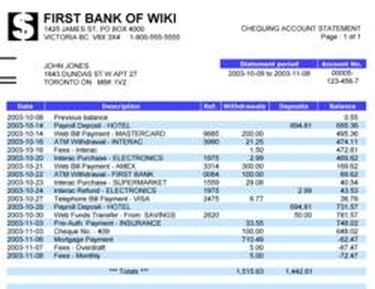
Savings Account Interest Overview
Financial institutions pay individual depositors interest on money deposited in savings accounts. They pay interest because you are allowing the financial institution to use your money to make loans to others. Interest rates paid on savings accounts to individual depositors are generally less than interest rates charged to those borrowing money. However, interest rates may vary considerably depending on the type of financial institution where the money is deposited. If you have a large sum to deposit, you may want to consider calling around to find the best interest rates. In addition, the type of savings account where the money is deposited affects the interest earned. Some savings accounts earn simple interest and others earn interest compounded daily.
Simple Interest
Financial institutions pay interest based on a percentage of your savings account balance. The interest is usually calculated and paid to depositors every three months, which is quarterly. You can figure simple interest in a few easy calculations: Savings account balance times the interest rate, divided by four. You divide by four because the interest is paid quarterly, or four times a year. If the interest were paid monthly, you would divide by 12 because there are 12 months in a year. Here is an example of a quarterly interest payment. Say you have $1,000 in a savings account at two percent interest paid quarterly. The equation would be ($1,000 x .02)/4=$5. You would earn $5 in interest after the first quarter. During the second quarter, you would earn interest on $1,005 if you did not deposit or withdraw any money. The equation would be ($1,005 x .02)/4=$5.03, and the new balance in the savings account would be $1010.03. Each quarter the savings account balance would increase as interest is added to the balance.
Interest Compounded Daily
Individuals earn more interest over time from a savings account that compounds interest daily than from a savings account that pays simple interest. The equation to calculate the interest is the almost the same. Use 365 instead of four, because there are 365 days in a year and the interest is compounded daily. To calculate one year of savings account interest you would need to make 365 separate calculations instead of four calculations. Therefore, most people use an interest calculator to figure compound interest (see Resources below). The equation would be ($1,000 x .02)/365=$0.06. You would earn $0.06 in interest after the first day. The second day, you would earn interest on $1000.06 if you did not deposit or withdraw any money. Of course, the difference will be more significant with larger savings account balances. These banks usually pay the interest into the savings account once a month.
-

Understanding EBT Cards: A Guide to SNAP Benefits
The EBT card is convenient and discreet. So you applied for food stamp benefits — also known as the Supplemental Nutrition Assistance Program, or "SNAP" — and got approved. A few da
-

FAFSA and Savings Accounts: How They Impact Your Financial Aid
The amount of financial aid a college student is eligible to receive is based on the data the student or his family provides in the Free Application for Federal Student Aid (FAFSA). Both income and as
budgeting
- Understanding Interest-Bearing Trusts: How They Work & Benefits
- Savings Account Fees: What to Expect & How to Avoid Them
- Calculate Savings Account Interest: A Simple Guide
- E-Trade: Online Brokerage & Investing Services - A Comprehensive Overview
- Christmas Clubs: A Guide to Holiday Savings
- Understanding Interest-Bearing Accounts: A Comprehensive Guide
- Understanding Compound Interest in Savings Accounts: A Comprehensive Guide
- Understanding Compound Interest: A Comprehensive Guide
- Understanding Online Savings Accounts: How They Work & Benefits
-
 Direct Deposit Explained: A Comprehensive Guide for Employees & Employers
Direct deposit is a type of bank transaction where funds are electronically transmitted from one account to another. Often used by businesses to pay employees, direct deposit requires the payee to pro...
-
 Understanding Flex Pay: Buy Now, Pay Later Explained
Couple shopping for flatscreen Consumers cannot always afford to pay for items when they need to make a purchase; some prefer to spread the costs. Some retailers offer flexible payment terms,...