
Understanding Check Cashing Services: Fees, Options & How They Work
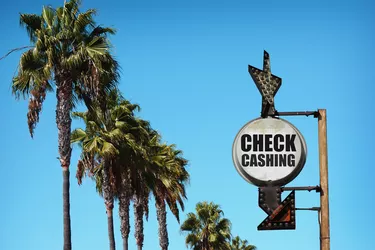
Image Credit: smodj/iStock/GettyImages
In This Article
- Why Do Check Cashing Places Exist?
- Services and Hours
- What You'll Need to Bring
- Check Cashing Fees
- Other Options
Check cashing businesses offer financial services outside a traditional bank or financial institution. These service providers can cash money orders or many types of checks without requiring you to have a bank account. Whether you opt for a stand-alone check cashing store or find these services at a grocery store, retailer or credit union, there are some things to know before cashing your check.
Why Do Check Cashing Places Exist?
According to the Federal Deposit Finance Corporation (FDIC), 18 percent of adults in the U.S. are unbanked or underbanked. By 2021 U.S. Census Bureau numbers, that is more than 45 million people.
Underbanked individuals may have one or more products from a financial institution or lender, such as a checking account, debit card or credit card, but they don't necessarily have the resources or credit score to manage their personal finances and banking needs. Unbanked individuals have no relationship with a traditional bank and cannot have direct deposit for payroll checks or use any banking services.
Unbanked and underbanked consumers need somewhere to make bill payments, cash payroll checks or even secure a short-term loan outside of the traditional banking system. These are the needs served by financial service centers like check cashing stores.
Services and Hours of Check Cashing Stores
Check cashing services will check the check casher's identity, verify the check issuer's validity and verify the check before cashing it. Many of these businesses also serve as one-stop financial service centers, offering money orders, bill payments and money transfers. Some check cashing companies also provide payday loans or title loans but be aware of the potentially high fees associated with these transactions.
Some locations, especially retail and grocery stores, are open longer than traditional bank hours. For instance, Walmart Money Centers are open on business days, nights, Saturdays and Sundays.
What You Need to Cash Your Check
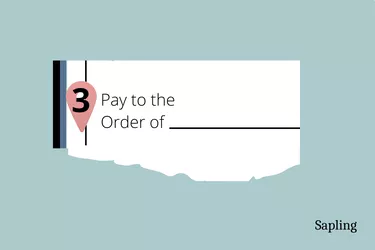
To cash a check, you must bring a valid, government-issued photo ID and have the type of check the check cashing service accepts. Most check cashing businesses accept payroll checks, government checks, tax refund checks, cashier's checks, preprinted checks and money orders. Some shops may not accept personal checks; confirm before you go.
The check must be made out to you, with the "Pay to the Order of" line (image item 3) matching the legal name on your photo ID.
When your identity and the check's validity are confirmed, you can turn your check into cash or have it loaded onto a prepaid debit card. But first, the fees.
Are Check Cashing Fees High?
The fee you'll be charged depends on your transaction and the check cashing business you use. Some stores charge a flat fee per dollar amount and have a maximum limit for how large a check you can cash. Other stores charge a percentage of the check amount.
Any check cashing service should let you know the fee structure and amount before you agree to cash a check there.
Other Check Cashing Options
Check cashing stores are convenient and widely available if you don't have a bank account. There may be other options, too. For instance, some banks and credit unions will cash checks for a small fee or no fee at all. Fintech apps like Chime offer mobile banking with no monthly fees or minimums and forgiving overdraft policies.
And there is more promising news on the horizon, as financial institutions are addressing the inequality of bank access and the growing importance of financial inclusion.
According to the Office of the Comptroller of the Currency, some banks and credit unions are recognizing America's 18 percent underbanked or unbanked as a market segment they can serve.
Some banks are offering free checking.) and second-chance checking accounts, recognizing that the high fees, overdraft fees and high minimum balances are keeping millions of consumers from being able to maintain a banking account.
-

Playing with FIRE Documentary Review: Insights & Behind the Scenes
The FIRE Documentary Some of the Playing with FIRE cast with Director (Left to Right: Grant Sabatier, J.D. Roth, Paula Pant, Brad Barrett, Taylor Rieckens, Travis Shakespeare, Chris Hutchins, Kiersten
-
Credit Card Upgrade? 13 Signs It's Time for a New Card
budgeting
- Debt Relief Grants: A Guide to Government Assistance
- Creating a Comprehensive Budget Statement: A Step-by-Step Guide
- Commercial Bank Account Types: A Comprehensive Guide
- Understanding Check Types: A Comprehensive Guide
- Notary Public Fees: Costs & State Regulations - [Year]
- Executor Fees: Understanding Compensation for Estate Administration
- Locate the Check Number: A Simple Guide
- Track a Money Order: Methods & Recovery Tips
- Understanding Offshore Bank Accounts: Privacy, Tax & Regulations
-
 Oil Prices Fall After Inventory Build Disappoints
Get all the latest news on coronavirus and more delivered daily to your inbox. Sign up here. Oil prices snapped its five-day winning streak despite a weekly inventory report showing st...
-
 Disputing a Cashing of a Stolen Check: A Step-by-Step Guide
A stolen check can be difficult to resolve. When a check is lost or stolen, someone else may cash it. There are two different situations when this may happen to you. You may have your checkbo...