Lead Scoring: A Comprehensive Guide to Building a Scoring Model & Hand-Off Strategy
68% of businesses don’t practice any type of lead scoring.
Lead scoring allows you to quickly and easily identify flaky, half-hearted, and committed prospects. And ignoring it isn’t a recipe for long-term, sustainable success.
With lead scoring, you don’t waste loads of time on unworthy prospects, and you don’t ignore people on the edge of buying.
But what exactly is lead scoring and why is it so important for your business? And how do you do it?
Let’s get started.
What is Lead Scoring?
To implement a lead scoring strategy for your marketing and sales teams, you first need to understand what lead scoring is.
Here’s how HubSpot puts it:
That was helpful. Sort of. But that definition is still a bit vague.
Think about it this way: lead scoring is a way to categorize prospects by level of commitment.
Most of the time, the lead scoring system is point-based. This means that someone who is more committed and interested in your product receives a higher lead score than someone who shows minimal interest.
Then, the marketing and sales teams (together) decide which prospects deserve which treatment based on their level of interest and fit with your product.
On the surface, lead scoring really is that simple. But, as with all systems of measurement, there are further layers of depth.
Because finding an acceptable “lead scoring template” online won’t happen. It doesn’t exist. Your business is unique. So your own lead scoring model will be, too. Instead, you want to start by tracking two primary facets of prospect qualification:
- The general way that the person fits with your business.
- The person’s actual level of interest and engagement with your product.
Your ideal client will receive a high lead score in both categories.
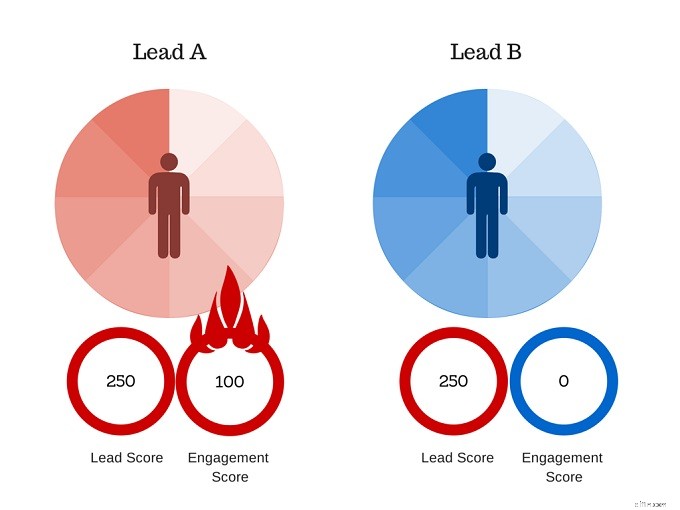
(Image Source)
Lead scoring allows you to tell which prospects are worth your time and which aren’t.
And it allows you to do so systematically rather than by what “feels right” at the time.
Similar to marketing segmentation, you can then group people into categories that define their interest scores.
You’ll have the groups who you need to “fire”, the people who you should continue engaging with but aren’t ready to buy, and the hot prospects that just need a tiny bit of convincing to make a purchase decision.
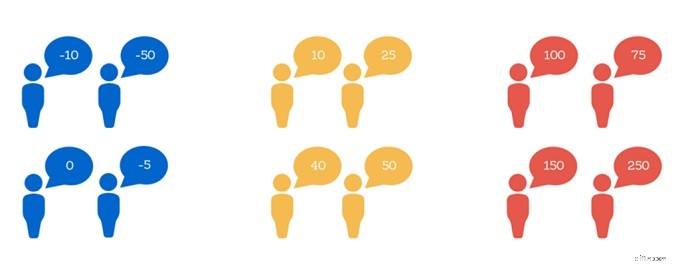
(Image Source)
With all of that prospect information, the benefits become obvious.
Now you can spend more time pursuing the prospects that matter most and ditch the ones that matter least, helping you slash acquisition costs and increase lifetime values.
But the benefits of lead scoring go much deeper than that…
Why is Lead Scoring Vital to your Business?
You know that your sales team should spend a massive portion of their time following up with prospects who’ve shown interest in your service or product.
But here’s what you — or, rather, your sales team — don’t know.
You don’t know who to follow up with. And you’re not alone in that ignorance.
70% of leads and sales are lost because of poor follow-up practices.
That’s almost three out of four people that don’t buy from you because you didn’t follow up with them. Yikes.
But that’s only the tip of the marketing-struggle iceberg.
In fact, 65% of companies say that generating traffic and leads is one of their top marketing challenges and 43% said that proving the ROI of their marketing activities was a top challenge.
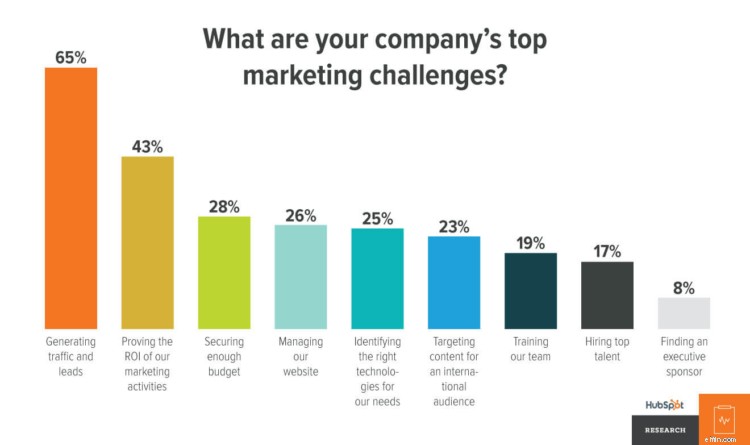
(Image Source)
Believe it or not, lead scoring might offer a solution for those very struggles.
Specifically, the top benefits of companies that use lead scoring are a more measurable return on investment (ROI), an increased conversion rate, and higher sales productivity and effectiveness.
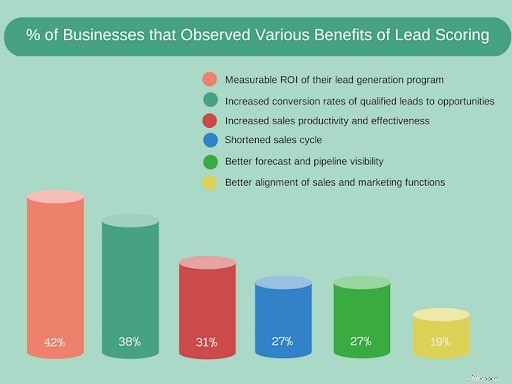
(Image Source)
Want to understand your marketing ROI better, generate more traffic and leads, and have a more effective sales team?
Lead scoring is your savior because it can completely automate:
- Highlighting promising leads
- Ditching pointless leads
- Nurturing medium-commitment leads
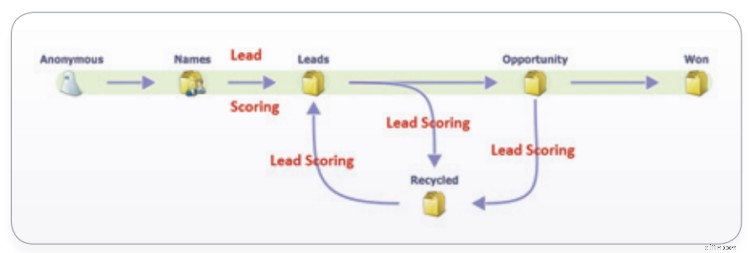
Here’s what that looks like. When someone isn’t showing any interest, they get left behind.
But when someone is showing a moderate amount of interest, you try to recycle them until they finally become a customer.
(Image Source)
Lead scoring, in other words, provides the segmentation engine that your marketing automation activities need to thrive.
That’s why 68% of highly effective marketers counted lead scoring as a top contributor to their revenue.
Or why companies who use lead scoring regularly see a 77% higher lead generation ROI than their non-lead-scoring counterparts.
In the words of Laura Ramos at Forrester Research,
Here’s how you’re going to leverage all of that lead-scoring potential.
Step #1: Determine the Characteristics of Your Personas and Segments
All good things start with personas. The trick is to start broad before you go narrow.
There are people who consistently engage with your content marketing efforts. They click on your ads, read your blog posts, and comment on your stuff.
However, these people aren’t necessarily buying from you yet.
Those will have different characteristics from the loyal customer with the highest lifetime value.
There are distinct differences. There are reasons one group has purchased, and the other is on the fence.
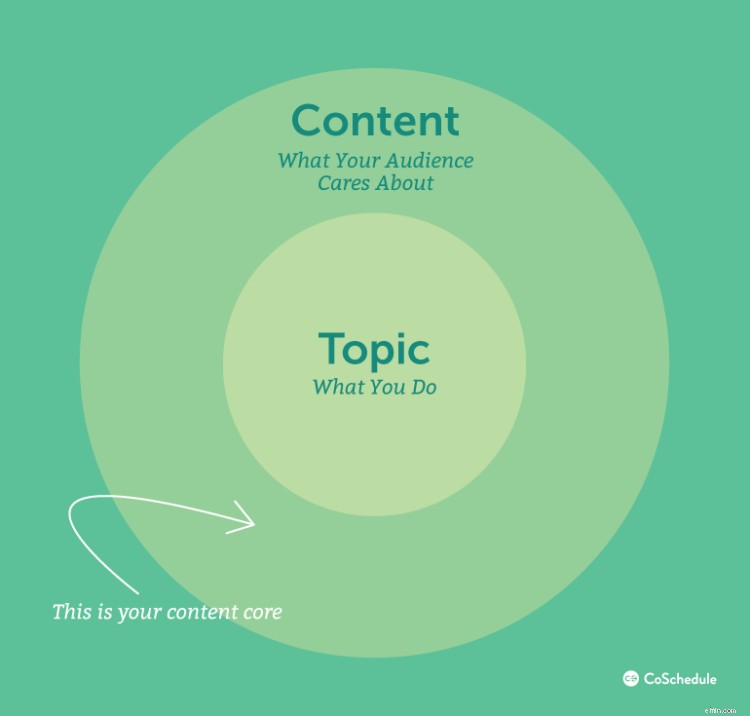
Whatever the case, customer segments and personas are high-level groups of people who are interested in your content, services, products, and business at various levels.
(Image Source)
To determine who your target market is, ask yourself:
- What is the identity of my company and what problem does it solve, holistically?
- Who experiences those problems and is likely to engage with my company regularly?
- Who has purchased, who hasn’t, and why (for each)?
- What language / messaging tone, style, audience, and intent has worked or failed?
You might, for instance, find that males who are in their 20’s are your target market.
Or, perhaps, females in their 30’s. But the point here is to get deeper.
Lead scoring goes beyond static demographics into actual user behavior.
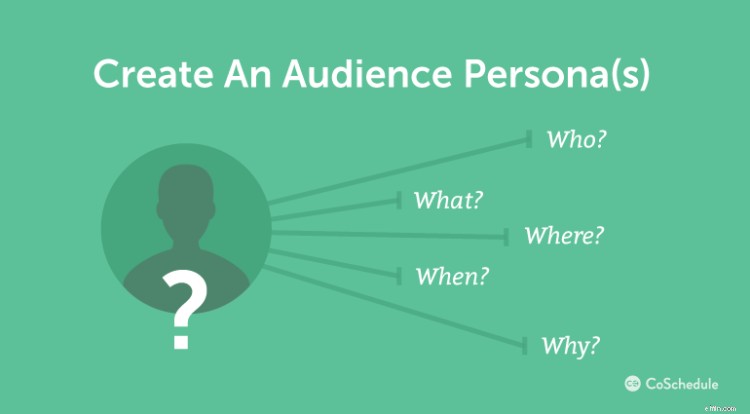
The ‘five whys’ can also help you go deeper into each one:
- Who are they?
- What do they want?
- Where are they coming from?
- When do they engage with you the most?
- Why are they interested in you?
Those five simple questions will work wonders to enhance your understanding of your target market.
(Image Source)
Think of these people as your marketing qualified leads.
They engage with your brand, but they haven’t necessarily bought yet.
Because one of the primary benefits of lead scoring is the ability to transition prospects from the marketing team to the sales team as sales-ready leads.
As Emily Salus from CollabNet says,
Next, it’s time to move on to determining your ideal customer.
-

Optimize Warehouse Management: 51 Tips for Efficiency & Profitability
Effective warehouse management is essential to delivering products on time while keeping operational costs down and driving profitability. Organization, of course, is key. But there are dozens of ways
-
Starting a Business: A Comprehensive Guide to Planning, Launching & Growth
Business
- Break-Even Analysis: A Comprehensive Guide for Business Success
- Find the Right Business Insurance Broker: A Step-by-Step Guide
- Boost Business Growth: Strategies for Repeat Customer Loyalty
- PPP Loan Application Guide: Simplify Your Small Business Funding
- Securing Business Financing: A Comprehensive Preparation Guide
- Small Business Grants: A Comprehensive Guide to Funding Your Growth
- Actionable Insights for Business Growth: A Practical Guide
- E-commerce Accounting: Essential Concepts for Online Businesses
- Prioritizing Financial Goals for Beverage Distributors: A Strategic Guide