
Credit Card Dispute Time Limits: Your Rights Under the Fair Credit Billing Act
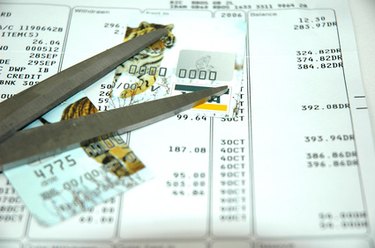
Credit card billing errors happen occasionally and can be corrected when addressed in a timely manner. Fair Credit BiIling Act (FCBA) gives consumers the right to dispute inaccurate credit card billing charges and to have them corrected. The law applies only to revolving accounts, including department store cards. It does not cover installment loans.
Types of Charges
Under FCBA, consumers can dispute unauthorized charges. Banks refund all but $50 of the unauthorized charge. FCBA allows disputes for charges with errors in the amount, date or the merchant's name. If a consumer does not receive a product or receives one that is significantly different from the description, he can file a charge dispute. Consumers can request a written explanation of charge, written proof of purchase or a request for clarification.
Filing a Dispute
Consumers have 60 days from the date the bill with the error was mailed to file a dispute. The dispute must be in writing and mailed to the address for billing inquiries. The Federal Trade Commission advises consumer to send the dispute via certified mail and request a return receipt. Include copies of any supporting documents. The bank must acknowledge the dispute within 30 days and resolve the problem within two billing cycles but in no more than 90 days.
Payment
You must make payment, including a finance charge, on the undisputed amount. The creditor does not have a right to collect a payment on the disputed amount or any related charges. However, the creditor may reduce the available credit by the disputed amount. The creditor may report the dispute to credit bureaus. According to Equal Credit Opportunity Act, a creditor cannot deny credit to a qualified consumer because the consumer is disputing a credit card charge.
Settlement
The creditor will conduct an investigation and report the results to you in writing. If the charge is incorrect, the letter will explain what steps the creditor will take to rectify the situation. The creditor must remove all finance charges, late fees or any other charges associated with the disputed amount. If the creditor determines that the charge is accurate, the letter will explain how much the consumer owes and why. Consumer may disagree with the results of the investigation in writing within 10 days after receiving the explanation. He can request any documents relating to the investigation. At this time, the creditor may report the account as delinquent but must also state that the consumer disagrees that he owes this amount.
-

Understanding Your Credit Card ID Number: Security & Location
Credit cards and debit cards are wonderful conveniences but they carry risks. A lost or stolen card or card number can cost you money and time. A credit card ID number is one of several security featu
-

Average Credit Card Debt in the US: A Detailed Breakdown
The average household credit card debt is around $8,300. Statistics show that Americans now rely more and more on plastic to cover life expenses. The average American carries eight credit and deb
credit card
- Understanding the CVC/CVV: Your Credit Card Security Code
- Credit Card Over Limit: Fees, Consequences & How to Avoid
- Credit Card Checksum: Understanding Its Role in Fraud Prevention
- Understanding Credit Card Verification Numbers (CVV/CVC/CSC)
- Credit Card Dimensions & Security: Everything You Need to Know
- Understanding Periodic Finance Charges on Credit Cards
- The American Express Centurion Card: An In-Depth Look at the World's Most Exclusive Credit Card
- Disputing a Citibank Credit Card Charge: A Comprehensive Guide
- Understanding Cash Finance Charges: What You Need to Know
-
 American Express CID: Understanding Your Card Verification Number
What Is the CVV on an American Express Credit Card? Every credit card has a card verification value, or CVV, consumers may need to provide when making a purchase. American Express refers to t...
-
 RushCard: Prepaid Visa Debit Card - Features & Benefits
A woman is paying with her credit card. The RushCard is a prepaid card you can use online and in stores that accept Visa debit cards. You can also use it to pay bills and withdraw money from ...