
Boost Your Credit Score: 3 Proven Strategies for Better Financial Health
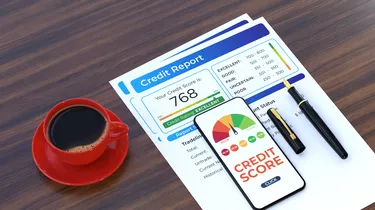
Image Credit: HATICE GOCMEN/iStock/GettyImages
Your credit score may be just a three-digit number, but it can have a big impact on your quality of life. It tells potential lenders how likely it is that you'll repay money loaned to you. You'll find it difficult, if not impossible, to qualify for financing if yours is too low.
The good news here is that your credit score is not carved in stone. You can boost yours if you take the right steps.
How Credit Scores Work
Your credit score can be anywhere from 300 to 850, or any of the five credit score levels in between. The higher, the better.
It's arrived at by one of two calculations. It's either a FICO score or a VantageScore. Most lenders – up to 90 percent – use FICO. Credit Karma uses VantageScore. Both collect financial data on you from the three major credit reporting agencies: Experian, Equifax and TransUnion.
FICO takes five credit score components into consideration, although the weight assigned to each varies:
- a history of timely (or late) payments
- your credit utilization ratio
- how many years of experience you have with borrowing money
- the types of loans you have, such as credit cards or a mortgage and car loan
- how much new credit you've applied for in recent months
You can focus on these areas to bring your score up.
Your credit score calculates how long you've been borrowing, so old accounts are good accounts. They mean you have experience with managing your credit.
1. Never Ever Miss a Payment
Put your credit accounts at the top of your payment list to be serviced before you pay anything or anyone else. Make at least the minimum payment on credit cards so you're not reported as being late. A single delinquent account can remain on your credit report and affect your score for up to seven years.
Throw extra money at those that are closest to their credit limits if you can afford to. This affects your credit utilization ratio – how much of your available revolving credit you've used up – and it's the most important part of your score. It tells lenders how deeply in debt you are.
2. Don't Apply for New Credit
Applying for new credit dings your score as well. Lenders will wonder if you're over your head financially if you've opened a slew of new credit accounts in a relatively short period of time, or if you've even applied for them.
There's one exception to this rule. You can apply to numerous financial institutions in a short period of time if all your applications are for the same type of loan, such as auto financing or a mortgage. The credit reporting agencies will assume you're shopping for the best deal and weigh these circumstances accordingly. It's not assumed that you're going to buy seven cars if you apply for seven auto loans within a short period of time.
3. Don’t Close Old Accounts
Your credit score calculates how long you've been borrowing, so old accounts are good accounts. They mean you have experience with managing your credit. Closing them can also affect your all-important credit utilization ratio.
You might have an open credit card that you haven't used in forever. Your balance on that card is zero, but you have a $4,000 credit limit. That's $4,000 that helps your credit utilization ratio, so let it sit there in your ownership, even if you're not using it.
How Long Will This Take?
Improving your credit score isn't like waving a magic wand, at least not in most cases. It could happen if you pay off all your credit cards and revolving accounts at once, bringing your credit utilization ratio down to 0 percent. Otherwise, expect to dedicate three to six months to following these and other rules before you see any kind of marked improvement. It could even take from one to two years, depending on the nature of what pulled your score down.
-

Bankruptcy & the January 6th Capitol Insurrection: A Troubling Connection
The people arrested in connection with the Jan. 6 Capitol insurrection had an 18% bankruptcy rate – twice as high as the national average – accor
-

CDs in 2024: Are Certificates of Deposit Still a Good Investment?
Should you put money into a CD, or keep your savings elsewhere?
debt
- Personal Loan Sales: Strategies & Best Practices for Loan Officers
- CareCredit Cash Advances: What You Need to Know
- Understanding Bank Loans: Types, Terms & How They Work
- Credit Card Balance Transfers: A Comprehensive Guide
- Pension Loan Guide: Borrow Against Your Retirement Savings
- Understanding and Stopping Payroll Garnishment: Your Options
- Experian Account Cancellation: A Step-by-Step Guide
- Understanding ACH NSF Charges: Causes & What to Do
- 403(b) Withdrawal Rules: Understanding Early Access & Tax Implications
-
 Financial Wellness for Mental Health: Practical Money Management Strategies
Money management is a skill that needs to be taught. A person with mental health issues has a myriad of concerns to deal with, and money management skills may fall by the wayside. According t...
-
 Mastering Long-Term Personal Finance: Strategies for Financial Success
When you think about it, personal finance is about playing the long game. Sure, its about other things as well. Its about paying off debt. Its about spending less than you earn. But when you thi...