
Effective Futures Trading Strategies: Enhance Your Market Edge
Utilizing different futures trading strategies can help traders guide their decision making process on when and how to engage with the market.
Some approaches focus on identifying long-term trends, while others involve reacting to short-term price fluctuations. Understanding these different futures strategies can provide valuable insight into how some traders attempt to manage risk and pursue their trading objectives within the futures market.
Completely new to futures trading? Learn more about how futures contracts work before exploring the strategies outlined below. Otherwise, let’s get started.
Example of trend following:
- A trader observes that Bitcoin (BTC) futures consistently make higher highs and higher lows for several days, indicating an uptrend. They decide to open a long position, aiming to profit as the price continues to climb.
- If the trend persists, they will hold their position. But if Bitcoin futures suddenly start making lower lows and break below a key support level, this could signal a potential trend reversal or weakening, prompting the trader to exit their position.
- Similarly, if an asset is in a clear downtrend, a trader might take a short position and close it when indicators suggest the downward momentum is fading.
That said, trend followers can enter trades that quickly reverse. This can lead to a string of small losses as the market fakes out in one direction before quickly going the other way. Skilled futures traders watch the market closely and stay selective with their entries.
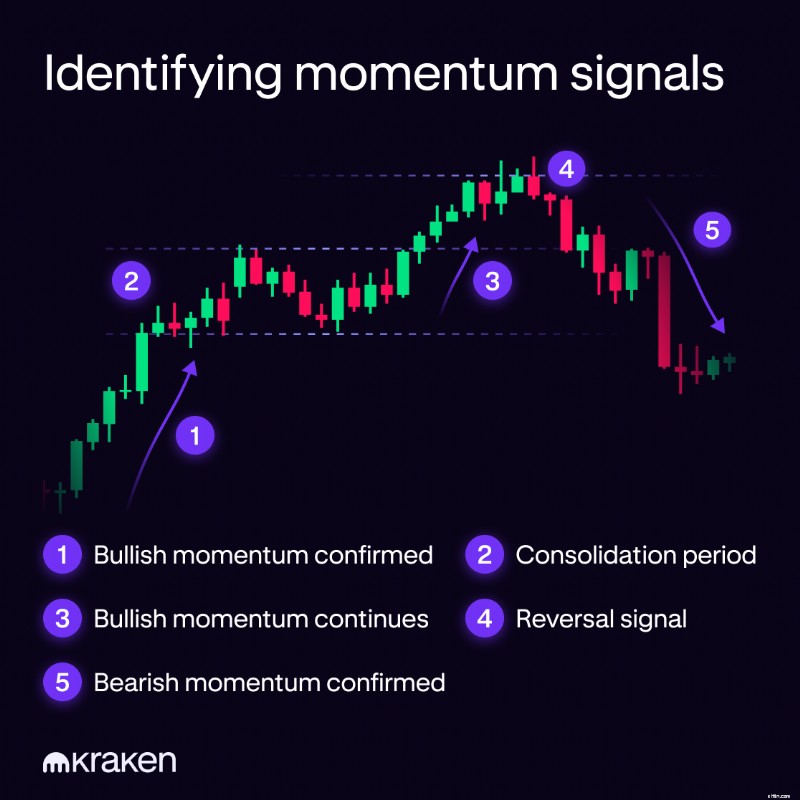
Example of momentum trading:
- A trader notices that Solana (SOL) futures have broken above a key resistance level with a noticeable both a spike in trading volume as well as a bullish crossover on the moving averages. Seeing this as a signal of strong upward momentum, they enter a long position.
- If the momentum holds, the trader can ride the trend and exit when indicators show signs of slowing or reversal.
- The trader may exit early to minimize losses if momentum fades quickly or reverses.
Momentum strategies often require tight stop-losses and quick decision-making to help manage risk. Without a clear trend, momentum signals may produce false starts, leading to potential losses.
Example of breakout trading:
- A trader sees that Shiba Inu (SHIB) futures have been trading in a tight range, with resistance around a certain price. When the price breaks above that level on strong volume, they enter a long position, anticipating continued upward momentum.
- If the price keeps rising, the trader holds the position, adjusting stop-losses or locking in profits along the way.
- If the breakout fails and the price drops back below the initial price, they exit to limit losses.
Because false breakouts are common, many breakout traders rely on trading volume spikes or additional indicators to confirm the move before entering.
Because positions aren’t held overnight, day traders aim to avoid risks related to news or price swings that can happen while they’re away from the market.
But this comes at a cost: staying on top of the market requires constant attention, and success often depends on quick execution and strict discipline.
Example of day trading:
- A trader sees Polkadot (DOT) futures bounce off a support level in the early hours of the trading day. They enter a long position, targeting a small price move of a few percentage points. Once the price hits their profit target, they exit the trade before the end of their trading window.
- If the move plays out as expected, the trader locks in a small gain and avoids overnight exposure.
- If the price turns quickly, they cut the position and move on, limiting losses to a preset amount.
This process repeats several times throughout the day and can rack up trading fees quickly. This is especially true with high-frequency setups. Small losses can easily add up during day trading without a well-defined plan and emotional control.
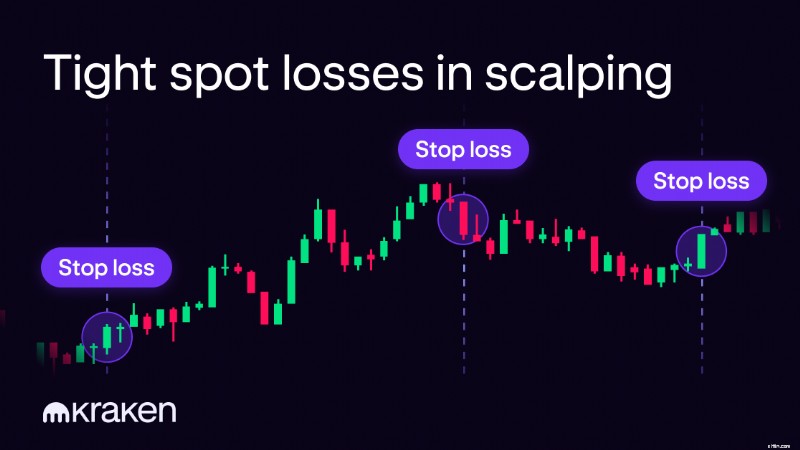
Example of scalping:
- A trader spots rapid buying activity on BNB (BNB) futures following a small breakout. They enter a long position and close it seconds after the price moves just a few dollars in their favor.
- If the move plays out, they capture a small gain and look for the next opportunity.
- If it reverses, the loss is also small, but with dozens of trades a day, risk adds up fast.
Scalpers often set tight stop-losses and avoid holding positions longer than planned to reduce exposure. That said, with so many trades, transaction costs can quickly eat into profits. Additionally, one poorly managed trade can wipe out the gains from many successful ones.
Trading derivatives and other financial instruments, including leveraged financial instruments, involves significant risks and is not appropriate for all investors. See our Risk Disclosure to learn more
-

Portfolio Diversification: Reduce Risk & Enhance Returns
Diversification is a technique of allocating portfolio resources or capital to a mix of different investments. The ultimate goal of diversification is to reduce the volatilityVIXThe Chicago Board Opti
-

Royal Commission Reveals Banking Failures Impacting Australian Farmers
The Financial Services Royal Commission has exposed the fraught relationship between farmers and financiers. We have heard about loan terms being
Digital currency exchange
- Best Low-Cost Cryptocurrencies for Indian Investors [May 2026]
- Secure Cryptocurrency Exchanges: A Comprehensive Guide to Safety
- Top 4 Options Trading Platforms for Beginners & Experienced Traders
- Meme Tokens: Understanding the 2021 Crypto Craze
- Polymarket & Prediction Markets: Infrastructure Challenges for Growth
- Bitcoin: Key Facts & Understanding the Future of Cryptocurrency
- Crypto Trading for Beginners: A Comprehensive Guide to Getting Started
- Bitcoin Halving Explained: What You Need to Know
- Beyond Bitcoin: Exploring Alternative Cryptocurrencies in 2021
-
 Bare Bones Budget: A Practical Guide to Saving Money
In the realm of personal finance, crafting a budget is an essential first step to managing your money effectively. But what if we told you there’s a way to supercharge your savings and financial d...
-
 Effective Money Management: 7 Proven Strategies for Financial Control
Managing money doesn’t have to feel overwhelming. With the right habits and a clear plan, you can stay in control of your spending, save consistently, and reduce financial stress. These seven prac...