
Understanding Economic Deficits: Causes & Effects
The literal meaning of the word deficit is a loss or shortfall. In terms of finance, deficit refers to a shortfall of certain economic resources, mostly money. An individual runs a deficit if they spend more money than what they earn in a month.
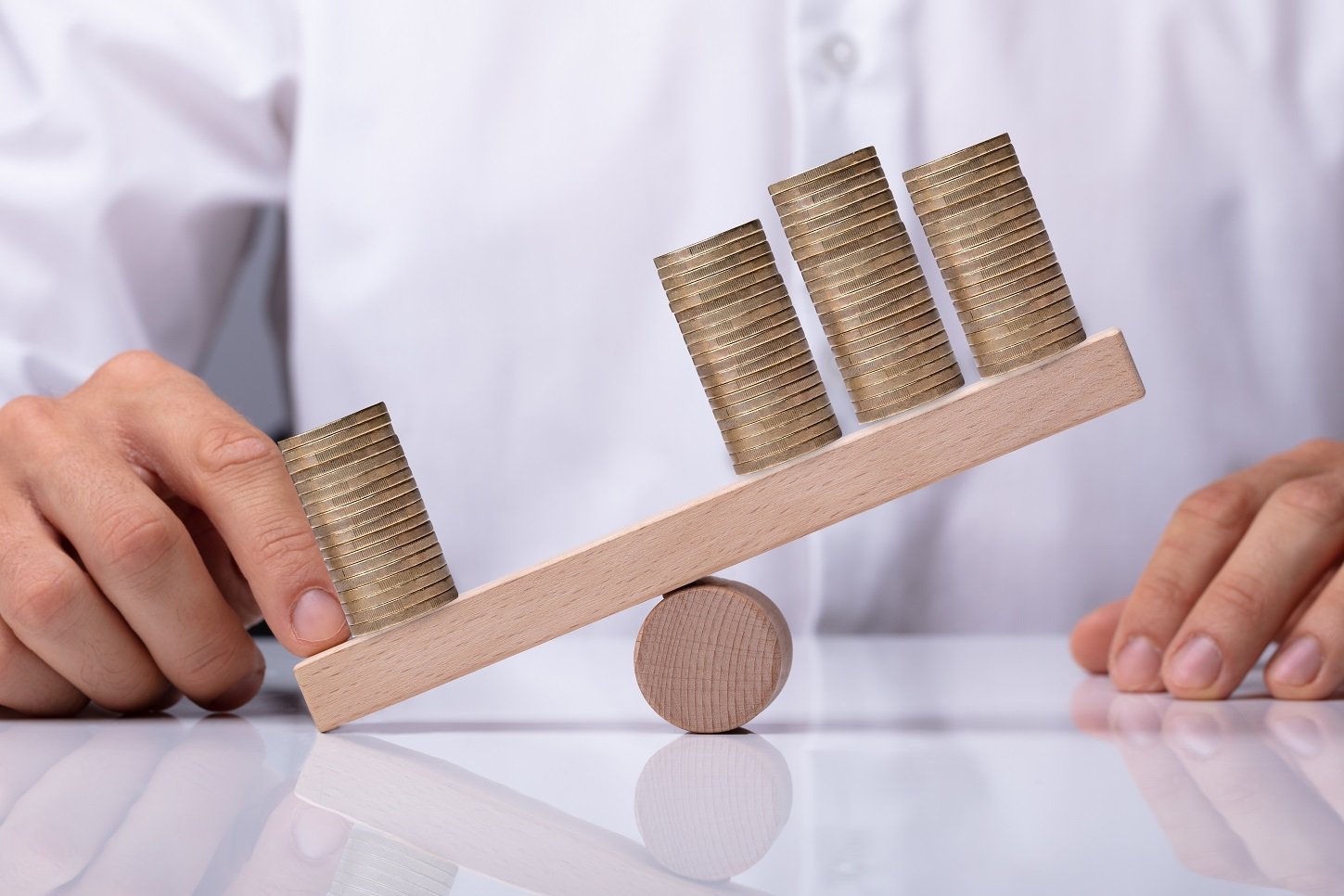
When a government spends more money than what it collects, it is said to run a fiscal deficit. Again, when the citizens of a country collectively buy more goods from abroad than what they sell to foreigners, the country is said to be facing a trade deficit. In short, a deficit occurs whenever negative items exceed positive items.
Summary
- In terms of finance, deficit refers to a shortfall of certain economic resources, mostly money.
- Since deficit implies a shortage of funds or an excess of cash outflows over inflows, it does not present a favorable situation for an entity. Therefore, experts consider deficits to be highly unsustainable and detrimental to long-term economic stability.
- Fiscal deficits and trade deficits are among the most important kinds of government deficits.
Understanding Deficits
Since a deficit implies a shortage of funds or an excess of cash outflows over inflows, it does not present a favorable situation for an entity. Such shortages always necessitate the addition of debt to overcome them, and it makes an entity indebted to external parties. It is why experts consider deficits to be highly unsustainable and detrimental to long-term economic stability.
However, there are situations when entities willingly incur deficits for some future benefit. A government sometimes spends more money to develop the economy and create jobs during a recessionRecessionRecession is a term used to signify a slowdown in general economic activity. In macroeconomics, recessions are officially recognized after two consecutive quarters of negative GDP growth rates., even if it means increasing its fiscal deficit. The government’s current fiscal deficit is justified by the possibility that such actions can help the country recover from the recession in the near future.
Fiscal deficit and trade deficit are among the most important kinds of deficit. Others include current account deficit, capital account deficit, primary deficit, and budget deficitBudget DeficitA budget deficit occurs when government expenditures exceed revenues from taxes and other sources. It is most commonly applied to government budgets..
Fiscal Deficit
Fiscal deficit refers to the shortfall that arises when a government spends more money than what it collects. The amount of the deficit also represents how much the government needs to borrow to pay for its excess expenditure.
Governments can borrow money from the citizens of the country by issuing and selling government bondsTreasury Bills (T-Bills)Treasury Bills (or T-Bills for short) are a short-term financial instrument issued by the US Treasury with maturity periods from a few days up to 52 weeks.. They can also borrow money from domestic commercial banks. These are internal sources of debt. External sources include getting a loan from foreign governments or international financial institutions, like the World Bank. Another way to finance the debt requirements of the government is by printing new currency. This is known as deficit financing.
As mentioned above, the creation of a fiscal deficit can be justified. However, fiscal deficits pose the following risks:
- When governments borrow, they need to pay additional interest on such loans. Interest payments drive up government expenditure in subsequent periods and increase the deficit in the future. It leads to a phenomenon called the vicious cycle of debt, wherein governments have to take additional loans to pay off past debts.
- Printing fresh currency leads to the inflow of an additional quantity of money in the economy. If people have more money to spend, more people will try to purchase goods that are available in limited quantities. Since market demand will exceed market supply, deficit financing can lead to inflation, that is, a rise in the prices of all commodities.
- Excessive dependence of a country on debt can hamper economic growth in the long term. If most of the government’s revenues are spent to settle past loans, there will be less money to invest in development and job creation, leading to economic growth.
Trade Deficit
When the value of a country’s imports exceeds the value of its exports, the resulting difference is termed a trade deficit. A trade deficit is not necessarily an unfavorable situation. In fact, such a deficit shows that the citizens of a country are able to access a wide range of products.
It also implies improved standards of livingStandard of LivingThe standard of living is a term used to describe the level of income, necessities, luxury, and other goods and services that are generally in the country. Moreover, the availability of better quality foreign products also encourages domestic industries to improve their products’ quality.
Despite its benefits, however, the trade deficit can result in a dampening impact on an economy in the long term. If domestic residents prefer foreign goods to domestic ones, domestic industries will lose their source of income. It can even lead to a permanent closure of the industries and a massive loss of employment. It poses a threat to a country’s future growth prospects.
More Resources
CFI is the official provider of the global Commercial Banking & Credit Analyst (CBCA)™Program Page - CBCAGet CFI's CBCA™ certification and become a Commercial Banking & Credit Analyst. Enroll and advance your career with our certification programs and courses. certification program, designed to help anyone become a world-class financial analyst. To keep advancing your career, the additional CFI resources below will be useful:
- ShortfallShortfallShortfall occurs whenever there is a mismatch between supply and demand. It is applicable to a variety of financial situations.
- Balance of TradeBalance of Trade (BOT)The balance of trade (BOT), also known as the trade balance, refers to the difference between the monetary value of a country’s imports and
- Imports and ExportsImports and ExportsImports are the goods and services that are purchased from the rest of the world by a country’s residents, rather than buying domestically
- Short-Term DebtShort-Term DebtShort-term debt is defined as debt obligations that are due to be paid either within the next 12-month period or the current fiscal year.
-

DeFi Explained: A Beginner's Guide to Decentralized Finance
The Beginner’s Guide to Decentralized FinanceIf you’re diving deep into the world of cryptocurrency, you have probably heard the term “DeFi” used to describe a variety of new protocols and assets. Fi
-
0x: A Comprehensive Guide to Decentralized Ethereum Trading
What Is 0x? 0x is a decentralized exchange for trading ERC 20 tokens. (See also: What Is ERC 20 And What Does It Mean For Ethereum?). It is among the most high-profile examples of decentra
finance
- Understanding Financial Supplement Student Loans in Australia
- Understanding Deficit Equity: Causes, Impacts & Solutions
- Understanding Budget Deficits: Causes, Effects & Solutions
- Jumbo CDs: Higher Rates & Deposits Explained
- Public Finance: A Comprehensive Overview - Revenue, Spending & Management
- Safe Haven Investments: Protecting Your Portfolio During Economic Uncertainty
- Budget Deficit Explained: Causes, Effects & Solutions
- Understanding Regulation Z: Your Rights as a Borrower
- Annuities Explained: A Simple Guide to Retirement Income
-
Understanding Cryptocurrency: A Beginner's Guide to Digital Currency
Cryptocurrency is a kind of digital currency that is intended to act as a medium of exchange. Cryptocurrency has become popular in the last decade, in particular, with Bitcoin becoming the most widel...
-
DB(k) Plans: A Hybrid Retirement Solution for Employers & Employees
The DB(k) plan is a type of retirement plan that is available for employers. This type of retirement plan combines features from the 401(k) plan with features from a defined benefit pension plan...