
Understanding Transfer Tax: A Step-by-Step Calculation Guide
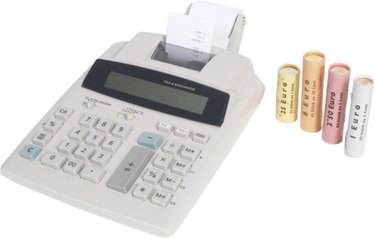
Some states have what is called transfer tax or grantor's tax on conveyance of real estate. In some states, they are stamps that are purchased and affixed on the deed. In other states, the tax is paid directly to the county recorder or court clerk. The tax might be paid by the buyer, seller or divided between the two. The following steps provide information about how the transfer tax is calculated.
Step 1
Identify the amount of the state's transfer tax. For our example, let's say it is $2 for each $500, or a fraction of that amount.
Step 2
Identify the sale price of the house. For our example, the sale price will be $200,000.
Step 3
Calculate the taxable units. To do that, you will divide the sale price of $200,000 by $500, making the taxable units equally 400.
Step 4
Multiply the taxable units by the transfer tax. In our example, it would be 2 x 400, making the transfer tax $800.
-
Understanding & Calculating Business Liabilities: A Comprehensive Guide
Use the balance sheet equation to calculate liabilities. Most companies have liabilities. These liabilities, otherwise known as debts, are either short-term or long-term. Short-term liabiliti
-
Effective Yield: Understanding and Calculating Annual Returns
You can calculate yields on your investments. In the world of finance and investments, two types of yield are the periodic yield and the effective yield. The periodic yield is the yield for t
home finance
- MoneyGram Transfer Fees: Calculate Costs Quickly | MoneyGram
- Understanding Loss Severity: Impact on Foreclosures & Short Sales
- Depreciation for Rental Properties: A Step-by-Step Guide
- Calculate Months of Inventory: A Real Estate Guide
- Understanding Mill Rates: How Property Taxes Are Calculated
- MRTA Explained: Mortgage Reducing Term Assurance in Malaysia
- Mortgage Constant: Calculation & Importance for Real Estate Investors
- Bridge Loans: A Guide to Securing Your Next Home
- Quarterly Taxes for Businesses: A Simple Calculation Guide
-
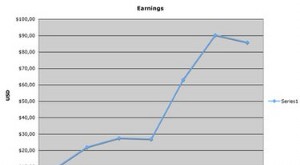 Understanding and Calculating Year-to-Date (YTD) Change
Calculating the YTD change can help you determine the rate of growth. A year-to-date figure (YTD) details the total percentage change from January 1 until a date later in the year. A calendar...
-
 Calculate Net Proceeds: A Simple Guide for Homeowners & Asset Sellers
You can calculate net proceeds. The Federal Reserve reported that American households controlled almost $26 trillion in owner-occupied real estate in 2019. It's impossible to know how muc...