
Boost Curb Appeal: Perennials vs. Annuals for a Stunning Home Exterior
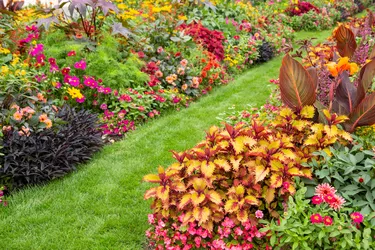
Image Credit: BasieB/iStock/GettyImages
You can't flip through a home and garden magazine or be within earshot of a gardening show without hearing the word "curb appeal." According to the National Association of Realtors (NAR), 99 percent of their members believe curb appeal is valuable for attracting a buyer and boosting home value.
If you're not selling your home, curb appeal can be important to you just because you love your home. And when it comes time to working on your curb appeal, you'll want a healthy mix of annuals and perennials.
Mixing Annuals and Perennials
When you start thinking about the impact of plants on the appearance of your home, you have to remember that you want it to be a year-round effect. You need to find a balance of plants that look good no matter what time of year it is. For constant structure, shape and color, your landscape design requires a blend of perennials and annuals. This means a mix of flowers, ground cover, shrubs and trees.
A mixture of perennials and annuals also helps to balance the amount of upkeep and cost of your curb appeal.
Perennials: Advantages and Disadvantages
The biggest advantage of perennials is that they will come back year after year without a lot of effort or expense on your part. These should form the foundation of your curb appeal. Choose perennials based on your growing zone to make sure they'll survive multiple years in your climate.
The upfront cost of perennials tends to be higher than annuals, but once you've paid and gotten the plant established, maintenance costs and effort are minimal.
Your perennials and annuals can also benefit from the creative use of hardscaping elements such as edging, rocks, pavers and other non-natural items that enhance the plants and the curb appeal.
Types of Perennials
Evergreens are the trees and shrubs that remain green all year-round, including conifers like pine trees. Evergreens provide structure, shape and balance during the months when nothing else can survive. This is where you get your year-round green.
Herbaceous perennials are the non-woody, flowering plants that bloom in the warmer months and die back over the winter while their roots survive underground. In the spring, they'll spout from the ground and start their cycle again. Examples include salvia and peonies. This is where you get the color that comes back year after year.
Native perennial plants are those that naturally occur in a region without human introduction. The biggest homeowner advantage of native plants is their ability to thrive in your area without much effort, upkeep or expense on your part.
Additionally, native plants have a symbiotic relationship with beneficial insects and pollinators, preserve biodiversity and aren't invasive. Milkweed, for example, is pretty and attracts monarch butterflies. The National Wildlife Federation's Native Plant Finder can help you pinpoint which plants are native to your area.
Annual Plants: Advantages and Disadvantages
Annual plants have a place in your curb appeal plan, too. Most of these plants last just one year, dying at the end of their lifecycle. To get that same plant again, you have to plant another seed or buy another plant.
The big advantage of annuals is that they offer bold, bright colors and they tend to bloom over and over during the growing season. The plants or seeds don't require much initial investment, but you do have to replace them each year. And they may require more upkeep, depending on where you plant them.
If you showcase your annuals in planters, hanging baskets and pots, you'll need to water them more because their roots can dry out more quickly than those in the ground. The smaller the pot, the more often you'll need to water.
You can extend the blooming cycle of some annuals by "deadheading" them, which means pinching off the old, wilted blooms. This allows the plant to focus its energy on the new blooms.
Hardscaping
Your perennials and annuals can also benefit from the creative use of hardscaping elements such as edging, rocks, pavers and other non-natural items that enhance the plants and the curb appeal. You might plant a perennial climber, like clematis, around your mailbox or surround your porch bench with decorative pots overflowing with colorful petunias. Both will boost your curb appeal with a relatively low investment.
-

Elon Musk Bitcoin Origin Theory: Examining the Rumors
As Bitcoin prices climb closer to $10,000, investors are ramping up speculation on who exactly created the digital currency. Now, theres a new theory that Tesla Inc. (Nasdaq: TSLA) founder and CEO E
-

Invest in US Stocks from India: A Comprehensive Guide
For a very long time, it was very difficult to invest in US stocks from India; often expen
home ownership
- Transform Cinder Block Walls: Affordable & Stylish Covering Ideas
- Basement Finishing Costs: Transforming Your Space into a Rental Apartment
- Ontario Land Survey Records: Access & Importance for Property Buyers
- Down Payment Savings: Essential Tips for First-Time Homebuyers
- Federal & State Grants for Energy-Efficient Window Replacement | [Year]
- First-Time Homebuyer Benefits for Married Couples: Can They Be Claimed Twice?
- Irrevocable Trusts for Real Estate: Benefits & Considerations
- Navigating a Competitive Housing Market: Your Guide to Home Buying
- Transferring Gas Bill Ownership: A Step-by-Step Guide
-
 Arrived Homes Review 2024: Is It a Legitimate Real Estate Investment?
Disclosure: This post may receive compensation from partners listed through affiliate partnerships, at no cost to you. This doesn’t influence our ratings, and the opinions are our own. Learn more here...
-
 Understanding Stablecoins: Risks & What You Need to Know
Many or all of the products here are from our partners that pay us a commission. It’s how we make money. But our editorial integrity ensures our experts’ opi...