
Understanding Share Deposits at Custodians: A Comprehensive Guide
Deposit at custodian is an electronic method that involves the transfer of new shares or share certificates to and from the Depository Trust Company (DTC) through service at the distribution point called Fast Automated Securities Transfer (FAST).
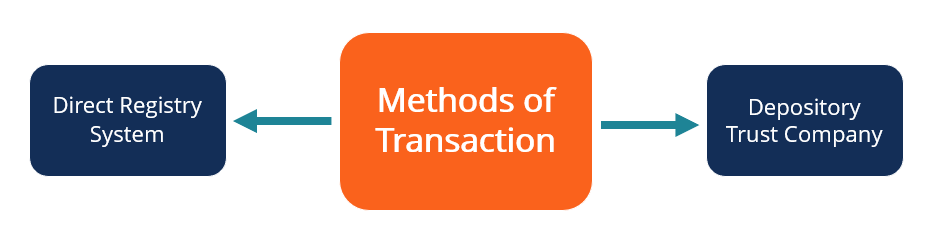
The deposit at custodian is one of the methods to transfer information between brokers/dealers, with the other method being the Direct Registry System (DRS). The two methods allow investors to own stocks in a registered form on the accounts of the transfer agent, rather than physical form.
Summary
A deposit at custodian involves the transfer of new shares or share certificates to and from the Depository Trust Company (DTC) through service at the distribution point called Fast Automated Securities Transfer (FAST).
- The benefits of DTC include lower risk, saving time, and cost-saving.
- A transaction is completed by either increasing or decreasing the balance on the DTC’s books, and the agent is given until 5:30 p.m. ET every day to process a transaction.
Benefits of Deposit at Custodian
The deposit of custodian provides many benefits to investors compared to other methods. The benefits include lower risk, time-saving, and cost-saving. It is because an electronic system like a deposit at custodian allows the transfer of stocks and money to and from the broker’s account immediately.
Hence, the settlement process is expediated and efficient. No physical transfer is involved, which reduces the chance of damage and loss during the transfer process. For the entire process to be successful, there are several requirements for the brokerBrokerageA brokerage provides intermediary services in various areas, e.g., investing, obtaining a loan, or purchasing real estate. A broker is an intermediary who, and they do not concern the investors. The main requirements are that shares need to be trading and qualified for restriction removal, the broker needs to possess a DTC license, and the issuer must be DWAC eligible.
Apart from a FAST transfer, using a deposit at custodian, a DTC can transfer using PTS/PBS. Once a transfer request is approved, the DTC completes the transaction – either a deposit or withdrawal – by increasing or decreasing the custodian’s balance on the DTC’s books, respectively.
Each day, participants are given until 5:15 p.m. ET to deposit or withdraw, and the custodian is given until 5:30 p.m. ET to either approve or reject the transaction. A reason must be given by the custodian when a transfer is approved or rejected, and requests that are not approved or rejected by the custodian at the end of the day will need to be followed up the next day. If the PEND feature is activated on the request, it will be open for the next 72 hours.
Deposits or withdrawals associated with secondary offering Delivery Orders (DOs) must contact the underwritingUnderwritingIn investment banking, underwriting is the process where a bank raises capital for a client (corporation, institution, or government) from investors in the form of equity or debt securities. This article aims to provide readers with a better understanding of the capital raising or underwriting process department of the DTC immediately.
What is the Fast Automated Securities Transfer Program?
The Fast Automated Securities Transfer Program (FAST) is a program that eliminates the movement of physical securities, as it is a contract between the transfer agent and the DTC, where the FAST agent acts as the guardian for the DTC. The FAST Program was introduced in 1975, and today, around 1.1 million issues are circulating the market with 100 agents and a total value of $41 trillion.
The FAST Program is an important program that dematerializes and reduces costs associated with shipping between agents and processing share certificates. FAST agents can access DTC-eligible systems through PTS/PBS or ANIRA. It will allow FAST agents to balance daily accounts and keep track of transactions made through the DTC’s FAST balance.
Deposit at Custodian Agreement
The Securities and Exchange Commission (SEC) requires that each of the DTC’s DWAC custodians is registered as a transfer agent to the Securities Exchange Act of 1934. To register, the following information must be provided:
- The name of the transfer agent
- Transfer agent number
- CDWC contact person
- SEC registration number
- Phone number
- Authorized signature
- User sign-ons
- Print name
- Title
- Date
Related Readings
CFI is the official provider of the global Commercial Banking & Credit Analyst (CBCA)™Program Page - CBCAGet CFI's CBCA™ certification and become a Commercial Banking & Credit Analyst. Enroll and advance your career with our certification programs and courses. certification program, designed to help anyone become a world-class financial analyst. To keep advancing your career, the additional resources below will be useful:
- Automated Clearing House (ACH)Automated Clearing House (ACH)The Automated Clearing House network, also known as ACH, is a channel run by the National Automated Clearing House Association (NACHA), which transfers
- Depository Trust and Clearing Corporation (DTCC)Depository Trust and Clearing Corporation (DTCC)The Depository Trust and Clearing Corporation (DTCC) is a US-based corporation that acts as a centralized clearing and settlement company for different
- Securities and Exchange Commission (SEC)Securities and Exchange Commission (SEC)The US Securities and Exchange Commission, or SEC, is an independent agency of the US federal government that is responsible for implementing federal securities laws and proposing securities rules. It is also in charge of maintaining the securities industry and stock and options exchanges
- Stock WarrantsStock WarrantsStock warrants are options issued by a company that trade on an exchange and give investors the right (but not obligation) to purchase company stock at a specific price within a specified time period. When an investor exercises a warrant, they purchase the stock, and the proceeds are a source of capital for the company.
-

Negotiable CDs (NCDs): Definition, Features & Investment
A negotiable certificate of deposit (NCD) refers to a certificate of deposit with a minimum par value of $100,000, although typically, NCDs will carry a much higher face value. They are also known as
-

Balance Transfer Credit Cards: Save Money & Pay Down Debt
In credit card debt? Having a hard time paying off your high-interest balance?If this rings true, you may want to transfer your balance to another card for a much lower interest rate. Depending on you
invest
- Understanding Security Deposits: What You Need to Know
- Understanding Deposit/Withdrawal at Custodian (DWAC)
- Understanding Deposits: Bank Accounts & Security Funds | [Your Brand/Company Name]
- Understanding Deposit Multipliers: How Banks Manage Reserves
- Deposit Slip: Definition, Purpose & How to Use
- Direct Deposit: Definition, Benefits & How It Works
- Callable CD Explained: Understanding Early Redemption
- Fast Stochastic Indicator: Definition, Calculation & Trading Strategies
- IRA Custodians: Protecting Your Retirement Savings | [Institution Name]
-
 Demand Deposits: Definition, Function & Examples
A demand deposit is money deposited into a bank account with funds that can be withdrawn on-demand at any time. The depositor will typically use demand deposit funds to pay for everyday expenses. For ...
-
![Risk Transfer: Definition, Types & Examples | [Your Company Name]](https://www.etffin.com/article/uploadfiles/202110/2021100815415019_S.png) Risk Transfer: Definition, Types & Examples | [Your Company Name]
Risk Transfer: Definition, Types & Examples | [Your Company Name]Risk transfer refers to a risk managementRisk ManagementRisk management encompasses the identification, analysis, and response to risk factors that form part of the life of a business. It is usually d...