
Understanding Folio Numbers: Your Mutual Fund Account Identifier
A folio number is an identification code for one’s own account in a mutual fund. Similar to a bank account numberInternational Bank Account Number (IBAN)The International Bank Account Number – typically referred to as IBAN – is a system of identification for bank accounts that is used across national borders. Internationally agreed upon, the IBAN system acts as a facilitator for communicating and processing international transactions, a folio number helps identify the investors within a fund. It also records the amount of money each investor has allocated within the fund, along with the contact and transaction details.
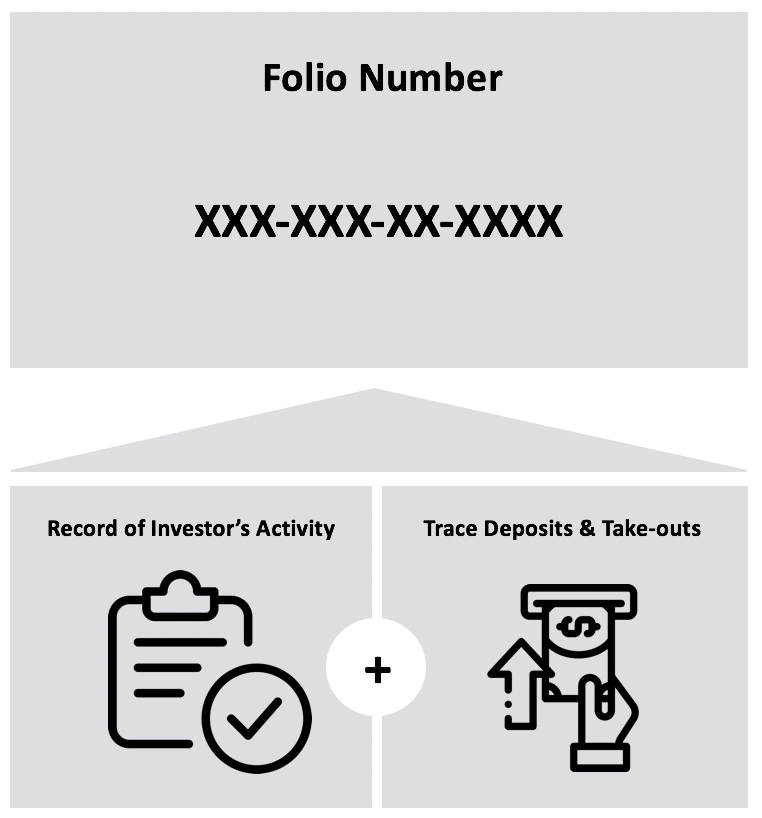
Understanding Folio Numbers
When individuals invest in mutual funds, the returns they receive and the fee structure are recorded in their folio number account. Although the broker often facilitates the investments and communicates the results to the investor. Often, such individuals may request a folio number history just to analyze the accuracy of the data. Furthermore, a folio number account can be used to make multiple purchases of the same mutual fund.
An investor can request multiple folio numbers that directly link to a single mutual fund. If they wish to consolidate all their folio codes into one, they have the option to do that as well.
Defining a Mutual Fund
A mutual fund is an investment vehicle that holds a basket of equities, bonds, and other securities. They are diversified investments that are managed by portfolio managersPortfolio ManagerPortfolio managers manage investment portfolios using a six-step portfolio management process. Learn exactly what does a portfolio manager do in this guide. Portfolio managers are professionals who manage investment portfolios, with the goal of achieving their clients’ investment objectives. at a low-cost fee. They tend to be built based on investor’s preferences, which is driven by risk tolerance.
For example, an investor who wishes to have a portfolio that is 60/40 equities and debt would have a significantly riskier mutual fund relative to an individual who would prefer 30/70 equity and debt allocation.
Advantages of Mutual Funds
1. Advanced portfolio management
When a mutual fund is purchased from an institutional investor, a management fee is often integrated to pay as a small price of managing the portfolio.
2. Dividend reinvestment
Dividends received from current investments are reinvested back into the fund to allow for growth.
3. Risk reduction (Safety)
As mutual funds offer a wide range of investments within a single vehicle, it ultimately provides diversification benefits, reducing unsystematic risk.
Disadvantages of Mutual Funds
1. High expenses
Despite the diversificationDiversificationDiversification is a technique of allocating portfolio resources or capital to a variety of investments.The goal of diversification is to mitigate losses and management aspects of mutual funds, they tend to be more expensive relative to other investments. Therefore, with higher fees, it tends to lower the overall investment return on the portfolio.
2. Poor management actions
The investment manager exercises significant authority over the fund’s investments. Meaning, if they wish to conduct any sort of unnecessary trading, selling investments under a realized loss, or any other behavior that would negatively affect the investors’ gains, they would be enabled to do so, as long as it is within the fund’s investment strategy.
Where to Find the Folio Number
Checking the mutual fund statement used to be the only way to access the folio number. Thus, when these statements were misplaced, many investors had undergone trouble to receive a new one. However, now, there are a variety of methods to retrieve one’s folio number including:
1. Consolidated account statements
- They are similar to bank-issued passbooks for saving accountsSavings AccountA savings account is a typical account at a bank or a credit union that allows an individual to deposit, secure, or withdraw money when the need arises. A savings account usually pays some interest on deposits, although the rate is quite low..
- They are issued on a monthly basis for free. If additional statements are requested, there will be a charge.
2. App or website of the asset management company (AMC)Asset Management Company (AMC)An asset management company (AMC) is a firm that invests a pooled fund of capital on behalf of its clients. The capital is used to fund different
- Fund transactions can be executed via an app or online.
- The app and online portals are typically commission-free.
3. Mutual fund statements
- Fund houses give the statements to investors at the time of purchase.
- AMC charges for requests for additional copies.
Advantages of a Folio Number
The advantages of a folio number are the following:
- Folio numbers can easily trace funds deposited or taken out by the investor.
- It is an easy method to keep a record of the investor’s activity.
- It helps locate the investor’s contact information and transaction history.
- It saves time from undergoing a KYC registration process with the same fund house.
- It enables fund houses to track an individual’s personal information and transaction history.
- Individuals can access investment statements at any time with a folio number.
- Investors can use their folio number to gather information regarding their list of MF units with an AMC instantly.
- Folio number’s record-keeping system allows AMCs to check the veracity of the unitholders.
Learn More
CFI offers the Capital Markets & Securities Analyst (CMSA)®Program Page - CMSAEnroll in CFI's CMSA® program and become a certified Capital Markets &Securities Analyst. Advance your career with our certification programs and courses. certification program for those looking to take their careers to the next level. To keep learning and advancing your career, the following resources will be helpful:
- Open-end vs. Closed-end Mutual FundsOpen-end vs Closed-end Mutual FundsMany investors consider open-end vs. closed-end mutual funds similar due to both mutual funds allowing them a low-cost way to pool capital together and
- Management FeesManagement FeesManagement Fees are fees paid to professionals entrusted with managing investments on a client’s behalf. Typically determined as a percentage of the total
- Stocks, Bonds, and Mutual FundsStocks, Bonds, and Mutual FundsStocks, bonds, and mutual funds are well known and powerful components of a diversified portfolio. To achieve desired returns to accomplish goals, it is
- Success FeeSuccess FeeIn finance, a success fee is a commission paid to an advisor (typically an investment bank) for successfully completing a transaction. The fee is contingent on successfully helping the client achieve their goal, and thus aligns the interests of the client and the advisor. Typically a percentage of the deal value
-

Understanding Your Mutual Fund Shareholder Report: Key Information
Looking at a mutual fund shareholder report can provide you with a lot of important information. Here are some of the things that you should expect to find in a mutual fund shareholder report. C
-
Understanding Mutual Fund Fees: What to Expect & What's Reasonable
Dealing with mutual fund fees is part of the process of investing in mutual funds. Many investors do not know how the fees that they pay stack up against the competition. Here are a few things t
invest
- Mutual Funds Explained: A Comprehensive Investor's Guide
- Long-Short Mutual Funds: A Comprehensive Guide
- Understanding Mutual Fund Fact Sheets: A Beginner's Guide
- Closed-End Mutual Funds: A Comprehensive Guide
- No-Transaction-Fee (NTF) Mutual Funds: A Comprehensive Guide
- Understanding Open-End Mutual Funds: A Comprehensive Guide
- Mutual Funds Explained: A Beginner's Guide to Investment
- Active Fund Management: Strategies & Benefits for Investors
- Hybrid Mutual Funds: A Comprehensive Guide for Investors
-
Understanding Vice Funds: A Guide to Controversial Investments
A vice fund is a type of mutual fund that takes the opposite approach to socially responsible investing. With this type of fund, fund managers invest in a variety of stocks from companies that a...
-
ETF vs. Mutual Fund: Understanding the Key Differences
When constructing an investment portfolio, you’ll probably include a variety of stocks and bonds among the securities you purchase. Stocks and bonds can be purchased individually or as part of a bundl...