
Understanding FMAN Options: February, May, August & November Expirations
FMAN is one of the three options cycles, and it comprises multiple options contracts that share the same terms and expire in the months of February, May, August, and November. The Chicago Board Options Exchange requires that commoditiesCommoditiesCommodities are another class of assets just like stocks and bonds. Most commodities are products that come from the earth that possess, indexes, and common stocks should be assigned to a cycle that comprises four expiration months. Apart from FMAN, the other cycles include JAJO (January, April, July, and October) and MJSDMJSDMJSD is an acronym that stands for the months of March, June, September, and December. The months are the final months of the four annual quarters for releasing financial earnings and declaring dividends. Public companies operating in the United States are required to file quarterly earnings reports (March, June, September, and December).
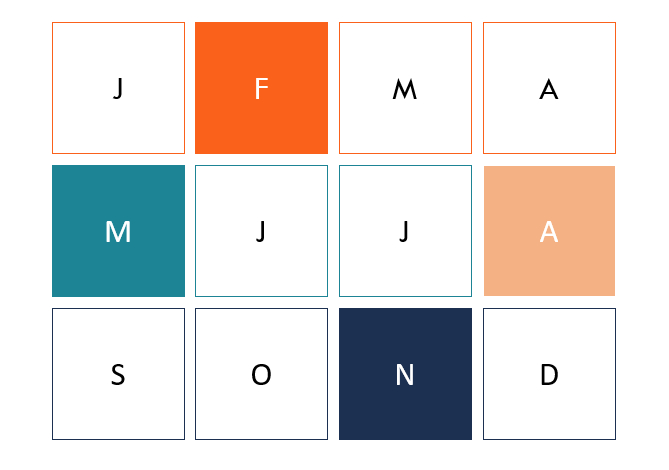
Options that are traded in any of the cycles will have contracts that expire in the current month and in the subsequent month. The expiration dateExpiration Date (Derivatives)The expiration date refers to the date in which options or futures contracts expire. It is the last day of the validity of the derivatives contract. is usually the third Friday of the month, and if it falls on a holiday, it is pushed back to preceding Thursday. The next cycle starts on the following Monday after the expiration date.
Summary
- FMAN is an acronym for the months of February, May, August, and November.
- Options contracts in the FMAN cycle share the same features and expiration months.
- Options contracts are only valid up to the expiration date, and they must be exercised before or on the expiration date to recoup any intrinsic value of the option.
Basics of Options Expiry
Options have a limited life, which means that they are only valid until the expiration date. Traders can exercise or close the trade before or on the expiration date by taking an offsetting position in order to realize any gains or losses on the derivative.
When a trader exercises an option, they are buying or selling the underlying asset at the strike priceStrike PriceThe strike price is the price at which the holder of the option can exercise the option to buy or sell an underlying security, depending on agreed in the options contract. If the trader does not want to exercise the option, they can let the option expire worthless and lose any premiums paid at the start of the contract.
Choices Available to the Options’ Holder
If a trader or an options’ writer exercises the option, they will receive the premium paid when the option is bought by the buyer. It is the best option for a trader who wants to realize a profit or loss (the difference between the purchase price and the current option price) on the contract. If the trader lets the contract expire worthless, the contract becomes invalid and cannot be exercised. If it happens, the seller will keep the premium. The expiration date is the last Friday of the month, and traders must make a decision on what to do with the options contract before the last trading day.
Sometimes, the broker may be authorized by the options’ holder to automatically exercise an in the money options contract on their behalf. Sometimes, a trader may request their brokers not to exercise the options contract automatically due to certain reasons such as lack of adequate capital to buy the underlying stock. Although the trader may not be interested in exercising the option, they can still close their position before or on the expiration date to recover any intrinsic valueIntrinsic ValueThe intrinsic value of a business (or any investment security) is the present value of all expected future cash flows, discounted at the appropriate discount rate. Unlike relative forms of valuation that look at comparable companies, intrinsic valuation looks only at the inherent value of a business on its own. attributable to the option.
Option Expires In the Money vs. Option Expires Out of the Money
If a contract expires in the money, the seller is required to sell the underlying asset to the option buyer at the strike price. The option holder can buy the option at a price that is below the market price. However, trading an in the money option does not necessarily mean that the option holder will make a profit since the commission fees and expenses of trading the option must be accounted for.
An options contract that expires out of the money has a less favorable strike price compared to the market price of the underlying asset. Being out of money does not necessarily mean that the option holder will make a loss. If the option holder paid a premium price that was far out of money, and the option is moving closer to being in the money, the trader has a chance to make a profit. However, if the option is out of the money at expiry, it will be worthless. If an option is out of the money, the holder must exercise the option before the expiration date in order to enjoy any extrinsic value attached to it.
Practical Example of FMAN Cycle
On February 15, an investor plans to purchase an options contract for ABC Limited, and the option is traded on the FMAN Cycle. The expiration dates for the options contract is at the end of business on the third Friday of the current month and the subsequent month. In this case, the options contract will expire on February (current month), March (subsequent month), August, and November (from the cycle schedule).
On March 15, an investor intends to purchase an options contract for ABC Limited, and the option is traded on the FMAN cycle. The expirations dates for this option on the FMAN cycle is as follows: March (current month), April (subsequent month), August, and November (from the cycle schedule).
More Resources
CFI is the official provider of the global Financial Modeling & Valuation Analyst (FMVA)™Become a Certified Financial Modeling & Valuation Analyst (FMVA)®CFI's Financial Modeling and Valuation Analyst (FMVA)® certification will help you gain the confidence you need in your finance career. Enroll today! certification program, designed to help anyone become a world-class financial analyst. To keep advancing your career, the additional resources below will be useful:
- Forward CommitmentsForward CommitmentsA forward commitment refers to a contractual agreement between two parties to carry out a planned transaction, i.e., a transaction in the future. Forward
- Guide to Commodity TradingGuide to Commodity Trading SecretsSuccessful commodity traders know the commodity trading secrets and distinguish between trading different types of financial markets. Trading commodities is different from trading stocks.
- Options: Calls and PutsOptions: Calls and PutsAn option is a derivative contract that gives the holder the right, but not the obligation, to buy or sell an asset by a certain date at a specified price.
- Spot PriceSpot PriceThe spot price is the current market price of a security, currency, or commodity available to be bought/sold for immediate settlement. In other words, it is the price at which the sellers and buyers value an asset right now.
-
Understanding Options Expiration: A Comprehensive Guide
In the early days of options trading—two or three decades ago—for market makers in the option trading pits in Chicago and other financial centers, there was one day a month in which attendance was vir
-

Understanding Call Options: A Beginner's Guide to Buying & Selling
Call options are a type of option that increases in value when a stock rises. They’re the best-known kind of option, and they allow the owner to lock in a price to buy a specific stock by a
invest
- Embedded Options: Understanding Rights and Future Actions in Financial Securities
- Understanding European Options: Definition & Key Features
- Understanding Index Options: A Comprehensive Guide
- Understanding JAJO Options Cycles: January, April, July, October
- LEAPS Explained: Understanding Long-Term Equity Options
- Understanding Non-Equity Options: A Comprehensive Guide
- Understanding Options: A Guide to Calls and Puts
- Rho (Finance): Understanding Interest Rate Sensitivity of Options
- Options Trading Explained: A Beginner's Guide to Understanding Options
-
 Barrier Options: Understanding and Trading Strategies
A barrier option is a type of derivative option contract, the payoff of which depends on the value of the underlying asset. In other words, the payoff only comes into effect if the asset underlying th...
-
 Understanding Gamma in Finance: A Comprehensive Guide
In the world of finance, gamma refers to the rate of change in deltaDelta (Δ)Delta is a risk sensitivity measure used in assessing derivatives. It is one of the many measures that are denoted by...