
401(k) Withdrawals: How Much Can You Take Out Each Month?

Saving money for retirement is important, but knowing how to tap that money is even more critical. When you are in the workforce, you know exactly how much you have to work with each month. But when you retire and start living off the money in your 401k, you need to do some serious calculations to determine how much you can afford to withdraw without depleting your nest egg.
Age 59 1/2
No matter how much you decide to withdraw from your 401k each month, it is best to put off those withdrawals until you pass the age of 59 1/2. Waiting longer to start tapping your 401k gives your assets more time to grow, and increases the odds that your money will last for your entire retirement. Waiting until age 59 1/2 to tap your 401k also allows you to avoid any tax penalties that would otherwise apply.
Required Minimum Distributions
While you have to wait until age 59 1/2 to start tapping your 401k funds, by the time you reach age 70 1/2 you must start taking required minimum distributions from those retirement funds. There is also a tax penalty if you fail to take that required distribution, but that penalty is even more severe. If you fail to take the RMD from your 401k, you face an excise tax equal to 50 percent of the amount you should have withdrawn. The RMD amount is calculated using a formula that includes the balance in the account and the age and life expectancy of the account holder.
Withdrawal Rate
The initial withdrawal rate you use when tapping your 401k can have a huge impact on how long that money lasts. While you can take as much as you want from your 401k each month, financial experts recommend that you withdraw no more than 4 to 5 percent of the total value of the account the first year, then adjust those withdrawals each year for retirement. Taking more than the maximum 5 percent suggested means you risk depleting the funds too soon.
Calculating Monthly Income
Going from earning a steady paycheck to living off your assets can be tough. One way to make the transition easier is by paying yourself a monthly salary from the 401k. The easiest way to determine the size of that monthly paycheck is to find the amount of the annual withdrawal, based on the 4 to 5 percent withdrawal recommendations. Once you have that yearly figure, you can easily calculate how much you can take each month by dividing that annual figure by 12. For instance, if you have a 401k worth $200,000 and use a 5 percent withdrawal rate, you can take $10,000 per year, or roughly $833 each month.
-
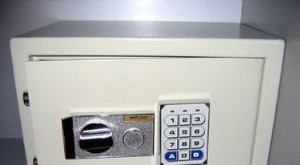
Lockbox Limits: How Much Cash Can You Store Legally?
Banks allow customers to rent these safe boxes to store valuables, including cash. A lockbox, also known as a safety deposit box or a safe deposit box, is commonly found in banks and other in
-
![Medicaid Income Limits & How to Keep Benefits | [Year]](https://www.etffin.com/article/uploadfiles/202109/2021092610212428_S.jpg)
Medicaid Income Limits & How to Keep Benefits | [Year]
Medicaid is the federally-funded program designed to bring health coverage to individuals and families who cannot afford the cost of private insurance. Although each state manages its own unique Medic
investing
- Vanguard 401(k) Loan: A Comprehensive Guide
- Boost Your Income: The Financial Literacy Payoff for 2024
- Check Your 401(k) Balance: Easy Methods & Resources
- Understanding 401(k) Withdrawals: Taxes & Early Access
- Early 401(k) Withdrawal: Risks, Options & Tax Implications
- Effective Monthly Savings Strategies: Build Financial Security
- 25 Proven Ways to Save Money Every Month
- Optimal Monthly Savings: A Guide to Financial Well-being
- Optimal Savings Rate: A Guide to Achieving Your Financial Goals
-
 Mutual Fund Withdrawal Guide: A Step-by-Step Approach
Mutual funds are a popular investment vehicle among all types of investors and savers. They can help a portfolio grow, they can supply income, and they can help an individual save for retirement. Inve...
-
 Locate Lost 401(k) Funds: A Comprehensive Guide
401(k) funds are protected by law, even if the employer declared bankruptcy. If you need to track down money from an old 401(k) account, no central agency exists with information on all 401(k...