
Understanding Equally Weighted Indexes: Calculation & Benefits

An index contains multiple securities, such as stocks and bonds. If you invest by following an index, you buy the same securities the index holds. Whether you invest through an exchange-traded fund or through individual purchases, you'll see that some holdings do better than others. An equally weighted index holds the same dollar amount of each security, making it easy for you to track performance.
Percentage Gain or Loss
You can calculate the percentage each security gains or loses. For example, a three-stock index might have stock XYZ that gained 10 percent, ABC may have lost 5 percent, and DEF may have gained 3 percent. If your index is equally weighted, you started out with the same dollar amount in each stock. Therefore, you can simply add up the percentages and that is your total return. In the example, you would have plus 10 percent, minus 5 percent and plus 3 percent. Your total return would be 8 percent.
Dollar Amounts
You can use actual dollars instead of percentages. You add and subtract your dollar gains and losses. If one stock made $100, another lost $50, and yet another made $25, 100-50+25 equals 75. You made $75 on your combined investment in the index.
-

Future Growth Calculation: Methods & Examples
You can calculate the future growth of a stock by comparing past and future values. By knowing a starting and ending value, you can calculate the future growth of an investment, population or
-

Understanding Real Estate Appreciation: A Simple Calculation
Appreciation can describe the rising value of homes. Appreciation describes the increasing value of an asset over time, and is commonly used in reference to increased values of real estate. C
investing
- Calculate Percentage Increase: A Simple Guide
- Understanding CPI Index: Calculating Percentage Change & Economic Significance
- Investment Expected Payoff: A Comprehensive Calculation Guide
- Calculate Investment Loss: A Simple Percentage Formula
- Calculate Excess Returns: A Step-by-Step Guide
- Understanding S&P 500 Returns: A Comprehensive Guide
- Weighted Average in Real Estate: Calculation & Application
- Calculating Rent Increases with CPI: A Comprehensive Guide
- Calculating Disposable Income: A Key Factor in Bankruptcy
-
 Indiana Teacher Retirement: A Comprehensive Calculation Guide
The Indiana Teacher's Retirement Fund (TRF) provides lifetime retirement benefits to teachers employed at least 10 years by the public school system. To retire, teachers must either be at least 65...
-
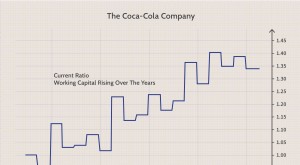 Calculating Working Capital: A Comprehensive Guide
Working capital assesses a companys ability to pay its current liabilities with its current assets, giving us an indication of the subject’s short-term financial health, capacity to c...