
Classified vs. Unclassified Balance Sheets: Key Differences Explained

A balance sheet summarizes a company's financial position as of a certain date, typically at the end of a fiscal quarter or year. It presents the company's total asset base, balanced against total liabilities and shareholders' equity. The balance sheet ties into the company's other financial statements. Net earnings, reported on the income statement, flow through to shareholders' equity on the balance sheet. Increases and decreases in assets and liabilities are used to reconcile net earnings with operating cash flows on the statement of cash flows.
Classified Balance Sheet
Classified balance sheets represent a more polished, finished product than unclassified balance sheets. Classified balance sheets categorize assets and liabilities as either short-term or long-term, and provide subtotals for each category. The sections on a classified balance sheet include current assets, current liabilities, long-term assets, long-term liabilities, fixed assets, other assets, other liabilities and shareholders' equity. Unlike unclassified balance sheets, classified balance sheets may have been audited, and may include accompanying notes that contain detailed information for certain balance sheet items. For example, the notes typically include a breakdown of the company's fixed assets and descriptive data regarding any interest-bearing debt.
Unclassified Balance Sheet
Unclassified balance sheets are used more for internal reporting and closely resemble the company's trial balance, which contains balance sheet line items listed in ascending order from short-term to long-term. There are no subtotals or other such formatting. These are most often used for internal reporting purposes, or by small companies with simpler balance sheets and fewer assets and liabilities to report.
-

Understanding the Balance Sheet & Income Statement: A Comprehensive Guide
Balance sheets and income statements are two forms of financial information a company prepares annually, quarterly or even more frequently. They both measure performance over a given period of t
-
Understanding Balance Sheets: A Comprehensive Guide
Have you ever been through an ECG or echo test? It tells the status of your cardiovascular health. The comparison may seem too far-fetched but in truth, a balance sheet has a similar purpose. It tel
investing
- EPF vs. CPF: Understanding Retirement Savings in Malaysia, India & Singapore
- Understanding Cash on a Balance Sheet: Definition & Significance
- Understanding GAAP Balance Sheet Format: A Comprehensive Guide
- Balance vs. Equity in Forex Trading: A Clear Explanation
- Understanding Preferred Stock on the Balance Sheet
- Class A vs. Class B Stock: Understanding the Key Differences
- Stocks vs. Commodities: Understanding the Key Differences
- Balance Sheet vs. Income Statement: Understanding the Key Differences
- Classified Balance Sheet: A Comprehensive Guide for Businesses
-
 Understanding Balance Sheets: A Comprehensive Guide
Reading a balance sheet is important in determining the financial health of a company. The balance sheet, also known as the statement of financial position, is one of the three key financial statement...
-
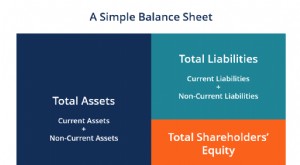 Balance Sheet Explained: A Comprehensive Guide for Finance Professionals
The balance sheet is one of the three fundamental financial statementsThree Financial StatementsThe three financial statements are the income statement, the balance sheet, and the statement of cash fl...