
Understanding Your Options: 4 Ways to Sell Stocks
While it might be difficult to decide when to sell a stock to maximize an investment's return, the four primary ways to sell a stock are fairly straightforward.
Market Order
When you use a market order, you offer to sell your stock at the best available price, so it's likely your order will be executed immediately. However, because you're offering to sell your shares at the best available price, you have no control over the price at which it will sell. Nor do you have any way of knowing what that price will be. The market order may or may not be executed at the same price as the last-traded price.
Sell-Limit Order
A sell limit order allows you to sell a stock at a price you specify or any price higher than that. In effect, the limit order sets the stock's minimum price. The sell limit order is executed when the stock price reaches the limit price or above. Because you specify a minimum sale price, your limit order may not be executed if the stock never reaches that level.
Stop Order
You place a stop order or stop-loss order to sell a stock at a particular price, referred to as the stop price. Once the stop price is attained, the stop order converts to a market order. The stop order's price is set below the stock's current market price to limit the loss an investor might incur.
The stop order price may be different than the order's execution price, because the stop order simply triggers the conversion of a stop order to a market order. The actual price the seller receives will depend on how quickly the stock price changes. In a fast-moving market, prices change quickly, so the execution price can differ significantly from the stop price.
Stop-Limit Order
Investors also can sell a stock using a stop-limit order. When the market price equals the stop price, the stop-limit order converts to a limit order. The limit order is executed at a price the seller specifies or a higher price. Unless a stock's price reaches the limit price, the stop-limit order may not be executed. For example, you might have a stop-limit order that takes effect when the stock price dips below $30, requesting that the shares be sold at that point as long as the price is $28 or higher.
-
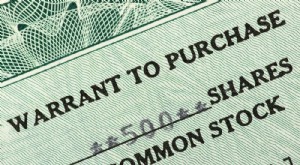
Understanding Stock Warrants: A Comprehensive Guide
A warrant gives the holder the right to purchase a company’s stock at a specific price and a specific date. In other words, a warrant is a long-term option to buy a given stock at a fixed price.
-

Understanding Stock Conversion Prices: A Guide for Investors
If you are planning on getting involved in the stock market, you will want to understand what the conversion price of a stock is. Here are the basics of the conversion price and what it means to
investing
- Understanding Stock Price Appreciation: A Guide for Investors
- Calculate Stock Price Appreciation: A Simple Guide
- Selling Bank Stock: A Simple Guide for Investors
- Measuring Stock Performance: A Guide to ROI
- Selling Walmart Associate Stock: A Comprehensive Guide
- Stop-Limit Orders: A Comprehensive Guide for Investors
- Selling Stock: A Beginner's Guide & When to Sell
- When to Sell Stock: Identifying Optimal Selling Points
- Understanding Stock Order Types: A Guide for Beginners
-
 Stop-Limit Orders: A Comprehensive Guide for Risk Management
A stop-limit order is a tool that traders use to mitigate trade risks by specifying the highest or lowest price of stocks they are willing to accept. The trader starts by setting a stop price (order t...
-
 Understanding Trade Orders: A Comprehensive Guide
Placing a trade order seems intuitive – a “buy” button to initiate a trade and a “sell” button to close a trade. Although executing trades is possible in such a way, it i...